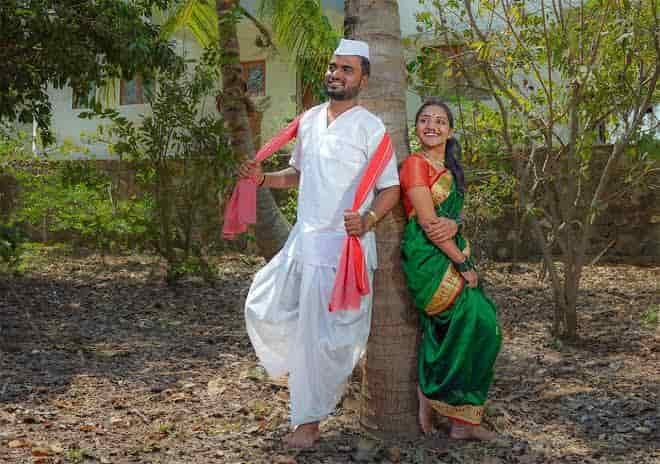
Kerala — God’s Own Country, the land of backwaters, spice gardens, elephant festivals, Kathakali performances, and ancient temple traditions — is a state whose clothing tradition stands in magnificent, almost shocking contrast to the elaborate textile cultures of its neighbours. Where Tamil Nadu has its heavy Kanchipuram silk, Andhra Pradesh has its Pochampally Ikat and Dharmavaram brocade, and Karnataka has its Mysore silk and Lambani embroidery, Kerala’s traditional dress achieves its profound aesthetic power through the exact opposite principle: absolute, purified simplicity.
The core garments of Kerala’s traditional dress — the Mundu, the Mundum Neriyathum, and the Kasavu Saree — are white or cream cotton, the colour of purity and peace, decorated with a single element of luminous contrast: a golden border of Kasavu thread, woven in varying widths and patterns depending on the occasion and the community. This restraint is not poverty of imagination but its opposite — a culture that has decided that simplicity elevated to perfection is more powerful than elaborate decoration. The white-and-gold combination of Kerala’s traditional dress has become one of the most immediately recognisable and most universally admired regional dress aesthetics in all of India.
Kerala’s traditional dress also carries remarkable antiquity. The Mundum Neriyathum — the two-piece female dress — is considered one of the oldest surviving forms of the ancient Indian draping tradition called the Antariya, described in early Buddhist, Hindu, and Jain literature. It predates the standardised saree form and represents an unbroken continuity of clothing tradition spanning at least two thousand years.
![List of Traditional Dress of Kerala [For Men and Women]](https://hrmsunfold.com/wp-content/uploads/2026/06/List-of-Traditional-Dress-of-Kerala-For-Men-and-Women.png)
Quick Comparison Table
| Garment | Worn By | Fabric | Occasion |
| Mundu (Single Mundu) | Men | Cotton | Daily casual |
| Double Mundu (Veshti) | Men | Cotton, Silk | Formal, Religious, Weddings |
| Melmundu (Upper cloth) | Men | Cotton | Religious, Ceremonies |
| Jubba / Kurta | Men | Cotton, Silk | Daily, Festivals |
| Mundum Neriyathum (Two-piece) | Women | Cotton | Daily, Festivals |
| Kasavu Saree (Set Mundu) | Women | Cotton, Silk-Cotton | Onam, Vishu, Weddings |
| Kanchipuram Silk Saree | Women | Silk | Weddings (Hindu) |
| Pavada Blouse | Girls | Cotton, Silk | Festivals, Ceremonies |
| Set Saree | Women | Cotton | Daily, Semi-formal |
| White Saree / Gown | Women (Christian) | Cotton, Silk | Church, Weddings |
The Philosophy of Kerala’s Dress — White and Gold
The defining characteristic of Kerala’s traditional dress is the white or cream ground cloth decorated exclusively with a Kasavu border — a woven golden thread border whose width, intricacy, and material (pure gold zari, copper-coated zari, or artificial zari) determines the formality and value of the garment. For daily wear, a narrow single-line Kasavu border suffices. For Onam or Vishu, a wider, more elaborate border in richer gold is worn. For weddings, the broadest and most ornate Kasavu borders — sometimes featuring woven patterns of peacocks, lotuses, and temple arches within the gold field itself — mark the garment as the finest in the wearer’s possession.
The weaving of this tradition is centred in several handloom villages across Kerala — Kuthampully in Thrissur district (specialising in fine cotton handloom for Mundu and Set Mundu), Chendamangalam in Ernakulam district, and Balaramapuram in Thiruvananthapuram district — where generations of weavers have maintained the specific techniques that give authentic Kerala handloom its distinctive character.
Traditional Dress of Kerala for Men
1. Mundu — The Iconic Male Garment
The Mundu is the definitive traditional garment of Kerala men — perhaps the simplest and most elegant male garment in the entire subcontinent. A single rectangular piece of white or cream cotton cloth, approximately two metres long and ninety centimetres wide, the Mundu is wrapped around the waist and knotted at the front, falling to the ankle in its full formal form. The Kasavu golden border runs along the lower edge of the Mundu, framing the garment’s white ground with its characteristic gleam.
The Mundu’s specific wearing mode signals social context with unmistakeable clarity. In full-length formal mode — Mundu falling straight to the ankle, not folded — it communicates respect: appropriate for religious ceremonies, temple visits, family functions, and the presence of elders. When the Mundu is folded upward to knee height and tucked at the waist — a style called Kacha or half-Mundu — it signals active work mode, appropriate for walking, physical activity, and casual daily movement. The transition between these two modes is made by simple folding or unfolding at the waist, making the Mundu one of the most practically adaptable garments ever designed. Always remembering to unfold and restore the full length in the presence of elders or during prayers is a point of Malayali social etiquette that children are taught from an early age.
2. Double Mundu (Veshti)
The Double Mundu — sometimes called Veshti, though the terminology differs between communities — is a more formal variant in which two layers of cloth are worn together, creating a more substantial, more visually impressive garment appropriate for weddings, very formal religious ceremonies, and the most significant social occasions. The Double Mundu’s double layers give it more body and a more imposing drape, and the Kasavu border is more visible at this scale. Many Kerala grooms wear the Double Mundu with a broad Kasavu border for their wedding ceremony, completing the look with a silk shirt or Jubba.
3. Melmundu — The Shoulder Cloth
The Melmundu — a white cloth similar to a shawl — is draped over one shoulder as an additional covering for the upper body, worn primarily during religious ceremonies, temple visits, and formal traditional contexts. It serves both a practical function (covering the upper body without a shirt, as required in certain temple entry rules) and a ceremonial one (signalling the wearer’s intention to participate in religious ritual with appropriate reverence). The Melmundu with a Kasavu border is the ceremonially appropriate version for formal religious contexts.
4. Jubba (Kurta) — Traditional Upper Garment
The Jubba — Kerala’s name for the traditional long kurta — is the upper garment paired with the Mundu for daily wear, festivals, and formal occasions. Made from white or cream cotton for daily use and from silk for festivals and weddings, the Jubba completes the Kerala male ensemble and is worn across all religious communities in the state. During Onam, the sight of men in white Mundu and white Jubba — the traditional Onam dress for men — is one of the most visually serene and most culturally resonant images in all of Kerala’s festive calendar.
Traditional Dress of Kerala for Women
1. Mundum Neriyathum — The Ancient Two-Piece Dress
The Mundum Neriyathum is the oldest and most culturally fundamental women’s garment in Kerala — a two-piece cotton dress that is considered one of the oldest surviving forms of the ancient Indian Antariya draping tradition. The garment consists of two pieces: the Mundu (the lower cloth, equivalent to the ancient sarong or dhoti for women) and the Neriyathu (the upper cloth, draped diagonally across the blouse and upper body). Both pieces are white or cream cotton with Kasavu golden borders.
The Mundu is wrapped around the waist below the navel in the same manner as the men’s Mundu, tucked securely at the waist. The Neriyathu — a longer piece — is tucked into the petticoat at one end and draped diagonally from the right hip across the torso to fall over the left shoulder. A matching blouse covers the upper body beneath the Neriyathu. The traditional draping style has the Neriyathu tucked inside the blouse, while the more modern style wears it over the left shoulder in the manner of a saree pallu.
The Mundum Neriyathum is worn across all ages for Onam, Vishu, temple festivals, and community celebrations. For Onam specifically — Kerala’s most beloved and most universally celebrated annual festival — the Mundum Neriyathum is the official festival dress for women across the state, and the sight of thousands of women in cream and gold at Onam celebrations is one of the defining visual images of Kerala’s cultural calendar. The blouse colour traditionally signals the wearer’s life stage: young unmarried girls wear green blouses, while married middle-aged women wear red blouses.
2. Kasavu Saree (Set Mundu) — The Evolved Formal Garment
The Kasavu Saree — also called the Set Mundu, Kerala Saree, or Settu Saree — is the evolved single-piece version of the Mundum Neriyathum, approximately five and a half metres of white or cream cotton or silk-cotton blended fabric that is draped as a conventional saree but maintains the essential aesthetic of white ground with Kasavu golden border. For most formal occasions in contemporary Kerala — weddings, official state ceremonies, cultural performances — women wear the Kasavu Saree rather than the two-piece Mundum Neriyathum, as its single-piece draping is more straightforward to manage while maintaining the same white-and-gold aesthetic.
The Kasavu border on the Kasavu Saree varies dramatically in elaborateness depending on the occasion and price point. A narrow single Kasavu line is appropriate for semi-formal daily wear. The most elaborate wedding-quality Kasavu Sarees feature broad gold borders with woven peacock, lotus, and temple designs in the gold field itself, making the garment’s border an artwork in its own right. Kuthampully handloom sarees are among the most celebrated Kasavu Sarees, handwoven in this village near Thrissur and sold across Kerala and internationally.
3. Kanchipuram Silk Saree — Bridal Dress
For Hindu Kerala weddings, the most common bridal saree is a Kanchipuram silk saree in rich colours — deep red, maroon, or gold — rather than the traditional white Kasavu Saree. The richness and grandeur of the Kanchipuram silk’s heavy body, broad zari borders, and elaborate pallu provide the visual opulence appropriate to the wedding context, while the gold colour connects to Kerala’s deep cultural association of gold with auspiciousness and prosperity.
4. Pavada (Skirt and Blouse) — Girls’ Traditional Dress
Young girls in Kerala wear the Pavada — a long skirt in silk or cotton, paired with a fitted blouse — as their traditional dress for festivals and ceremonies. The Pavada is typically in vibrant colours — unlike the adult women’s white-and-gold aesthetic — in bright reds, blues, and greens with golden or embroidered borders, reflecting the younger generation’s more colourful dress conventions. Girls often wear flowers in their hair and simple jewellery with the Pavada, completing a look of festive innocence.
5. Christian and Muslim Women’s Traditional Dress
Kerala’s significant Christian minority (roughly 20 percent of the population) has its own distinct women’s dress tradition for formal religious occasions. Christian brides typically wear white sarees or white gowns with gold embroidery for church weddings — a beautiful expression of Christian bridal symbolism (white for purity) that simultaneously echoes Kerala’s traditional white-and-gold aesthetic. Many Christian women also wear the Kasavu Saree for Onam and cultural occasions, reflecting the degree to which Kerala’s traditional aesthetic has transcended religious community lines.
Muslim women in Kerala traditionally wear modest dress that often incorporates white sarees with coloured or gold borders, longer dupattas, and increasingly in contemporary form, modest fusion wear that maintains cultural connection while respecting religious convention.
Kerala’s Wedding Dress Tradition
At a traditional Hindu Kerala wedding, the bride wears a Kanchipuram silk saree (the Manthrakodi — “divine cloth” — gifted by the groom) in deep red, gold, or maroon, with Palakka Mala (green mango-motif gold necklace), Kasumala (coin necklace), gold bangles, and Jhumki earrings. Her hair is decorated with jasmine flowers. The groom wears a white Double Mundu with a broad Kasavu border, a silk shirt or Jubba, and sometimes a ceremonial shawl (Mundu Veshti) — the serene white-and-gold of his ensemble standing in beautiful contrast to the bride’s rich coloured silk.
Traditional Jewellery
Kerala’s traditional gold jewellery forms are among the most distinctive in India. The Palakka Mala (mango-motif gold necklace) is one of the most recognisable Kerala jewellery forms internationally. The Kasumala is a long gold coin necklace. The Mukku Nath is a decorative nose ring worn for ceremonies. The Thoda is a thick gold bangle. The Jhumki is a characteristically shaped pendant earring. Together these jewellery forms complete the Kasavu Saree’s white-and-gold aesthetic by adding the warmth of Kerala’s deeply gold-oriented jewellery culture.
FAQs
Q1. What is the Kasavu border in Kerala’s traditional dress?
Kasavu refers to the golden woven border on Kerala’s traditional white or cream cotton garments — Mundu, Mundum Neriyathum, and Kasavu Saree. The border’s width, intricacy, and material (pure gold, copper-coated, or artificial zari) determines the garment’s formality and value.
Q2. What is the difference between Mundum Neriyathum and Kasavu Saree?
The Mundum Neriyathum is the original two-piece form — Mundu (lower cloth) and Neriyathu (upper drape) — worn separately. The Kasavu Saree is the evolved single-piece form draped as a conventional saree while maintaining the white-and-gold aesthetic. Both are white with golden Kasavu borders.
Q3. Why do women wear blouses in different colours with the Mundum Neriyathum at Onam?
The blouse colour traditionally signals life stage: young unmarried girls wear green blouses and married middle-aged women wear red blouses during the Mundum Neriyathum ensemble at Onam and other festivals.
Q4. What is the significance of white in Kerala’s traditional dress?
White in Kerala’s dress tradition represents purity, simplicity, and peace — fundamental values in Malayali cultural consciousness. The white garment with its single gold Kasavu border achieves a balance of spiritual simplicity and celebratory richness that defines Kerala’s unique aesthetic philosophy.
Q5. What does the Kerala groom traditionally wear at a wedding?
The Kerala Hindu groom wears a Double Mundu with a broad Kasavu border and a silk Jubba (shirt), sometimes with a ceremonial Mundu Veshti shawl. The bride typically receives the Manthrakodi — a Kanchipuram silk saree gifted by the groom’s family — as her wedding garment.