Delhi — the National Capital Territory, the city that has been the seat of power for the Tomara Rajputs, the Delhi Sultanate, the Mughal Empire, the British Raj, and the Republic of India — is not a state with a single regional dress tradition the way Punjab has its Phulkari or Tamil Nadu has its Veshti. It is something more complex: a city that has been absorbing, transforming, and projecting dress traditions for eight centuries, functioning simultaneously as the capital of empire and the crossroads of the subcontinent. The Mughal courts of Shahjahanabad gave India the Sherwani and the Zardozi tradition. The Punjabi migrants who rebuilt the city after Partition gave it the Salwar Kameez as the dominant female garment. The textile markets of Chandni Chowk have for centuries made Banarasi silk, Kanchipuram cotton, Lucknowi Chikankari, Rajasthani Bandhani, and Hyderabadi brocade available simultaneously within a single kilometre’s walk. Delhi does not produce a single dominant regional textile the way Varanasi produces Banarasi or Kanchipuram produces its silk — instead it functions as the great convergence point where every Indian textile tradition arrives, competes, and finds its most fashion-conscious market.
The result is a dress culture of extraordinary range, sophistication, and self-consciousness. Delhi people are intensely aware of their clothes, intensely interested in what they wear, and intensely connected to the city’s historical legacy as the centre of Islamic courtly dress culture in India. The Sherwani worn by a Delhi groom carries the visual memory of the Mughal court. The bridal Lehenga with Zardozi embroidery connects to the Persian craftsmen who brought this gold-wire technique to the Mughal court workshops. The Salwar Kameez with Chikankari connects to Lucknow’s Nawabi court. Delhi wears all of these traditions simultaneously, as the self-appointed capital of Indian style.
| Garment | Worn By | Fabric / Tradition | Occasion |
| Kurta-Pajama | Men | Cotton, Silk, Chikankari | Daily, Festivals |
| Sherwani | Men (grooms, formal) | Silk, Brocade, Velvet | Weddings, Eid, Formal |
| Dhoti-Kurta | Men | Cotton, Silk | Religious, Ceremonies |
| Pathani Suit | Men | Cotton, Linen | Daily, Festivals (Old Delhi) |
| Nehru Jacket + Kurta | Men | Silk, Cotton | Formal cultural events |
| Salwar Kameez | Women | Cotton, Silk, Georgette | Daily, Festivals |
| Banarasi / Designer Saree | Women | Silk, Georgette | Weddings, Festivals |
| Lehenga Choli | Women | Silk, Brocade, Velvet | Weddings, Celebrations |
| Anarkali Suit | Women | Georgette, Silk | Festivals, Formal events |
| Ghagra Choli | Women | Cotton, Silk | Festivals, Cultural events |
| Kurti with Palazzo | Women | Cotton, Chiffon | Daily, Semi-formal |
Delhi’s Textile Heritage — Mughal to Modern
Delhi’s dress identity cannot be separated from two historical forces: the six centuries of Mughal and preceding Sultanate rule that made Shahjahanabad (Old Delhi) the capital of Islamic courtly dress culture in the subcontinent, and the Partition of 1947 that brought hundreds of thousands of Punjabi refugees into the city, remaking its demographics and its everyday clothing vocabulary simultaneously.
The Mughal contribution is most visible in men’s ceremonial dress — the Sherwani, the Achkan, the Angarkha, and the embroidery traditions of Zardozi, Mukkaish, and Kundan Kari that transformed plain fabric into expressions of power and refinement. The textile workshops of Shahjahanabad specialised in the most demanding forms of embroidery available anywhere in India, producing garments for the court that required months of skilled artisan work in gold and silver wire, precious stones, and the finest silk. This tradition survives in the ateliers of Chandni Chowk and Daryaganj, where bridal Sherwanis and Lehengas with genuine Zardozi work continue to be produced for Delhi’s enormous wedding market.
The Punjabi contribution reshaped everyday dress. The Salwar Kameez — already common in Punjab — became the default daily garment for Delhi women across communities, classes, and neighbourhoods from the 1950s onward. Delhi’s particular version of the Salwar Kameez evolved its own character: more embellished than everyday Punjabi suits, influenced by the Mughal love of surface decoration, and available in the city’s extraordinary range of fabrics from the most basic cotton to the most elaborate silk brocade.
Traditional Dress of Delhi for Men
1. Kurta-Pajama
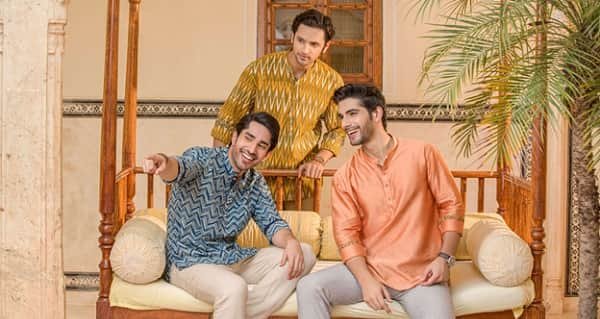
The Kurta-Pajama is the most universally worn traditional male garment in Delhi — a long, loose cotton or silk kurta paired with comfortable pajama trousers that serves as both the daily dress of working men in Old Delhi’s bazaars and the festive dress of men across the city at Diwali, Eid, and family celebrations. Delhi’s kurtas carry specific character: the Mughal-influenced love of decoration means that even everyday festive kurtas in Delhi frequently feature embroidery at the collar, cuffs, and placket — subtle Chikankari for the restrained aesthetic, more elaborate threadwork and mirror work for the exuberant. For Diwali and major Hindu festivals, men across Delhi’s residential colonies wear silk kurtas in rich jewel tones — deep purple, forest green, burgundy — with churidar pajamas and embroidered jutis completing the festive look.
The Lucknowi Kurta — in Chikankari embroidered fine cotton or georgette — is arguably the most fashion-coveted of the kurta variants worn in Delhi, combining the restraint of white thread embroidery with the prestige of Lucknow’s celebrated craft tradition. Delhi’s proximity to Lucknow and its role as the national capital means that the Lucknowi kurta has been adopted across political, bureaucratic, and cultural circles in the city as the semi-formal traditional dress of choice.
2. Sherwani — The Mughal Legacy
The Sherwani is the formal male dress of Delhi at its most historically resonant — a long, coat-like outer garment worn over a kurta and churidar or pajama, originating in the courts of the Mughal Empire and refined through centuries of Islamic courtly patronage in the very city where it is now most elaborately produced and most prominently worn. Delhi Sherwanis are the most celebrated, most competitive, and most nationally coveted in India — the city’s concentration of master embroiderers, bridal designers, and high-end fabric importers makes it the national centre for Sherwani production and purchase.
For Delhi grooms, the Sherwani is not merely a garment but a declaration of identity and family status. The fabric choice — silk, brocade, velvet, or the most expensive Banarasi weave — signals the family’s aesthetic preferences. The embroidery technique — Zardozi (gold wire), Mukkaish (silver wire), Kundan Kari (stone setting), or combinations — signals the level of investment. The colour — cream and ivory for the traditional aesthetic, darker jewel tones for the more contemporary — signals the generation and tastes of the wearer. The complete Sherwani ensemble includes matching churidar, embroidered jutis (pointed leather shoes), and a silk or brocade safa (turban) or topi, with a dupatta (stole) draped over one shoulder completing the picture. The Mughal emperor’s ghost is visible in every Delhi groom’s Sherwani — it is the most direct living connection between contemporary dress and the city’s defining historical legacy.
3. Dhoti-Kurta
For Delhi’s older generation and for religious ceremonies — temple pujas, wedding rituals, thread ceremonies, and major Hindu festivals — the Dhoti-Kurta remains the standard traditional dress. In Delhi’s large Hindu population drawn from UP, Bihar, Rajasthan, and other states, the specific dhoti draping style varies by community of origin, but the combination of white cotton dhoti and plain or embroidered silk kurta is the universal male religious dress across these communities. At the great temples of Delhi — Akshardham, Birla Mandir, Laxmi Narayan Temple — men in Dhoti-Kurta are a consistent presence at morning and evening prayers.
4. Pathani Suit
The Pathani Suit — a long kurta with salwar-style trousers, typically in cotton or linen — is the characteristic daily dress of Old Delhi’s Muslim male population, concentrated in the lanes around Jama Masjid, Chandni Chowk, and the Walled City. At Jama Masjid on Fridays and during Eid prayers, the assembly of men in Pathani suits — in white for the purists, in cream, beige, and pastel for the fashion-conscious — is one of Delhi’s most visually arresting traditional dress images. The Pathani suit’s long kurta with side slits and loose salwar reflects the same North Indian and Central Asian dress lineage as the Sherwani, but in the more practical, more breathable cotton version suited to daily movement through the city’s congested lanes.
5. Nehru Jacket
The Nehru Jacket — the collarless, button-fronted jacket worn over a plain kurta — deserves specific mention in Delhi’s traditional dress vocabulary because it was specifically invented and popularised in Delhi by Jawaharlal Nehru, India’s first Prime Minister, as a deliberate synthesis of Indian and Western formal aesthetics. The Nehru collar and cap became international symbols of Nehruvian India and have remained part of Delhi’s political and cultural dress vocabulary ever since — worn at Republic Day ceremonies, at cultural events, and by men who want to signal a specifically Indian nationalist aesthetic without full traditional dress.
Traditional Dress of Delhi for Women
1. Salwar Kameez — The Dominant Daily Dress
The Salwar Kameez is so completely the dominant everyday dress of Delhi women that describing it as specifically a “traditional dress of Delhi” risks understating how universal it has become. In every neighbourhood, every market, every office, every college campus and every government building in the city, women of all ages, communities, and classes wear the Salwar Kameez as their standard dress. Delhi’s version of the Salwar Kameez has its own specific character: it is more embellished than the simple cotton suits of village Punjab, influenced by the city’s Mughal-derived love of surface decoration, and available in a quality range from the most inexpensive cotton to the most elaborate hand-embroidered designer pieces that command prices equivalent to international couture.
The embellishments characteristic of Delhi’s Salwar Kameez culture draw directly from the city’s craft heritage: Zardozi (gold wire embroidery), Kundan mirror work, sequin and thread work, and more recently Chikankari all appear on Delhi suits. The dupattas — the scarves that complete the ensemble — are the place where the most elaborate decoration is concentrated, ranging from simple printed cotton to heavily embroidered organza or georgette. Chandni Chowk and Lajpat Nagar’s markets are the primary wholesale and retail destinations where women from across India come specifically to buy Delhi’s characteristic Salwar Kameez styles.
2. Saree — Delhi’s Formal Women’s Dress
While the Salwar Kameez is the everyday, the saree remains the formal and celebratory dress for Delhi women at weddings, religious ceremonies, major festivals, and official events. The saree market of Delhi is the most diverse in India: Chandni Chowk alone carries Banarasi silk from Varanasi, Kanchipuram silk from Tamil Nadu, Chanderi from MP, Chikankari cotton from Lucknow, Tant from West Bengal, Sambalpuri Ikat from Odisha, and every other major regional saree tradition — all available in one concentrated market for Delhi’s cosmopolitan population of women from every Indian state. The result is a saree culture of extraordinary range but no single dominant regional identity — Delhi women wear the best sarees of every state depending on occasion, family tradition, and personal preference.
The specifically Delhi contribution to saree culture is the Zardozi-embellished saree — silk or georgette sarees with gold and silver wire embroidery worked across the border and pallu in Mughal-derived floral and geometric motifs, produced by the embroidery ateliers of Chandni Chowk and Daryaganj for the bridal and celebration market. These sarees carry Delhi’s historical identity as the capital of Mughal embroidery most directly.
3. Lehenga Choli — The Bridal Standard
The Lehenga Choli — a heavily embellished full-length flared skirt, fitted blouse, and matching dupatta — is the definitive bridal and wedding guest dress of contemporary Delhi, and the city is the most important market for high-end designer Lehengas in India. The concentration of both traditional master embroiderers in Old Delhi and contemporary fashion designers in South Delhi and Mehrauli has made Delhi the national capital of the Lehenga market — where a bride’s Lehenga can range from a fifty-thousand-rupee professionally embroidered piece from a Chandni Chowk atelier to a fifty-lakh designer creation from one of the city’s major bridal fashion houses.
Delhi Lehengas are characteristically heavy with embellishment — Zardozi, sequins, thread work, mirror work, and Gota-Patti borders are all present in the standard bridal vocabulary — and the colour palette in recent decades has expanded from the traditional red to include every colour across the spectrum, with the choice of shade being as much a personal fashion statement as a cultural convention.
4. Anarkali Suit
The Anarkali suit — a long, flared kurta with churidar or palazzo pants, whose silhouette echoes the full-skirted court dress of the Mughal era — is one of the most specifically Delhi-identified formal women’s suits, its very name invoking the city’s Mughal heritage. Available in georgette, silk, and chiffon in a range of lengths from knee to floor, the Anarkali is the dress of choice for Delhi women at weddings, festivals, and formal events where the Salwar Kameez feels too casual but a full saree is more than desired. The Anarkali’s sweeping silhouette — dramatic when the wearer moves, flattering across a wide range of body types — has made it one of the most successful formal suit styles in contemporary Indian fashion, originating in Delhi’s design market.
5. Ghagra Choli
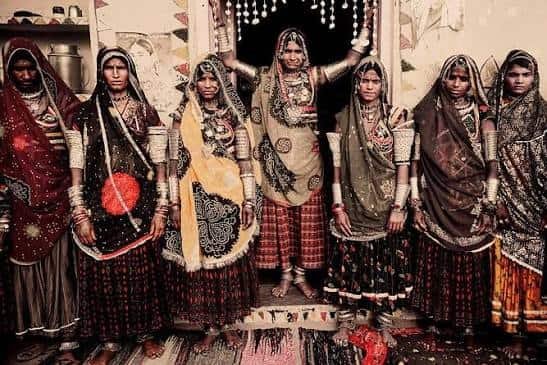
Particularly associated with Delhi’s large Rajasthani and Gujarati migrant communities — concentrated in areas like Uttam Nagar, Dwarka, and parts of East Delhi — the Ghagra Choli (full-length flared skirt with fitted blouse and odhni) appears at Navratri, Teej, Gangaur, and the major festivals of the calendar where women from these communities express their specific regional heritage within the city’s cosmopolitan context. At Delhi’s spectacular Navratri Garba events, which have grown enormously in scale and cultural visibility over the past two decades, the Ghagra Choli in mirror-worked cotton or embroidered silk is the standard dress, creating the most vivid traditional dress spectacle in the city’s annual calendar.
Zardozi — Delhi’s Craft Heritage
Zardozi — the technique of embroidering gold and silver wire onto fabric to create three-dimensional metallic patterns — is the most historically distinctive craft tradition of Delhi’s dress culture, carried by the embroidery workshops of Shahjahanabad from the Mughal court tradition into the contemporary bridal market. Delhi’s Zardozi workers, concentrated in the lanes of Chandni Chowk and Zeenat Mahal, represent one of India’s most technically accomplished and commercially vibrant craft communities. Their work appears on Sherwanis, Lehengas, sarees, and evening wear sold not just in Delhi but through the designer market internationally.
Wedding Dress — The Delhi Standard
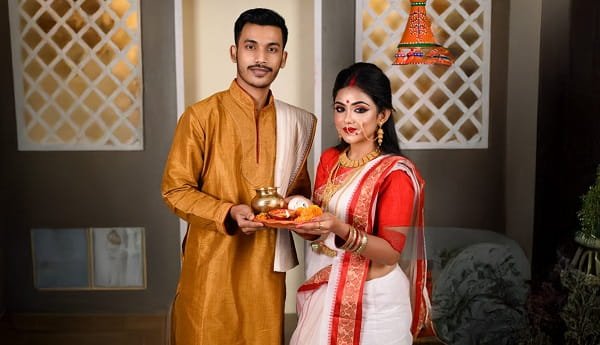
At a traditional Delhi Hindu wedding, the bride typically wears a heavily embroidered Lehenga Choli in red, maroon, or deep pink — with Zardozi, Kundan mirror work, and thread embroidery on both skirt and blouse — completed with a Maang Tikka, Chandbali earrings (moon-shaped, the specifically Delhi bridal earring form), Chura and Kaleere (bangles and hanging ornaments on the bridal wrist), Kamarbandh (waist chain), and Payal (anklets). The groom wears a Sherwani in ivory or cream brocade with Zardozi embroidery, churidar pajama, embroidered jutis, a silk turban with Kalgi (decorative turban ornament), and a dupatta over one shoulder. This ensemble — bride in red Lehenga, groom in ivory Sherwani — is the most universally recognised Delhi wedding image.
Muslim weddings in Delhi follow a different aesthetic — the bride often wears a red or green Lehenga or gharara (wide-legged trouser with short skirt overlay) with Mukkaish or Zardozi embroidery, while the groom wears a cream or white Sherwani with achkan-style detailing, reflecting the specific Mughal-Nawabi dress heritage that defines Delhi’s Muslim sartorial traditions.
FAQs
Q. Does Delhi have its own specific regional dress, or does it wear garments from other states?
Delhi’s dress culture is cosmopolitan rather than narrowly regional — the city functions as a convergence point for every Indian dress tradition. Its specific contribution is the Mughal-derived embroidery traditions (Zardozi, Mukkaish, Kundan) applied to the Sherwani and Lehenga, and the specific character of its Salwar Kameez culture influenced by Punjabi migration and Mughal decoration aesthetics. Delhi is less a producer of regional dress than the national capital of its presentation and refinement.
Q. What makes the Delhi Sherwani different from Sherwanis elsewhere?
Delhi Sherwanis are produced by the most concentrated community of master embroiderers in India, in the workshops of Chandni Chowk and Daryaganj drawing on the Mughal court embroidery tradition. The quality and variety of Zardozi, Mukkaish, Kundan, and stone embellishment work available in Delhi is unmatched nationally, making the city the definitive destination for the most elaborate and most expensive groom’s wedding dress in India.
Q. What is the Anarkali suit and why is it associated with Delhi?
The Anarkali suit is a long, flared kurta with churidar or palazzo pants whose silhouette echoes Mughal court dress. Its name directly invokes Delhi’s Mughal heritage, and it originated and was popularised in Delhi’s fashion market as the definitive formal suit for women at wedding and festival events. Its sweeping silhouette has made it one of the most successful formal suit styles in contemporary Indian fashion.
Q. What is Zardozi and why is it central to Delhi’s textile identity?
Zardozi is the embroidery technique of stitching real gold or silver wire onto fabric to create three-dimensional metallic patterns, brought to India through Mughal patronage and concentrated in Delhi’s Chandni Chowk workshops. It is the most historically distinctive craft element of Delhi’s dress culture, appearing on Sherwanis, Lehengas, and sarees for the most formal occasions.
Q. What is the significance of Chandni Chowk in Delhi’s dress culture?
Chandni Chowk — the ancient market street of Shahjahanabad laid out by Shah Jahan in the seventeenth century — is the most concentrated and most historically significant textile and dress market in India. It carries every major regional textile tradition of India simultaneously, houses Delhi’s most accomplished Zardozi and embroidery workshops, and is the destination where brides from across India come to buy sarees, Lehengas, and bridal accessories. It is the living, commercial heart of Delhi’s dress culture.