The Haldi ceremony is one of Indian weddings’ most joyful, most photogenic, and most genuinely auspicious pre-wedding rituals — the application of a turmeric (haldi) paste to the bride’s and groom’s skin by family members, believed to impart a natural glow to the complexion, ward off evil, bless the couple with prosperity, and prepare them spiritually for the sacred union of marriage. What was once a simple domestic ritual has evolved in the contemporary Indian wedding into one of the most elaborately styled and carefully photographed events in the entire wedding calendar — with dedicated photography sessions, colour-coordinated family outfits, floral décor in yellow and orange tones, and the bride and groom’s own Haldi outfit receiving as much consideration as their main wedding dress.
The Haldi outfit operates under an interesting set of design constraints that make it a genuinely creative fashion challenge — it must be beautiful enough for professional photography and social media sharing, comfortable enough for sitting through the turmeric application process, and disposable enough that the inevitable turmeric staining of the fabric is not a cause for distress. This balance between beauty and practicality has driven some of the most creative traditional fashion thinking in contemporary Indian bridal and groom styling.
| Rank | Outfit | For | Colour | Price Range |
| 1 | Yellow Silk Lehenga | Bride | Yellow, turmeric, saffron | ₹5,000–₹50,000 |
| 2 | Yellow Kurta Pajama | Groom | Yellow, ivory, white | ₹2,000–₹15,000 |
| 3 | Floral Printed Saree | Bride | Yellow, white, floral | ₹2,000–₹15,000 |
| 4 | Dhoti Set with Shawl | Groom | White, yellow, ivory | ₹3,000–₹20,000 |
| 5 | Embroidered Salwar Suit | Bride | Yellow, pastel, mint | ₹2,000–₹12,000 |
1. Yellow Silk Lehenga — The Classic Bridal Haldi Choice
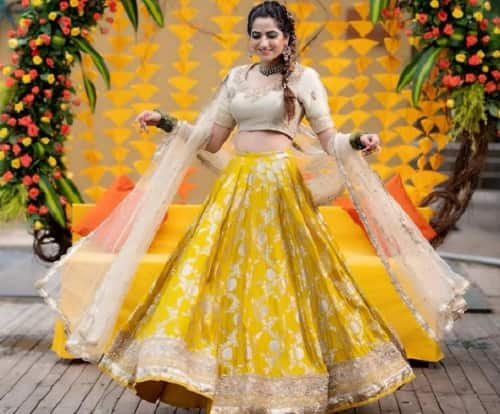
The yellow silk lehenga is the quintessential Haldi bride outfit — the garment that has become synonymous with the Haldi ceremony in contemporary Indian wedding photography and social media wedding content. Yellow’s deep auspiciousness in Hindu tradition — the colour of turmeric itself, of sunlight, of the sacred thread, and of prosperity — makes it the natural and culturally most resonant choice for a ceremony whose central element is the yellow turmeric paste. A bride photographed in a brilliant yellow lehenga against a backdrop of marigold flowers is one of contemporary Indian wedding photography’s most iconic and most emotionally warm images.
Design elements — The Haldi lehenga works best in a relatively lighter-weight silk or georgette fabric rather than the heavy brocade typical of wedding lehengas — allowing comfortable movement through the ceremony while maintaining the visual richness appropriate to bridal photography. Gota patti work (the thin golden ribbon appliqué most associated with Rajasthani bridal tradition), subtle zari border embellishment, and mirror work all complement yellow fabric beautifully without overwhelming it. The blouse can feature heavier embellishment — a heavily gota-worked or zardozi-embellished blouse against a relatively simpler lehenga skirt creates elegant proportion.
Colour variations — While bright turmeric yellow is the classic choice, the palette has expanded significantly in contemporary styling — mustard, saffron, marigold orange, pale butter yellow, and even turmeric-toned ivory all fall within the Haldi colour story. Brides who want to maintain the yellow theme without the potential harshness of bright yellow against their specific complexion can explore these tonal variations to find the most flattering shade within the family.
Dupatta styling — A translucent yellow organza dupatta with a heavy embellished border draped loosely over the head creates the classic bridal Haldi look. A simpler tissue silk dupatta without heavy embellishment is more practical for active ceremony participation while still photographing beautifully.
Jewellery — Floral jewellery — made from fresh marigolds, mogra, and rose petals rather than metal and gemstones — is the defining jewellery choice for Haldi ceremonies, creating an organic, fragrant, and visually spectacular look that is specific to the ceremony rather than carried forward from the wedding’s metal jewellery. Marigold garlands worn as necklaces, floral chandelier earrings, a floral tikka, and floral hair accessories create a complete yellow-and-gold natural jewellery look that is among contemporary Indian wedding styling’s most photographed aesthetics.
2. Yellow Kurta Pajama — The Classic Groom Haldi Look
The yellow kurta pajama is the most elegant and most photographically effective Haldi outfit for Indian grooms — a silhouette that is simultaneously traditional, festive, and specific to the ceremony’s colour story. The groom’s yellow kurta creates a natural visual coordination with the bride’s yellow lehenga without requiring them to be identically dressed — the different garment forms (kurta for him, lehenga for her) maintain appropriate gender distinction while the shared colour palette creates the couple’s visual unity that Haldi photography celebrates.
Design elements — A pure silk kurta in bright yellow or deep saffron with subtle embellishment at the neckline, front placket, and cuffs creates the ideal balance between festive dressing and practical Haldi ceremony appropriateness. The embellishment should be restrained rather than elaborate — heavy embroidery or zardozi work is inappropriate for a ceremony where the garment will be stained with turmeric paste, and the less expensive the garment (while maintaining visual quality) the better the practical outcome. A churidar pajama or straight silk pajama in contrasting ivory or cream creates a clean, classic silhouette.
Kurta length and collar — A knee-length or slightly below-knee kurta with a subtle Nehru collar (bandhgala-style) creates the most sophisticated Haldi groom look. The closed Nehru collar has a particular appropriateness for Indian ceremonies, and its clean line photographs exceptionally well. An open-collar kurta with a subtle chest pocket and simple front embroidery is a slightly more casual alternative for grooms who prefer a less formal Haldi aesthetic.
Stole or dupatta for groom — Many grooms add a contrast stole — in ivory, cream, or gold — draped over one shoulder for the Haldi ceremony photographs. This adds a formal dimension and visual interest to what might otherwise be a fairly simple kurta presentation, and the contrast of colours creates visual depth in photography.
Footwear — Traditional mojri (embroidered leather shoes) in gold or ivory leather are the most appropriate footwear for the Haldi groom look — they photograph beautifully and maintain the traditional aesthetic that the yellow kurta establishes.
3. Floral Printed Saree — The Artistic Bride Alternative
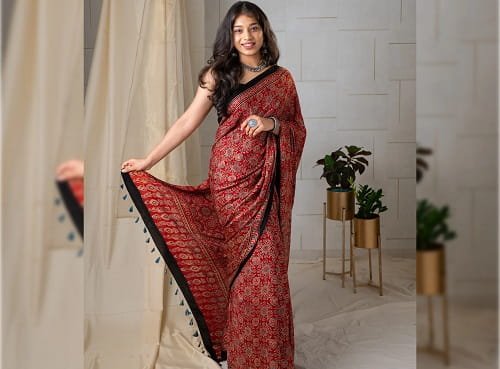
A floral printed saree — in yellow, white, or pastel tones with botanical floral motifs that echo the organic, flower-filled visual aesthetic of Haldi décor — offers a beautiful alternative to the lehenga for brides who prefer the saree silhouette for their Haldi ceremony. The floral printed saree’s appeal lies in its organic visual relationship with the flower-filled Haldi environment — a bride wearing a saree covered in marigold-like floral motifs surrounded by actual marigold decorations creates a cohesive, beautifully organic aesthetic that stands out distinctively from the more conventional lehenga option.
Fabric and print choices — A muslin or mulmul cotton saree with hand block-printed botanical motifs creates the most authentic and most breathable Haldi saree option. These fabrics drape softly and beautifully in photography while being the most comfortable option for a ceremony involving physical contact and movement. Chanderi cotton-silk with woven floral motifs or a georgette saree with digital floral print in yellow and white provides slightly more formal alternatives. Banarasi tissue sarees in yellow with woven floral motifs represent the most premium Haldi saree option for brides who want luxury fabric alongside a floral visual.
Colour and pattern — White with yellow floral print is a particularly fresh and photographically beautiful combination for Haldi — the white ground creates clear, high-contrast photography that reads beautifully in the warm, golden-toned light that professional Haldi photography typically employs. Yellow with orange floral print mirrors the turmeric palette directly. Mint green or pale lavender with yellow floral motifs creates a softer, more contemporary interpretation of the Haldi colour story.
Styling — A floral printed saree styled with fresh flower hair accessories, a simple mangalsutra-style necklace, and thin gold bangles rather than heavy bridal jewellery creates an effortlessly beautiful, slightly bohemian Haldi aesthetic that has become very popular in contemporary Indian wedding styling.
4. Dhoti Set with Shawl — The Regal Groom Alternative
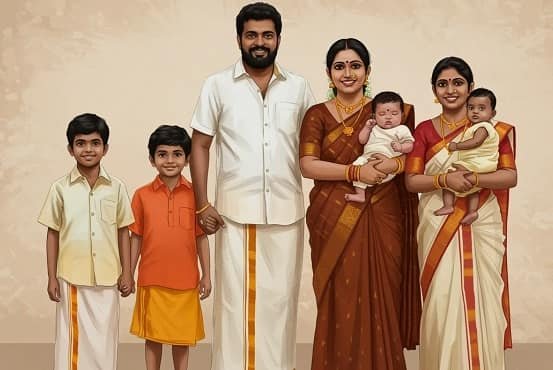
A traditional dhoti kurta combination — the groom’s most classical Indian dress option — creates a distinctly regal and culturally rooted Haldi look that the kurta pajama cannot quite replicate. The dhoti’s natural drape, its association with India’s most sacred traditions, and its visual distinction from the wedding day sherwani give the Haldi dhoti set a specific ceremonial appropriateness that resonates particularly strongly in South Indian weddings, Bengali weddings, and families who want maximum traditional authenticity in their Haldi ceremony aesthetic.
Design elements — A silk dhoti in white or ivory with a gold or yellow border, paired with a short or medium-length kurta in yellow or ivory silk, creates the classic Haldi dhoti set. The dhoti’s border colour — typically gold zari or yellow block-print — ties the garment into the ceremony’s colour story. A silk angavastram (shoulder cloth) or shawl in contrasting yellow, gold, or saffron draped over one shoulder adds elegance and creates the visual completeness that a bare-shouldered dhoti kurta sometimes lacks in formal photography.
South Indian interpretation — In South Indian weddings, the pancha (dhoti) with a matching silk angavastram in the bride’s saree border colour creates a beautifully coordinated couple look that is specific to the South Indian tradition and genuinely photographically stunning. The matching of border colours between bride’s Kanjivaram saree and groom’s dhoti pancha is a South Indian styling tradition of great elegance.
Floral accessories — A garland of marigolds or jasmine worn around the neck, a simple flower tucked behind the ear, and a small floral boutonniere on the kurta bring the groom’s dhoti set into visual harmony with the Haldi décor’s organic floral aesthetic without requiring elaborate styling investment.
5. Embroidered Salwar Suit — The Comfortable Bride Option
An embroidered salwar suit in yellow or pastel tones provides a practical, comfortable, and genuinely beautiful Haldi outfit option for brides who prioritise movement freedom and practical comfort alongside visual appeal — particularly relevant for brides who plan to participate actively in the Haldi ceremony rather than sitting as its subject alone. The salwar suit’s more relaxed silhouette compared to the lehenga’s heavy skirt and the saree’s draping requirements makes it naturally more comfortable for the extended sitting and social interaction that the Haldi ceremony typically involves.
Design elements — A straight-cut or anarkali-style kurta in bright yellow, mustard, or pastel lime with gota patti, mirror work, or hand embroidery at the neckline, cuffs, and hemline creates a festive Haldi appearance without the investment of a lehenga. A palazzo or churidar adds the traditional grounding that the Haldi ceremony’s significance calls for. A dupatta in contrasting ivory or complementary pastel tones, styled loosely over the head, completes the traditional silhouette.
Anarkali as premium option — A floor-length anarkali in bright yellow with heavy gota patti work at the neckline and hemline creates a more formal and visually dramatic salwar suit variant that is nearly as photogenic as the lehenga while offering significantly more practical comfort. The anarkali’s flared skirt creates movement and visual interest in photographs without the weight and restriction of a full lehenga.
Practical wisdom — For brides who want to wear their Haldi outfit for the complete extended event — morning ceremony, family gathering, lunch, extended family photography — without changing, the salwar suit’s comfort for prolonged wearing outweighs the lehenga’s visual grandeur. Knowing that the garment will be stained with turmeric regardless of its quality makes the salwar suit’s more accessible price point a genuinely practical consideration.
Haldi Ceremony Styling Tips for Couples
Coordinate, don’t match — The most visually sophisticated Haldi couple styling uses the same colour palette (yellows, saffrons, ivories) in different garment forms and different embellishment levels rather than wearing identical outfits. The visual unity of shared colour with the distinctiveness of different silhouettes creates better photography than identical twinning.
Invest in floral jewellery — Fresh floral jewellery is among the most important Haldi styling investments — its visual impact in photographs is extraordinary, and unlike metal bridal jewellery, it is appropriate for the ceremony’s organic, turmeric-stained context.
Choose comfortable fabrics — Silk dupioni, mulmul cotton, georgette, and tissue are the most practical Haldi fabrics — beautiful in photography, relatively easy to move in, and less distressing when inevitably stained with turmeric.
Barefoot in the photography — Many Haldi photography compositions look most beautiful barefoot or with simple floral ankle decorations rather than formal footwear — the organic, sensory nature of the ceremony is best expressed with minimal foot coverage in close-up photography.
Frequently Asked Questions (FAQs)
Q: What colour should the bride wear for Haldi?
A: Yellow is the most traditional and most auspicious colour for Haldi — it mirrors the turmeric paste’s own colour. Saffron, mustard, and pale gold are beautiful variations within the yellow family.
Q: Can the groom wear white for Haldi?
A: Yes — ivory and white are excellent Haldi colours for grooms, particularly in a silk dhoti set or white kurta. White coordinates beautifully with the yellow Haldi décor and photographs clean and bright.
Q: Should the bride wear expensive clothes for Haldi?
A: Moderation is wise — the Haldi outfit will inevitably absorb turmeric staining that is extremely difficult to remove. Investing in a beautiful but not irreplaceable outfit (₹5,000–₹25,000 for the bride) is more practical than wearing a garment of the same value as the wedding dress.
Q: Can South Indian brides wear sarees for Haldi?
A: Absolutely — a Kanjivaram silk saree in yellow with gold border is one of the most beautiful and most culturally authentic Haldi looks for South Indian brides, and the traditional aesthetic resonates deeply with the ceremony’s sacred character.
Q: What flowers are best for Haldi floral jewellery?
A: Marigold (genda phool) is the most traditional — its deep orange-yellow colour perfectly complements the Haldi ceremony’s colour story. Mogra (jasmine) adds fragrance, and roses provide structural variety. Combinations of these three create the most beautiful Haldi floral jewellery.