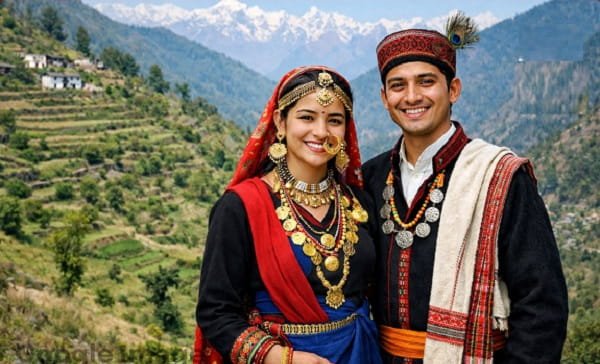
Mizoram — the Land of the Highlanders, the smallest state of India’s Northeast after Sikkim and Tripura, a land of rolling blue-green hills, bamboo forests, and a people of extraordinary cultural cohesion — is a state where traditional dress is not peripheral to daily life but central to it. The Mizo people, primarily the Lushai or Lusei tribe that forms the majority of the state’s population alongside other communities including the Hmar, Lai, Mara, Chakma, and Paitei, share a handweaving tradition of great sophistication in which the Puan — a wrapped cloth that is the foundation of all Mizo dress — serves as the canvas for cultural identity, social status, marital stage, and community belonging simultaneously.
What distinguishes Mizoram’s textile tradition from many other Indian states is the degree to which specific garments communicate specific social information that community members read immediately. The colour of a woman’s Puan, the pattern of her blouse, the specific design of her shawl — all of these communicate whether she is unmarried, married, or widowed; which sub-tribe she belongs to; whether the occasion is festive or everyday; and in historical contexts, whether her husband had achieved the status of Thangchhuah — the supreme honour granted to a man who had organised grand public feasts and the ritual sacrifice of a Mithun (a large bison). This textual richness, woven into the very fabric of clothing, makes Mizo dress one of India’s most culturally dense textile traditions.
Quick Comparison Table
| Garment | Worn By | Occasion / Community | Character |
| Puanzu | Men | All occasions, Lusei | Black-and-white handwoven shawl |
| Puandum (Pawndum) | Men | Festivals, Ceremonies | Red, black, white striped shawl |
| Tawlhloh Puan | Men (Warriors historically) | Historical/Cultural | Black-and-white, warrior symbol |
| Thangchhuah Dress | Men (Thangchhuah title holders) | Ceremonial | Elaborate, status-specific ensemble |
| Hmar Am | Both | Daily | Indigo-dyed cotton cloth |
| Lungi | Men | Daily | Handwoven waist wrap |
| Kawrchei / Kawlraisen | Women | Daily, Festivals | Traditional blouse, white with embroidery |
| Puan | Women | Daily | Wraparound skirt, many varieties |
| Puanchei | Women | Festivals (Chapchar Kut, Pawl Kut) | Most colourful festive Puan |
| Ngotekherh | Both | Daily, Unisex | Black-and-white striped, light checked |
| Hmaram | Women, Children | Cultural events, Hmar tribe | Hmar handloom cloth |
| Zakuolaisen | Unmarried Girls | Festivals | Crimson-striped blouse |
| Puon Pie | Married Women | Daily, Cultural | Plainer woven cloth |
| Puanropui | Women (ceremonial) | Weddings, Important Events | Rich, elaborate garment |
| Cyhna Hno | Both | Festivals | Silk with embroidered borders |
The Puan — Foundation of Mizo Dress
Before describing individual garments, the Puan requires explanation as the fundamental concept underlying all Mizo textile traditions. The Puan is not a single garment but a category — any piece of woven cloth that wraps around the body to serve as either a lower skirt or an outer covering. All Mizo dress traditions, whether for men or women, are variations of the Puan in different lengths, materials, patterns, and specific functions. The Puan has been described since the earliest records of Mizo life, originally as the only garment worn — wrapping around the body from the left arm across the back and under the right armpit, with flaps that prevented it from slipping.
As Mizo society evolved, the Puan evolved with it — lengthening, differentiating into specific types for specific purposes, and gradually developing the extraordinary variety of named, patterned variants that define contemporary Mizo dress. The weaving of Puan is women’s work, produced on traditional lion looms (also called loin looms) consisting of four large bamboo uprights holding a framework of horizontal bamboo poles, with the weaver’s body tension providing the warp tension. Mizo girls begin learning to weave at an early age, and weaving skill historically formed an essential part of a woman’s eligibility for marriage.
Traditional Dress of Mizoram for Men
1. Puanzu — The Standard Male Shawl
The Puanzu is the most commonly worn traditional garment for Mizo men — a handwoven shawl cloth in black and white that is draped over the shoulders or wrapped around the upper body. Generally approximately seven feet long and five feet wide, the Puanzu serves as the multipurpose outer garment of Mizo men across most community occasions. For daily use, the Puanzu tends toward plain black-and-white design without elaborate additional motifs. For festivals like Chapchar Kut and Mim Kut, Puanzus in brighter colours incorporating red, green, and yellow stripes replace the everyday version, giving Mizo men’s festival dress a more visually vibrant character than the restrained daily Puanzu.
The Puanzu was historically the universal garment of Mizo men regardless of social status — leaders and ordinary community members wore the same basic form, the distinction being in the quality of the weaving and the specific patterns reserved for men of status. With increasing British and subsequently Western influence from the early twentieth century, the Puan among men declined significantly — by the 1960s it had become rare for men’s daily wear — but it continues to appear at festivals, cultural events, and occasions where traditional identity is being consciously expressed.
2. Puandum (Pawndum) — Ceremonial Shawl
The Puandum (also spelled Pawndum) is a more formally significant shawl worn by Mizo men at ceremonial occasions — characterised by its red, black, and white striped pattern, with the colours each carrying specific symbolic weight. Red represents vitality, bravery, and the warrior tradition. Black represents strength and resilience. White represents purity and peace. The combination of these three colours in the Puandum makes it the most symbolically loaded of men’s garments, appropriate for ceremonies that invoke these values simultaneously. The Puandum is draped across the shoulders and worn as the definitive mark of formal ceremonial dress.
3. Tawlhloh Puan — The Warrior’s Garment
Among the most culturally significant named garments in all of Mizo textile tradition is the Tawlhloh Puan — the name translating approximately as “no retreat cloth.” This black-and-white garment was historically worn only by men who had demonstrated extraordinary warrior courage, pledging to fight without retreating. Its minimalist black-and-white design belies the enormous cultural weight it carries — a garment that makes a public declaration of the wearer’s commitment to stand rather than flee. The Tawlhloh Puan is no longer worn in its original warrior context but appears in cultural performances and heritage events as a symbol of the Mizo warrior tradition.
4. Thangchhuah Dress — The Title-Holder’s Ensemble
The Thangchhuah was historically the supreme social honour achievable by a Mizo man — obtained by organising grand public feasts and the ritual sacrifice of a Mithun bison, a demonstration of extraordinary generosity and social leadership. A man who achieved Thangchhuah status gained the right to wear specific garments unavailable to any other man: the Puantial cloth, the Thangchhuah Diar turban, and a distinctive checked shirt in red, yellow, and white. This dress ensemble was the most elaborate and most status-laden male garment combination in Mizo culture, and wearing any element of it without the qualifying achievement would have been a serious social transgression.
5. Lungi and Hmar Am
For daily casual wear, Mizo men wear a Lungi — a handwoven waist wrap that functions as the lower body garment, fastened at the waist and worn to the knee. The Hmar Am is an indigo-coloured handmade cotton cloth that can be worn by both men and women as a versatile everyday garment, reflecting the Hmar tribe’s characteristic preference for deep indigo colouring that distinguishes their textile tradition from the predominantly black-and-white or red-white palette of the Lusei majority.
Traditional Dress of Mizoram for Women
1. Puan — The Core Wraparound
The women’s Puan is the wraparound skirt that functions as the primary lower garment of Mizo women — worn from the waist downward, typically reaching below the knee to ankle length. The most basic Puan versions are in black and white, with the black shades historically made from synthetic-supplemented weaves. Across the many tribes and sub-groups of Mizoram, the specific Puan design — its stripe width, colour combination, border treatment, and additional motifs — varies significantly, creating an immediate visual vocabulary of tribal and community identification.
2. Puanchei — The Festival Puan
The Puanchei is the most visually spectacular, most ceremonially important, and most internationally recognised garment in Mizoram’s textile tradition — the festive Puan worn by Mizo women at the major festivals of Chapchar Kut (spring festival) and Pawl Kut (harvest festival), at weddings, and at the most important ceremonial events of Mizo community life. It is considered the most ornamental and technically demanding Puan to weave, requiring considerable skill, time, and expertise from the weaver.
The Puanchei’s visual character is defined by its extraordinary colourfulness — a combination of red, black, and white as the primary colours against a white fabric backdrop, supplemented by multiple distinctly coloured threads that are woven into the pattern. The mixture of multiple coloured yarns against the white ground creates the Puanchei’s characteristic visual richness, and no two Puancheis are exactly identical in their colour proportions. Historical accounts suggest that the design pattern was introduced to the Mizo people in the mid-nineteenth century via trade contact with the Pawi in Burma, and has evolved continuously since then into the elaborate form it takes today.
The Puanchei also carries specific cultural weight that extends beyond its visual appearance. Wearing a Puanchei is inherently a statement of cultural pride and festive participation — donning one requires the occasion to merit it, making the Puanchei the visual signal that a celebration of real importance is underway.
3. Kawrchei (Kawlraisen) — The Traditional Blouse
The Kawrchei is the traditional blouse worn by Mizo women as the upper garment paired with the Puan — a blouse made from two rectangular pieces of cloth sewn together, the construction forming a garment into which the arms enter through holes on the sides and the head through a hole on top. Typically white in ground colour with embroidered designs on the sleeves and necklines in contrasting colours, the Kawrchei was introduced to the Mizo women’s dress tradition through British colonial-era Christian education, which included tailoring as part of the school curriculum. The Kawrchei beautifully illustrates the specific nature of cultural hybridisation in Mizo dress — the garment’s function is a blouse covering the upper body in a manner introduced through Christian modesty conventions, but its making has been fully absorbed into and transformed by Mizo handweaving tradition.
4. Zakuolaisen — Unmarried Girls’ Festival Blouse
The Zakuolaisen is the traditional festival blouse specifically worn by unmarried Mizo girls — characterised by its bright crimson-coloured stripes that visually signal the wearer’s unmarried status to community members. This garment exemplifies the way that Mizo dress operates as a social communication system: the specific blouse a woman wears at a festival immediately communicates her marital status without requiring any verbal statement. After marriage, a woman replaces the Zakuolaisen with the more restrained Puon Pie — a plainer, more modest woven cloth appropriate for the married woman’s role within the community.
5. Hmaram — The Hmar Tribe’s Handloom Cloth
The Hmaram (also called Kawkpui Zikzial) is the characteristic textile of the Hmar tribe — one of Mizoram’s weaving-expert communities — a handmade cloth with a white warp running horizontal to a black backdrop with traditional motifs designed into it. The Hmaram is notably shorter in width than most Puans, worn below the navel and fastened at the waist. Historically worn by adults, the Hmaram has in contemporary practice become particularly associated with children’s dress during cultural events. The Hmar tribe’s reputation as Mizoram’s most skilled weavers means that Hmaram production is considered the highest expression of their weaving artistry.
6. Puanropui — Luxurious Ceremonial Garment
The Puanropui — the name meaning “rich garment” or “great cloth” — is the most elaborate and most ceremonially weighted of women’s Puans, worn at weddings and the most important cultural events by women of high social standing. Its patterns are woven in vibrant colours with exceptional density of detail, representing the highest level of Mizo weaving skill and the greatest investment of weaving time in any single garment. Brides and women of elevated social position wear the Puanropui as a public declaration of status and the significance of the occasion.
7. Cyhna Hno Puan — Silk with Embroidered Borders
The Cyhna Hno is a distinctive Puan made from silk fabric with beautiful embroidery worked along its borders — a more luxurious and more visually refined garment than the standard cotton Puans, worn for festivals and ceremonies where the specific combination of silk’s sheen and the embroidered border’s detail creates a garment of particular elegance.
Lusei Women’s Tribal Dress
The Lusei (Lushai) women’s specific traditional dress includes a blue cotton skirt as the primary lower garment, paired with a white jacket and a body-wrapping cloth. The traditional Lusei women’s headgear is made from bass and cane — a woven structure decorated with natural materials that crowns the entire ensemble. This specific combination — the blue skirt, white jacket, and cane headgear — is the most recognisable Lusei women’s traditional dress in the context of Mizo cultural performances.
Festival Dress — Chapchar Kut
Chapchar Kut is Mizoram’s most celebrated spring festival, marking the completion of jungle clearing before farming season. The festival creates the primary occasion when Mizo traditional dress appears in its most complete and most elaborate form: women in Puanchei and Kawrchei with floral headbands and jewellery, men in Puandum or festival Puanzu, and the state’s extraordinary bamboo dance (Cheraw) performed by women in perfectly coordinating traditional dress. The visual spectacle of Chapchar Kut is the most immediate expression of what Mizoram’s traditional dress looks like in full cultural context.
FAQs
Q1. What is the Puan and why is it central to Mizo traditional dress?
The Puan is the fundamental wrapped cloth that underlies all Mizo dress traditions — worn as both lower skirt for women and outer shawl for men in different lengths, materials, and patterns. All named Mizo garments are essentially specific variants of the Puan adapted for different occasions, genders, and social contexts.
Q2. What makes the Puanchei special?
The Puanchei is the most ornamental and technically demanding Puan, worn at major festivals like Chapchar Kut. Its extraordinary colourfulness — multiple coloured threads against a white backdrop in red, black, and white combinations — makes it the most visually vibrant garment in the Mizo tradition. Wearing it signals a celebration of real importance.
Q3. How does Mizo dress communicate social status and marital stage?
Specific garments are reserved for specific stages of life and social achievement. Unmarried girls wear the Zakuolaisen with crimson stripes; married women wear the plainer Puon Pie. Men who achieved the Thangchhuah honour wore specific pattern combinations unavailable to others. The Tawlhloh Puan was a warrior’s exclusive garment. This communication system is woven directly into the fabric.
Q4. What is the Hmaram and which tribe produces it?
The Hmaram (Kawkpui Zikzial) is the traditional textile of the Hmar tribe — Mizoram’s most expert weavers — a black-background cloth with white horizontal warp and traditional motifs. It is shorter than most Puans and is particularly associated with children’s cultural dress in contemporary practice.
Q5. When is the Cheraw dance performed and what is worn?
The Cheraw (bamboo dance) is performed during Chapchar Kut and other major festivals. Women performers wear the Puanchei with coordinating Kawrchei blouses, floral headbands, and jewellery — the coordinated traditional dress of the performers is as essential to the visual impact of the Cheraw as the dance movements themselves.

![List of Traditional Dress of Karnataka [For Men and Women]](https://hrmsunfold.com/wp-content/uploads/2026/06/List-of-Traditional-Dress-of-Karnataka-For-Men-and-Women.jpg)