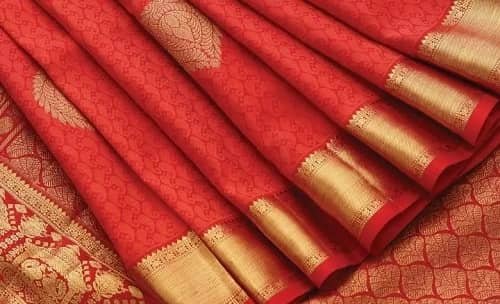
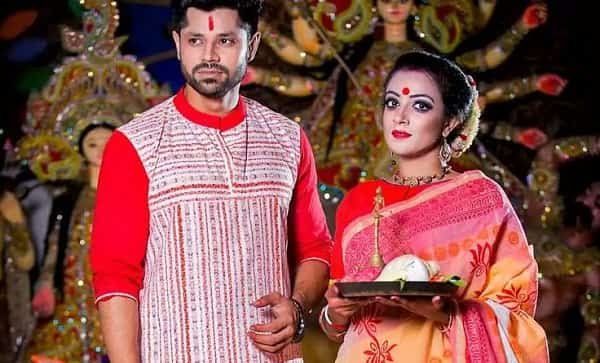
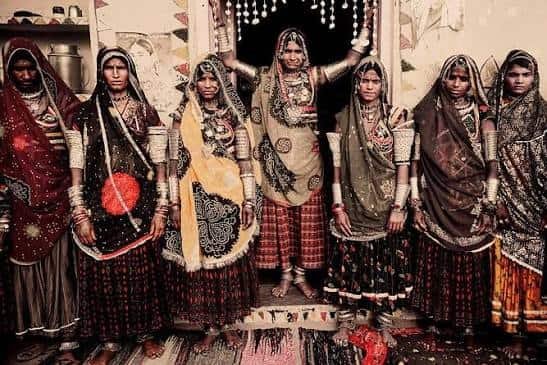
Gujarat — the Land of the Gurjans, the birthplace of Mahatma Gandhi, the trading hub that connected medieval India to the Arabian Sea’s global commerce routes — is a state where clothing is a visual language of extraordinary eloquence. No other Indian state has produced as many internationally celebrated textile traditions in as dense a concentration: the double ikat silk perfection of Patola from Patan, the resist-dye miracle of Bandhani from Kutch and Jamnagar, the natural block-print sophistication of Ajrakh from Kutch, the shimmering mirror-work embroidery of the Rabari community, the intricate Moti Bharat pearl embroidery of the pastoral tribes, the distinctive geometric weaves of Mashru fabric. Each of these traditions represents not just a craft but a complete cultural ecosystem — communities whose identity, livelihood, spiritual vocabulary, and social structure all find expression through the cloth they produce.
This extraordinary textile richness has a specific explanation: Gujarat has been a major international trading hub since at least the first century CE, when its ports at Surat, Bharuch, and Lothal connected India to Persia, Arabia, East Africa, and Southeast Asia. The merchant communities — Bania, Jain, Parsi, Bohra — who dominated this trade were both customers for and promoters of Gujarat’s finest textiles, creating the economic demand that sustained generations of highly specialised weavers, dyers, and embroiderers. The result is a state where the finest garments are genuine heirlooms — a Patola silk saree that takes six months to weave and costs more than a car is not an extravagance but an investment in a textile whose colour will not fade and whose design will not date.
| Garment | Worn By | Fabric / Technique | Occasion |
| Kediyu (Angrakhu) | Men | Cotton, Silk | Navratri, Festivals |
| Dhoti | Men | Cotton, Silk | Daily, Religious |
| Chorno | Men | Cotton | Daily, Festivals |
| Pagdi / Phento / Phentdi (Turban) | Men | Cotton, Bandhani | Festivals, Weddings |
| Kurta | Men | Cotton, Silk | Daily, Festivals |
| Chaniya Choli (Ghagra Choli) | Women | Cotton, Silk with Embroidery | Navratri, Weddings |
| Patola Silk Saree | Women | Double-Ikat Silk | Weddings, Ceremonial |
| Bandhani Saree | Women | Tie-Dye Cotton or Silk | Weddings, Festivals |
| Panetar Saree | Women (Brides) | White and Red Silk | Wedding (Bridal) |
| Gharchola Saree | Women | Red Silk with Zari Checks | Wedding, Festivals |
| Odhni (Dupatta) | Women | Bandhani, Silk | Daily, Festivals |
| Abha / Kanjari (Kutch Blouse) | Kutch Women | Embroidered Cotton | Daily, Festivals |
| Rabari Dress | Rabari Tribal Women | Embroidered Cotton | Daily, Cultural Events |
Traditional Dress of Gujarat for Men
1. Kediyu (Angrakhu)
The Kediyu — also called Angrakhu — is the most visually distinctive and most immediately recognisable traditional upper garment for Gujarati men, and the garment that has become the defining element of male traditional dress in the context of Navratri, India’s most spectacular nine-night dance festival. The Kediyu is a short, flared, frock-like kurta with a pleated or gathered body that creates a full, swinging silhouette when the wearer moves — and movement is precisely the point, because the Kediyu was designed for the energetic, spinning movements of Garba and Dandiya Raas, Gujarat’s celebratory folk dances. The flaring design ensures that the garment moves with the dancer rather than restricting his movement, and the pleats allow the full range of motion required for vigorous partner dances.
For Navratri specifically, Kediyus are produced in vibrant, festive colours — deep blues, rich reds, emerald greens, bright yellows — typically adorned with mirror work (Shisha), embroidery, and decorative detailing that makes the dancer a visual spectacle under the festival lighting. The Kediyu paired with Chorno is the non-negotiable male Navratri costume, worn with the Bandhani Pagdi turban to complete the full traditional Gujarati male festival look.
2. Dhoti
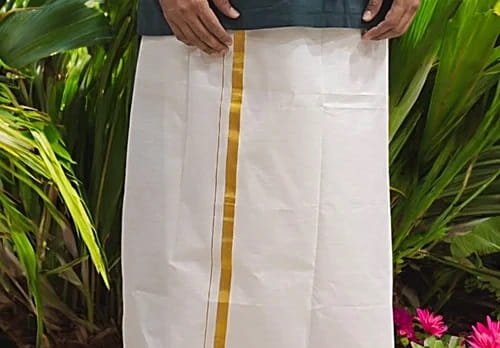
The Dhoti is the traditional lower garment for Hindu Gujarati men — a rectangular piece of unsewn cotton cloth wrapped around the waist and legs in the manner common across India. For everyday use, Gujarati men wore white or light-coloured cotton Dhotis comfortable for the state’s warm climate. For formal, religious, and ceremonial occasions, silk Dhotis with decorative borders are worn, signalling the transition from daily to formal dress. The Dhoti is increasingly reserved for ceremonial and religious contexts in urban Gujarat, though it remains common daily wear in rural areas.
3. Chorno
The Chorno is the distinctive Gujarati version of traditional men’s lower-body dress — a type of cotton pants that are loose, baggy, and comfortable in a way that immediately distinguishes them from both the draped Dhoti and the tailored trousers of Western dress. Essentially a stitched alternative to the Dhoti, the Chorno fastens at the waist with either a drawstring or elastic, making it significantly easier to wear than the elaborate draping required for a Dhoti. Its loose cut allows free movement, making it particularly practical for the active dancing of Navratri and Garba celebrations. The Chorno’s ease of use has helped it maintain its relevance in contemporary Gujarati traditional dress even as the Dhoti has declined in daily use.
4. Pagdi / Phento (Turban)
The Pagdi — known as Phento or Phentdi in Gujarati — is the traditional turban worn by Gujarati men, particularly for festivals, religious ceremonies, and weddings. During Navratri, the Bandhani Pagdi — a turban cloth dyed using the tie-and-resist technique to create the characteristic dotted patterns of Bandhani work — is the festive headwear of choice, its vibrant colours complementing the Kediyu-Chorno ensemble. The Pagdi is a symbol of honour and dignity across Gujarat’s communities, and the specific way it is tied and the colour it appears in can communicate community identity and social standing to those who know how to read these visual codes.
5. Kurta
The traditional Kurta — a long, loose shirt — is the everyday upper garment paired with the Dhoti or Chorno for Gujarati men outside the specific Kediyu context. For formal occasions and weddings, embroidered Kurtas with zari work at the neckline and sleeve edges are preferred, while plain cotton Kurtas serve for daily wear across the agricultural and trading communities of rural Gujarat.
Traditional Dress of Gujarat for Women
1. Chaniya Choli (Ghagra Choli)
The Chaniya Choli is the definitive traditional dress of Gujarati women and the garment most immediately associated with Gujarat in the Indian and international imagination. A three-piece ensemble, it consists of the Chaniya (a full, floor-length flared skirt also called Ghagra), the Choli (a fitted embroidered blouse, also called Polku), and the Odhni (a long decorative scarf or dupatta worn draped over the head and shoulder). Together, these three pieces create the vibrant, swirling visual identity of Gujarati women’s festival dress — the garment in which millions of women dance Garba during Navratri’s nine nights.
The Chaniya is the centrepiece: a full skirt whose circumference allows it to flare dramatically when the wearer spins during Garba, creating the visual spectacle that defines the dance’s aesthetic. The most elaborate Chaniya Cholis feature dense mirror work (Shisha embroidery), threadwork embroidery, patchwork appliqué, and Bandhani printing across all three pieces. In Kutch and Saurashtra, the embroidery traditions of the Rabari, Ahir, and Mutwa communities produce some of India’s most technically accomplished and most visually spectacular Chaniya Choli embellishment, where each garment can take months to complete and functions as a wearable artwork.
2. Patola Silk Saree — The Queen of Indian Textiles
The Patola saree from Patan is, by virtually any measure of technical difficulty, rarity, and historical prestige, among the greatest textile achievements in human civilisation. Made using the double ikat weaving technique — in which both the warp and weft threads are individually resist-dyed before weaving begins, requiring the weaver to maintain perfect colour alignment through both thread systems simultaneously — a single Patola saree requires six months to one year of continuous work by a team of skilled weavers.
The Salvi community of Patan has practiced this technique for over 900 years, with the craft remaining within a tiny number of families who are its sole custodians. The result is a saree in which identical, perfectly aligned geometric patterns appear on both sides of the fabric simultaneously — mathematically impossible to achieve without the double ikat pre-dyeing process and extraordinarily difficult even with it. Historically worn by royalty and wealthy merchant families, Patola sarees were considered powerful enough to ward off evil spirits and were given as gifts to Southeast Asian royal courts. Contemporary Patola sarees range from Rs. 1 lakh to Rs. 5 lakh and above depending on complexity, taking their rightful place among the world’s most valuable handwoven textiles.
3. Bandhani Saree
The Bandhani saree is the most widely produced and most commercially accessible of Gujarat’s celebrated textile traditions — the tie-and-dye technique that produces the characteristic pattern of tiny, closely spaced circular dots across the fabric’s surface in vibrant colour combinations. Originating from Kutch and Jamnagar, where the Khatri community has practiced Bandhani for centuries, the process involves tying thousands of tiny pinches of fabric with thread to resist-dye them when the cloth is immersed in colour — the smaller and denser the tied dots, the more skilled the artisan producing them.
Bandhani sarees appear at virtually every significant life occasion in Gujarat: red Bandhani for weddings, yellow or orange Bandhani for festivals, the Mothara (dot) pattern specifically for auspicious occasions. The specific pattern of dots also communicates social information — certain Bandhani designs are associated with particular communities, marital stages, or cultural events, making the saree a visual text readable by those who know the code.
4. Panetar — The Gujarati Bridal Saree
The Panetar is the traditional bridal saree of Gujarat — a white saree with a bright red or pink border and red pallu, symbolising the simultaneous purity (white) and auspiciousness (red) of the bride at her wedding. Made from fine silk, the Panetar is gifted to the bride by her maternal uncle (mama) as part of the pre-wedding ceremony, and this specific act of gifting — the mama’s gift — is one of the most emotionally significant rituals in the Gujarati Hindu wedding. After the wedding ceremony, the bride changes into the Gharchola saree (described below) gifted by the groom’s family, making the transition from Panetar to Gharchola a textile-encoded narrative of her transition from her birth family to her marital family.
5. Gharchola Saree
The Gharchola is a traditional Gujarati saree in deep red or maroon, characterised by its distinctive woven check pattern created using zari (gold or silver thread) on a silk base. The checks of the Gharchola, filled with small woven motifs — figures of elephants, parrots, horses, and traditional geometric designs — produce a rich, structured visual pattern immediately distinguishable from the flowing designs of Bandhani or the precisely geometric patterns of Patola. The Gharchola is the saree that the groom’s family gives to the bride, worn after the wedding ceremony as the first garment the new bride wears in her husband’s home. Like the Panetar, the Gharchola functions as a textile ritual object — a garment whose giving and wearing encode the social and familial meanings of the wedding transition.
6. Odhni (Dupatta)
The Odhni is the traditional dupatta of Gujarati women, draped diagonally across the body and used to cover the head as a mark of modesty and respect in traditional contexts. When made from Bandhani-dyed fabric, the Odhni becomes one of the most visually vibrant accessories in the Chaniya Choli ensemble, its tiny dotted patterns catching light and movement as the woman walks or dances. Saurashtra’s women are particularly known for their distinctive Odhni styles and the elaborate embroidery that decorates their odhnis’ borders.
7. Abha and Kanjari — Kutch Women’s Blouse
Women of the Kutch region wear a distinctive blouse called Abha or Kanjari that immediately identifies the region within Gujarat’s diverse clothing landscape. A long, fitted blouse decorated extensively with mirror work (Shisha) and gold or silver thread embroidery, the Abha is the upper body garment that completes the embroidered skirt and Odhni ensemble characteristic of Kutch’s pastoral and tribal communities. The mirror work on the Abha is not merely decorative — the mirrors were historically believed to ward off the evil eye by reflecting negative energies, giving the embellishment a protective spiritual function alongside its visual brilliance.
8. Rabari Women’s Dress
The Rabari are Gujarat’s most celebrated pastoral tribe — semi-nomadic camel and cattle herders whose clothing represents the most technically elaborate and most visually spectacular of all Gujarati embroidery traditions. Rabari women’s dress consists of a heavily embroidered skirt, the Abha blouse with dense Shisha mirror work, and a Odhni, all worked with the Moti Bharat (pearl embroidery) and Rabari stitch that takes years to learn and weeks to execute for a single garment. The motifs on Rabari clothing draw from the desert landscape that the community traverses — scorpions, peacocks, camels, snakes, and the tree of life appear repeatedly in geometric, stylised forms. A complete Rabari wedding outfit can take an entire year to produce.
FAQs
Q. What is the Patola saree and what makes it unique?
The Patola is a double ikat silk saree woven in Patan, Gujarat, using a technique in which both warp and weft threads are individually resist-dyed before weaving, requiring the weaver to maintain perfect pattern alignment across both thread systems simultaneously. This creates identical patterns on both sides of the fabric. A single Patola requires six months to a year of work and is among the world’s most technically demanding handwoven textiles.
Q. What is Bandhani and where does it come from in Gujarat?
Bandhani is Gujarat’s ancient tie-and-resist dyeing technique, originating from Kutch and Jamnagar, producing the characteristic dotted pattern created by tying thousands of tiny fabric pinches before dyeing. The Khatri community has practiced Bandhani for centuries, and specific dot patterns communicate social information about the wearer’s community and marital status.
Q. What is the significance of the Panetar and Gharchola at a Gujarati wedding?
The Panetar — white with red border — is gifted to the bride by her maternal uncle and worn during the wedding ceremony. The Gharchola — deep red with zari check patterns — is gifted by the groom’s family and worn after the ceremony. Together, the two sarees textile-encode the bride’s transition from her birth family to her marital family.
Q. What is mirror work (Shisha) embroidery and why is it associated with Gujarat?
Shisha (mirror work) embroidery involves attaching small pieces of reflective glass to fabric using coloured thread in elaborate designs. Historically, the mirrors were believed to ward off the evil eye by reflecting negative energies. It is particularly associated with Kutch’s tribal and pastoral communities and appears on Chaniya Cholis, Abha blouses, and home furnishings.
Q. What is the Chaniya Choli and when is it worn?
The Chaniya Choli is Gujarat’s iconic three-piece women’s festival dress — a full flared skirt (Chaniya), fitted embroidered blouse (Choli), and decorative scarf (Odhni) — worn primarily during Navratri’s nine nights of Garba dancing and at weddings. Its full, swinging skirt is specifically designed for the spinning movements of Garba, making it a garment in which design and dance are inseparably integrated.