Every property transaction in India carries one cost buyers routinely underestimate — often by lakhs of rupees — simply because they didn’t budget for it separately from the purchase price itself. Stamp duty isn’t a broker’s fee or an optional add-on; it’s a mandatory government tax that makes your ownership legally enforceable, and getting the basics wrong can genuinely delay or derail your registration. Here’s exactly what it is, how it’s calculated, and who’s actually responsible for paying it.
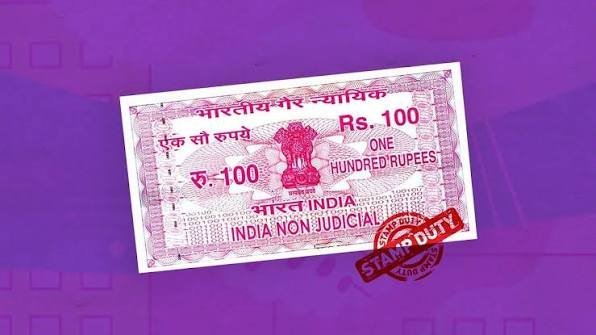
What Is Stamp Duty?
At its core, stamp duty is what transforms a private agreement between two parties into a document the law actually recognizes.
- Stamp duty is a tax levied on legal instruments — documents that record a transaction or create a legal right — and it must be paid before or at the time the document is executed
- It’s governed by the Indian Stamp Act, 1899, one of India’s oldest pieces of tax legislation, still firmly relevant well over a century later
- Under Entry 63 of the State List in the Seventh Schedule to the Constitution, stamp duty on property sale deeds is a state subject, which is exactly why rates vary so dramatically from one state to the next
- Paying it serves three practical purposes: it makes the document legally valid, allows it to be presented as evidence in court, and generates revenue for the state government
Who Is Legally Responsible for Paying Stamp Duty?
This is the question that trips up more buyers and sellers than almost any other part of a property transaction.
- Under Section 29 of the Indian Stamp Act, the buyer is generally legally responsible for paying stamp duty, since they’re the one acquiring ownership rights and the document is executed for their benefit
- However, Section 29 opens with the phrase “in the absence of an agreement to the contrary” — meaning if the sale agreement explicitly states the seller will pay, or that the cost will be split between both parties, that arrangement holds legal weight instead
- In practice, most sale agreements in India stay silent on this point, which simply leaves the statutory default — buyer pays — firmly in place
- Kerala is the principal exception to this general rule — there, stamp duty itself is paid by the buyer, but a separate transfer duty specifically falls on the seller, a split fixed by state law that isn’t negotiable within the sale deed
- In competitive markets or builder-led sales, a builder may sometimes offer to absorb stamp duty costs as part of a promotional offer, though this cost is typically just factored back into the overall pricing rather than genuinely disappearing
How Stamp Duty Rates Vary Across India
There’s no single national stamp duty rate, and the variation between states is genuinely substantial — often the single biggest factor determining your total transaction cost.
- As of 2026, rates broadly range from roughly 3% to 8% of the transaction value, depending entirely on which state the property sits in
- Some concrete examples: Telangana charges around 4%, Kerala charges roughly 8%, Maharashtra sits around 5–6%, Gujarat around 4.9%, and Karnataka uses a graduated structure ranging from 2% to 5% depending on property value
- The spread between the cheapest and most expensive state is roughly four to five percentage points of property value — on a ₹1 crore flat, that’s the practical difference between paying ₹6 lakh and ₹11 lakh in stamp duty alone, purely based on which state you’re buying in
- Rates also differ within a single state — urban versus rural areas, residential versus commercial versus agricultural property, and different buyer categories can all attract different rates
- Women buyers receive a rebate in several states — Delhi, for instance, cuts its stamp duty rate by roughly a third when the property is registered solely in a woman’s name, while Karnataka reduces its base rate further for lower-value properties as a deliberate affordable-housing concession
- Some states add extra layers — Andhra Pradesh, for example, adds an additional 1.5% transfer duty on top of stamp duty, a surcharge Maharashtra doesn’t apply
How Stamp Duty Is Actually Calculated
The percentage rate is only half the story — what that percentage gets applied to matters just as much.
- Stamp duty is calculated on whichever is higher — your actual negotiated transaction value or the property’s government-notified circle rate or guidance value for that locality
- This exists specifically to prevent buyers and sellers from colluding to declare an artificially low sale price purely to reduce their tax liability — the government-set floor value backstops the calculation regardless of what’s written in the agreement
- If you inherit an older sale agreement signed at a lower figure but the applicable circle rate or guidance value has since risen, stamp duty is calculated on that higher, current government rate — not the older agreement price
- Registration charges are calculated separately from stamp duty, typically around 1% of the transaction value, though several states apply a ceiling cap on this fee regardless of property value
How Stamp Duty Is Actually Paid
The payment process has become significantly more streamlined in recent years, though the fundamentals remain consistent.
- E-stamping through the state’s official portal (many states use stamps.gov.in) has become the most common method, letting you generate and pay for your stamp certificate digitally before printing the challan
- Non-judicial stamp paper remains the more traditional method, where physical stamp papers equivalent to the calculated stamp duty amount are purchased directly
- Stamp papers purchased in either the buyer’s or seller’s name remain valid for 6 months from the date of purchase, so timing your purchase relative to your actual registration date matters
- Payment is required before or during registration at the sub-registrar’s office, which is the final step that legally establishes your title to the property
What Happens If You Don’t Pay on Time
Delaying or skipping stamp duty payment carries genuinely serious consequences, not just a minor administrative penalty.
- Failure to pay stamp duty within the required timeframe means the government won’t officially recognize your ownership of the property
- Penalties for non-payment or delayed payment can range from 2% per month on the deficit amount, up to a maximum of 200% of the shortfall — a genuinely severe consequence for what might have started as a modest underpayment
- An improperly stamped document also cannot generally be used as legal evidence in court, which becomes a serious problem if a dispute ever arises over the property later
What Stamp Duty Is Not
A few related costs get frequently confused with stamp duty, and it’s worth being clear on the distinction.
- Capital gains tax is a completely separate tax the seller owes on their profit from the sale — it has nothing to do with stamp duty and is calculated under income tax rules, not the state stamp act
- TDS (Tax Deducted at Source) applies separately when the sale consideration is ₹50 lakh or more and the seller is a resident Indian — the buyer must deduct 1% of the gross consideration under Section 194-IA and deposit it with the government, but this is an advance deduction against the seller’s income tax, not an additional cost layered onto stamp duty
- Registration charges, while typically paid alongside stamp duty at the same time, are a legally distinct fee for the act of registering the document, calculated and capped separately in many states
FAQs
Q1. If my sale agreement doesn’t mention who pays stamp duty, does that mean it’s automatically split between buyer and seller?
No — when a sale agreement is silent on this point, the legal default under Section 29 of the Indian Stamp Act applies, meaning the buyer is responsible for paying stamp duty in full. A split or seller-paid arrangement only holds if the agreement explicitly states that arrangement in writing.
Q2. Can I pay a lower stamp duty by declaring a sale price below the property’s circle rate or guidance value?
No — stamp duty is always calculated on whichever is higher, your declared transaction value or the government-notified circle rate or guidance value for that property. Attempting to under-declare the price won’t reduce your stamp duty, since the government floor value backstops the calculation regardless of what’s written in your agreement.
Q3. As a woman buyer, how much can I actually save by registering the property solely in my name?
This varies significantly by state — Delhi, for example, reduces its stamp duty rate by roughly a third for women buyers, which can translate to meaningfully lower costs on a large transaction. Always verify the exact current rebate percentage with your state’s registration department, since these concessions are periodically revised and differ substantially across India.
Q4. What happens if I discover after registration that I underpaid my stamp duty?
You’ll be liable for the deficit amount plus a penalty, which can range from 2% per month up to a maximum of 200% of the shortfall depending on how the underpayment occurred and how long it went uncorrected. It’s genuinely worth double-checking your calculation against the current circle rate or guidance value before registration, since correcting an underpayment after the fact is considerably more costly than getting it right the first time.