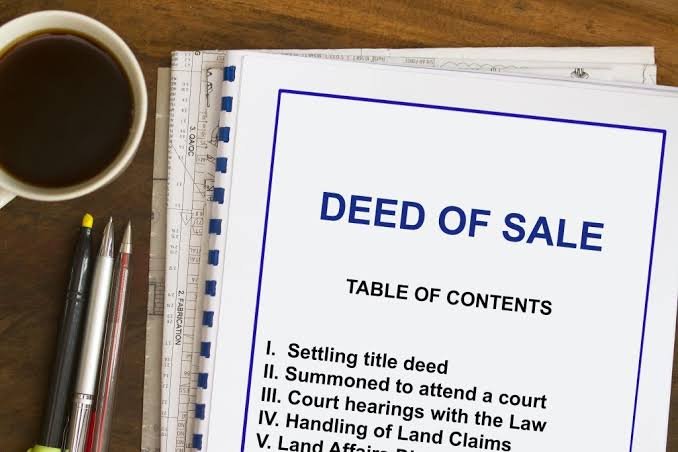
Here’s an uncomfortable truth many first-time buyers only learn the hard way: paying for a property and signing an agreement doesn’t actually make you the legal owner. That final, non-negotiable step is property registration — and skipping it, or treating it as a formality to “handle later,” is where a genuinely large share of Indian property disputes originate. Here’s exactly what it means, why it matters so much, and what’s changing about it in 2026.

What Is Property Registration?
Property registration is the government’s official acknowledgment that a specific transaction actually happened and that ownership has genuinely transferred.
- It’s the legal process of recording the details of a property and its ownership change in government records, through the relevant registration authority
- This process is primarily governed by the Registration Act, 1908, a piece of legislation over a century old that has shaped how Indian property transactions become legally binding
- A registered sale deed is the document that makes the transaction legally enforceable, puts the public on notice of the new owner’s title, and serves as admissible evidence in court
- Registration creates a public record and establishes priority among competing claimants — genuinely important if more than one party ever tries to assert a claim over the same property
Why Registration Is Legally Mandatory
This isn’t an optional formality you can defer — Indian law is explicit about this.
- Under Section 17 of the Registration Act, 1908, any sale or transfer of immovable property valued above ₹100 must be registered to be legally valid — a threshold so low it’s effectively meaningless today, meaning practically every real transaction requires registration
- An unregistered sale deed cannot be used as evidence of title in court, regardless of how legitimate the underlying transaction genuinely was
- If someone tells you “the agreement is enough for now” or “registration can be done later,” treat that as a serious warning sign — an unregistered document may look impressive on paper, but it carries no legal weight if a dispute ever arises
- Without registration, your ownership claim remains genuinely fragile, no matter how much money you’ve already paid or how long you’ve physically possessed the property
What Registration Actually Does — and Doesn’t — Guarantee
This distinction matters more than most buyers realize, and it’s worth understanding clearly before you assume registration alone protects you completely.
- Registration establishes that a transaction was officially recorded and creates a public record of it — this genuinely matters for legal enforceability and priority among competing claims
- However, registration does not verify the seller’s underlying title — a landmark 2025 Supreme Court ruling (K. Gopi v. Sub-Registrar) confirmed the registrar’s role is purely ministerial, meaning a registered deed is proof a transaction was recorded, not proof that the seller genuinely had clear, undisputed ownership to transfer in the first place
- This is exactly why thorough due diligence — checking the property’s title history, obtaining an Encumbrance Certificate, and verifying there are no pending disputes — remains essential even for a property you plan to register properly
- Registration and title verification are two distinct steps, and skipping the second while completing only the first still leaves you exposed to genuine risk
The Property Registration Process, Step by Step
While specific procedures vary slightly by state, the core sequence remains broadly consistent across India.
- Check the applicable circle rate or guidance value for your locality, since this determines the minimum value your transaction can be registered against
- Compute and pay stamp duty, calculated on whichever is higher — your actual transaction value or the government circle rate
- Draft the sale deed, printed on the appropriate stamp paper or generated through e-stamping
- Book a Sub-Registrar appointment, typically done online through your state’s IGRS (Integrated Grievance Redressal System) or equivalent property registration portal
- Attend in person with all parties — buyer, seller, and two witnesses — for biometric verification and document submission at the Sub-Registrar’s office
- File for mutation afterward in the local revenue records, a separate follow-up step that updates the government’s land ownership records to reflect your name
Documents You’ll Need
Having your paperwork genuinely complete before your appointment prevents the most common cause of registration delays.
- PAN card — mandatory for any property transaction above ₹30 lakh under Section 139A of the Income-tax Act
- Aadhaar card — original and a photocopy, now required in most states specifically for biometric capture during the registration process
- Passport-size photographs — typically two recent color photographs of each party involved
- Address proof — voter ID, driving license, a recent electricity bill, or passport
- Date-of-birth proof — passport, school leaving certificate, or birth certificate
- Form 60 — required only if you haven’t yet been allotted a PAN, as a self-declaration under the relevant income tax rule
- For NRI buyers specifically — a valid passport, valid visa, OCI card where applicable, NRE or NRO account statements, and a registered Power of Attorney if the buyer cannot be physically present for the registration itself
- If any of the seller’s documents are missing, unclear, or contested, the entire registration stalls until that issue is fully resolved — this is worth confirming well ahead of your scheduled appointment
What Registration Costs Beyond Stamp Duty
Registration carries its own separate fee, distinct from the stamp duty itself.
- The registration fee typically runs around 1% of the property value, though many states apply a fixed capped amount instead, commonly somewhere between ₹30,000 and ₹50,000 depending on the specific state
- This means that for very high-value properties, you may end up paying only the capped limit rather than the full 1% calculation
- Rates and caps vary meaningfully by state, so always verify current figures directly through your state government’s website or your local Sub-Registrar Office portal rather than assuming a generic national figure applies
What’s Changing: The Registration Bill, 2025
A significant reform is underway to modernize a process that has run largely unchanged for over a century.
- The central government introduced the Registration Bill, 2025, intended to replace the Registration Act, 1908, which had governed this process for more than 100 years
- This reform specifically addresses long-standing issues with the old system — heavy manual paperwork, inconsistent procedures between states, processing delays, and large-scale property fraud
- The new framework provides the legal foundation for electronic registration, digital storage of deeds, and automated verification — a genuine structural shift for a process that has historically required extensive physical documentation
- Most states are also rolling out the National Generic Document Registration System (NGDRS) as part of this broader 2025–26 reform push, aimed at standardizing and digitizing registration processes across the country
- Despite these digital advancements, physical presence at the Sub-Registrar’s office remains mandatory for now — fully online registration isn’t yet possible, even as more of the surrounding paperwork moves digital
Why Skipping or Delaying Registration Is a Genuine Risk
A few concrete consequences make clear why this step deserves the same seriousness as the purchase price negotiation itself.
- Without registration, you have no enforceable legal claim to the property, regardless of how much you’ve paid or how long you’ve occupied it
- Registered properties unlock practical benefits an unregistered transaction simply can’t offer — including mortgage and home loan eligibility, since lenders require a registered title as security
- A properly registered property also ensures smooth inheritance transfers for your heirs, avoiding the legal complications that arise when ownership documentation is incomplete or contested
- Most people only fully grasp the stakes when a dispute actually arises — by which point, resolving an unregistered or improperly documented transaction becomes significantly harder and costlier than doing it correctly from the start
FAQs
Q1. Does registering a property guarantee that the seller actually had clear legal title to sell it?
No — a 2025 Supreme Court ruling confirmed that a registrar’s role during registration is purely ministerial, meaning registration only proves a transaction was officially recorded, not that the seller’s underlying ownership was genuinely clear and undisputed. This is precisely why independent title verification and an Encumbrance Certificate check remain essential steps, separate from registration itself.
Q2. Is property registration different from mutation, and do I need to do both?
Yes, they’re distinct steps — registration is the legal act of recording the sale deed with the Sub-Registrar, while mutation is a separate, subsequent process that updates local revenue records to reflect your name as the new owner for property tax and administrative purposes. Both matter, and mutation should be filed as a follow-up step after your registration is complete.
Q3. Can I complete property registration entirely online without visiting the Sub-Registrar’s office?
No — while much of the preparatory process, including appointment booking and stamp duty payment, has moved online, physical presence at the Sub-Registrar’s office remains mandatory for the actual registration, including biometric verification of all parties and witnesses. Fully online registration isn’t yet possible in India, even with the digital reforms introduced through the Registration Bill, 2025.
Q4. How long does the property registration process typically take from start to finish?
Once all documents are in order and your Sub-Registrar appointment is confirmed, the actual registration itself is often completed the same day in metro cities, though it can take up to a week in other areas depending on local office workload. The bigger time variable is usually document preparation and verification beforehand, particularly if the seller’s paperwork has any gaps or unresolved issues.