Every year, buyers discover — sometimes only after they’ve already paid and registered — that the property they bought was still carrying an old mortgage, a pending loan, or a legal dispute nobody mentioned. The single document specifically designed to catch that before it happens is the Encumbrance Certificate, and skipping this check is one of the most avoidable mistakes in Indian property buying. Here’s exactly what it is, what it reveals, and — just as importantly — what it doesn’t.
What Is an Encumbrance Certificate?
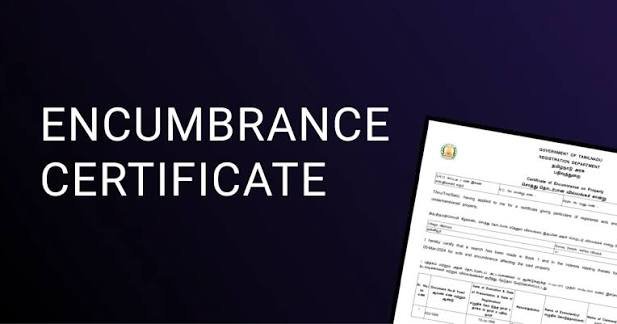
An Encumbrance Certificate, commonly abbreviated as EC, is essentially the property’s official financial and legal history, as recorded by the government.
- It’s an official document issued by the Sub-Registrar’s office, listing every registered transaction on a property — sales, mortgages, gifts, leases, court orders, and more — for a specified period you request
- Its core purpose is to verify that a property’s title is marketable and unambiguous, confirming there are no outstanding loans, liens, or legal claims attached to it
- The EC is issued at the level of the specific Sub-Registrar Office (SRO) under whose jurisdiction the property falls, since property registration in India is managed at the state and local level
- This document is genuinely essential for three types of people: property buyers verifying they’re not inheriting someone else’s legal or financial liability, home loan applicants whose banks require it before sanctioning any mortgage, and anyone handling inheritance or mutation matters
Form 15 vs. Form 16: What the Two Certificates Actually Mean
Every EC application results in one of exactly two outcomes, and understanding the difference is genuinely important.
- Form 15 is issued when the search finds one or more registered transactions on the property during your requested period — it lists every transaction chronologically, including the type of deed, document number, registration date, and the parties involved
- Form 16, often called a Nil Encumbrance Certificate, is issued when no registered transactions are found for that property during the requested period — this is the outcome most resale buyers hope to see
- A Form 15 isn’t automatically bad news — it simply means the property has a recorded history, which is normal for any property that’s changed hands, been mortgaged, or gone through inheritance at some point
- You cannot choose which form to receive — the outcome depends entirely on what the Sub-Registrar’s records actually show for that specific property and period
Why a Form 16 (Nil EC) Isn’t Automatically a Good Sign
This is the part most buyers get wrong, and it’s genuinely worth slowing down on.
- A Nil EC could mean the property genuinely had no registered transactions during that period — for example, if it’s been held by the same family for decades without any formal transfer
- It could also mean the search parameters were incorrect — a wrong survey number, the wrong Sub-Registrar Office, or an incorrect date range can all produce a false “clean” result
- It might indicate the property is registered under a different reference than what you searched — a parent property versus a subdivided plot, for instance, can produce mismatched records
- In the most concerning cases, a Nil EC can result from the property being unregistered or illegally constructed, meaning no legal records exist at all for the government to find
- Always verify why a Form 16 was issued by cross-checking against revenue records — documents like the pahani, 7/12 extract, or patta depending on your state — and confirm the property details in the EC exactly match what you’re actually buying
What an Encumbrance Certificate Does Not Cover
This limitation matters enormously and is frequently misunderstood.
- The EC can only reflect information based on registered transactions that were actually submitted to and recorded by the government
- Unregistered transactions will not appear in the EC at all, regardless of whether they genuinely exist or affect the property’s legal status
- This means an EC alone is not sufficient to guarantee a property is completely free of every possible complication — it’s one essential layer of due diligence, not the entire picture
- Pairing an EC check with independent title verification, a physical inspection of the property, and confirmation against local revenue records gives you a genuinely more complete picture than relying on the EC in isolation
How to Apply for an Encumbrance Certificate
The process varies meaningfully by state, since property registration itself is a state subject in India, but the core steps stay broadly consistent.
- Online application is now available in most states through their official registration department portal — Karnataka’s Kaveri Online Services and Kerala’s PEARL portal are two well-developed examples
- Offline application remains necessary in states without a digitized system — this involves visiting the Sub-Registrar Office directly, filling out Form 22, and submitting your documents in person
- Required documents typically include identity proof (Aadhaar, PAN, or voter ID), address proof, and detailed property identification — survey number, plot number, location, and boundaries
- You’ll need to specify the EC period you want covered — most banks specifically require encumbrance details covering at least 15 years before approving a home loan
- Application fees are relatively modest compared to overall property value, though the exact amount varies by state and by how many years of history you’re requesting — as an example, Kerala charges roughly ₹15 for the application plus ₹105 for a 5-year search or ₹265 for coverage up to 30 years
How Long It Takes and What It Costs
Processing time depends heavily on how digitized your specific state’s records are and how old the property’s history is.
- In fully digitized states like Karnataka, online EC applications can sometimes be processed instantly
- Most other states with online systems typically take 2 to 5 working days for processing
- Offline applications submitted directly at the Sub-Registrar Office generally take 3 to 15 working days, depending on office workload and how far back your requested period extends
- Records predating digitization — often anything before 1990 — take meaningfully longer to search and verify, since older records frequently exist only in physical registers rather than searchable databases
Why This Document Matters So Much in Practice
A few concrete scenarios make clear why skipping this check carries genuine financial risk.
- Banks won’t sanction a home loan without it — financial institutions require an EC, typically covering a minimum of 15 years, before approving any mortgage against a property, since they need assurance the property isn’t already pledged elsewhere
- Buyers use it to confirm marketable title — a clean EC (paired with proper cross-verification) gives genuine confidence that you’re not inheriting someone else’s undisclosed loan or legal dispute along with the property
- It’s required for mutation and inheritance matters — updating revenue records or transferring property through inheritance both typically require a current EC as supporting documentation
- It protects against the specific fraud pattern of hidden mortgages — a seller who has already mortgaged a property to a bank, then tries to sell it again without disclosing that debt, would typically be caught by a proper EC check before registration
FAQs
Q1. If I get a Form 16 (Nil EC), does that guarantee the property has absolutely no issues?
No — a Form 16 only confirms there are no registered transactions in the Sub-Registrar’s records for your specified search period, but it can’t catch unregistered transactions, disputes, or issues that never made it into official records. Always verify why a Nil EC was issued and cross-check the property details against local revenue records rather than treating it as an automatic clean bill of health.
Q2. How many years of encumbrance history should I request when applying for an EC?
Most banks specifically require encumbrance details covering at least 15 years before approving a home loan, so this is a reasonable minimum baseline even if you’re not financing the purchase. For high-value properties or ones with a genuinely uncertain history, requesting a longer period — sometimes up to 30 years — provides more thorough coverage, though it typically costs more and can take longer to process.
Q3. Can I apply for an Encumbrance Certificate online for any property in India?
It depends entirely on your state — property registration is a state subject, so digitization levels vary significantly. States like Karnataka and Kerala offer fully online application and often quick processing through dedicated portals, while other states may still require an in-person visit to the Sub-Registrar Office and a longer manual processing timeline.
Q4. Why does an Encumbrance Certificate matter even if I’m paying entirely in cash without a home loan?
Even without a bank involved, the EC protects you directly from unknowingly buying a property that’s already mortgaged, disputed, or otherwise legally encumbered, since these liabilities would typically transfer along with the property regardless of how you’re paying. Skipping this check simply because a lender isn’t requiring it removes an important layer of protection that genuinely matters for your own long-term ownership security.