Fancy dress competitions and themed celebrations are among the most joyful and creatively stimulating experiences in a child’s life — the opportunity to transform into a beloved character, a historical figure, a mythological deity, or a symbolic cultural icon through costume, makeup, and performance. In India, fancy dress events are a beloved tradition across schools, community functions, cultural programmes, and family celebrations — with children, parents, and grandparents all investing creative energy in designing costumes that are visually impressive, culturally meaningful, and appropriately expressive of a young girl’s personality and interests.
India’s rich tradition of mythology, history, cultural diversity, and storytelling provides an extraordinary reservoir of fancy dress inspiration for girls — from the powerful goddesses of Hindu mythology to the heroines of Indian independence, from classical dance forms to India’s vibrant regional cultural traditions. The best fancy dress costumes for Indian girls combine visual impact with educational value, encouraging children to learn about the characters and traditions they embody through the process of preparing their costume and presentation. This guide covers five of the most popular, most visually impressive, and most culturally meaningful fancy dress ideas for Indian girls.
| Rank | Character/Theme | Difficulty | Approximate Cost | Best For |
| 1 | Goddess Durga / Lakshmi | Medium | ₹500–₹2,500 | School functions, Navratri |
| 2 | Rani Lakshmibai | Medium | ₹600–₹2,000 | Republic Day, Independence Day |
| 3 | Classical Dancer (Bharatanatyam) | Low–Medium | ₹800–₹3,000 | Cultural programmes |
| 4 | Indian Bride | Low | ₹400–₹1,500 | Weddings, cultural events |
| 5 | Garba / Navratri Dancer | Low | ₹400–₹1,200 | Navratri, cultural events |
1. Goddess Durga or Goddess Lakshmi
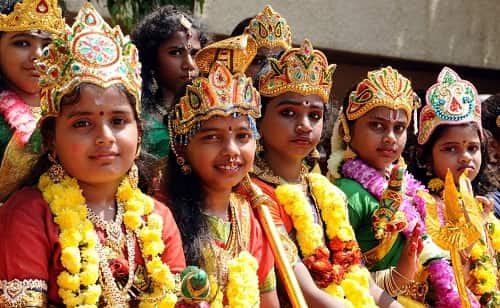
Dressing as one of India’s powerful and beloved Hindu goddesses is consistently the most popular and most visually impressive fancy dress choice for Indian girls — combining extraordinary visual impact with deep cultural and mythological significance that makes the costume meaningful far beyond its aesthetic appeal. Goddess Durga — the warrior goddess who slays the demon Mahishasura to protect the cosmos — and Goddess Lakshmi — the goddess of wealth, prosperity, and auspiciousness — are the two most frequently chosen divine figures, each offering distinctive costume elements and symbolic narratives.
Durga costume — A royal silk or silk-like lehenga or saree in red, orange, or gold with heavy embellishment, a crown (mukut) in gold with traditional design elements, multiple costume arms (achievable with clever costume design or props), and symbolic items like a trishul (trident) and sword. Face makeup with vibrant colours, a third eye drawn on the forehead, and a red bindi complete the divine appearance. The costume’s visual grandeur — particularly the crown and the multiple arms — creates an immediately recognisable, photographically spectacular presentation.
Lakshmi costume — A silk saree in pink or gold tones, a lotus flower as a hand prop, gold jewellery layered across wrists, neck, and ears, a gold crown, and lotus-themed face painting. The characteristic gesture of Lakshmi with one hand raised in blessing (abhaya mudra) and gold coins flowing from the other makes for a memorable performance presentation.
Preparation tips — Craft shops and Amazon India stock affordable mukuts, props, and fabric trimmings that create professional-quality costumes without excessive expense. Practise a short Sanskrit shloka or a verse from the Devi Stuti for the performance component, which adds genuine educational depth to the visual spectacle.
2. Rani Lakshmibai — The Warrior Queen
Rani Lakshmibai of Jhansi is India’s most celebrated historical heroine — the queen who led her forces against the British East India Company in the 1857 uprising and became a symbol of courageous resistance that has inspired generations of Indian women. For school fancy dress competitions — particularly around Republic Day (26 January), Independence Day (15 August), and history-themed events — Rani Lakshmibai is the most powerful and most educationally meaningful character choice a girl can make.
Costume elements — A royal saree or warrior-style lehenga in white, which is most associated with Rani Lakshmibai’s iconic imagery, or in royal blue, gold, or maroon for variation. A sword (prop) is the most immediately recognisable identifier. A military-style sash across the chest, a crown or royal headpiece, a shield, and royal jewellery complete the warrior queen look. Some presentations incorporate a baby doll tied to the back in a shawl — referencing the historical account of Lakshmibai carrying her son Damodar on her back during the battle of Jhansi, which is one of the story’s most powerful images.
Performance component — Memorising a few lines of the famous poem by Subhadra Kumari Chauhan — “Khoob ladi mardani, woh to Jhansi wali rani thi” — provides a powerful verbal component that judges and audiences consistently appreciate. The combination of visual impact and literary recitation makes this one of the most complete and most award-winning fancy dress presentations.
3. Classical Indian Dancer — Bharatanatyam
A classical Bharatanatyam dancer costume transforms any girl into a vision of Indian cultural heritage — combining the extraordinary visual richness of classical dance attire with the opportunity to perform actual dance movements that bring the costume alive in a way that purely static costumes cannot. Bharatanatyam — Tamil Nadu’s ancient classical dance form with origins in temple dance traditions dating back over 2,000 years — has one of India’s most visually spectacular costumes, instantly recognisable even to audiences unfamiliar with the dance form’s technical intricacies.
Costume elements — A silk costume in a rich jewel tone (typically red, green, or royal blue) with gold zari border, comprising a fitted blouse, a pleated front piece (the characteristic fan-shaped arrangement of pleated fabric that opens when the dancer takes the characteristic bent-knee aramandi position), and side pleats. The jewellery set — including the characteristic headpiece with jada (hair ornament), sun and moon ear ornaments, temple jewellery necklace, bangles, and waist belt — is commercially available as a complete classical dance costume set from dance supply shops across India at ₹500–₹2,000.
Completing the look: kolam (the classical dot pattern makeup) applied to the face, particularly the large kohl-lined eyes with extended eyeliner wings, the prominent red lips, and the characteristic red and white dots (pottu pattern) at the temples. Bells (ghungroos) tied around the ankles add the authentic sound dimension that makes even simple dance movements feel ceremonial.
4. Indian Bride
The miniature Indian bride is one of the most universally adored fancy dress presentations — a costume that combines the visual splendour of Indian bridal tradition with a child’s natural delight in dressing up in elaborate finery. The appeal of this costume crosses all ages, all regional backgrounds, and all cultural contexts — the image of a beautifully dressed small girl in bridal attire creates an instant emotional response of warmth and delight in any audience.
Costume elements — A red or pink lehenga choli or silk saree in the regional bridal style of the family’s tradition — South Indian brides in Kanjivaram silk, North Indian brides in embroidered silk or velvet lehenga. A tikka (maang tikka) on the forehead parting, glass bangles in red and gold stacked up both arms, a maathapatti (side headpiece), heavy necklace, earrings, nose ring (clip-on bindi can substitute), and a dupatta draped bridal style over the head.
Bridal henna (mehendi) applied on the hands — even simple geometric patterns work beautifully — and red and white alta (traditional foot decoration) on the feet complete an authentically bridal appearance. The costume is particularly endearing on young girls because the contrast between the elaborateness of the bridal ensemble and the child wearing it creates the visual delight that makes this presentation consistently memorable.
5. Garba / Navratri Dancer
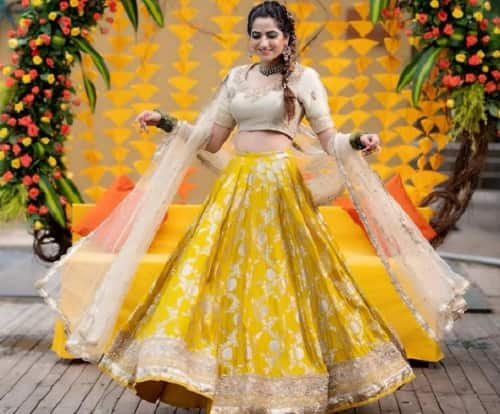
The Garba dancer costume — worn for Navratri celebrations and cultural events across India — is one of the most colourful, joyful, and movement-friendly fancy dress options available, allowing girls to participate actively in actual Garba dance performance alongside wearing the costume as a static presentation. Gujarat’s Navratri is one of the world’s largest annual cultural celebrations, and the traditional Garba costume’s vibrant colours, mirror work, and festive energy make it immediately recognisable as Indian cultural heritage.
Costume elements — A traditional Gujarati chaniya choli (three-piece outfit comprising a flared skirt, cropped blouse, and dupatta) in vivid colours with extensive mirror work (shisha embroidery), bright border patterns, and the characteristically full, flared skirt that creates a spectacular visual effect when the dancer spins in the Garba circle. A traditional hair bun with a flower arrangement, multiple bangles in contrasting colours, and garba-specific jewellery complete the authentic appearance. Dandiyas (the traditional wooden sticks used in Dandiya Raas dance) as props allow for actual performance participation.
Frequently Asked Questions (FAQs)
Q: What are the best fancy dress ideas for girls in school competitions?
A: Goddess Durga, Rani Lakshmibai, and classical dancer costumes consistently win in school competitions for their combination of visual impact and cultural educational content.
Q: How can I make a fancy dress costume for my daughter at home?
A: Most Indian fancy dress costumes can be made with fabrics from local markets, craft supplies, and basic sewing. The crown (mukut) and jewellery for divine characters are affordable at ₹100–₹300 from craft shops.
Q: What is the best fancy dress for Republic Day competitions?
A: Rani Lakshmibai is the most appropriate and most impactful choice for Republic Day and Independence Day themed fancy dress competitions.