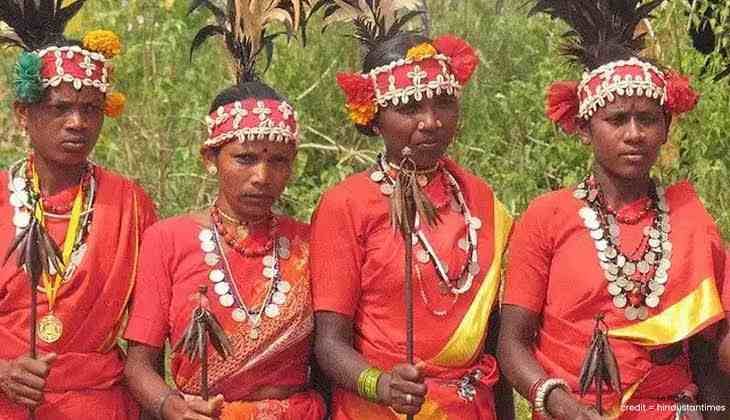
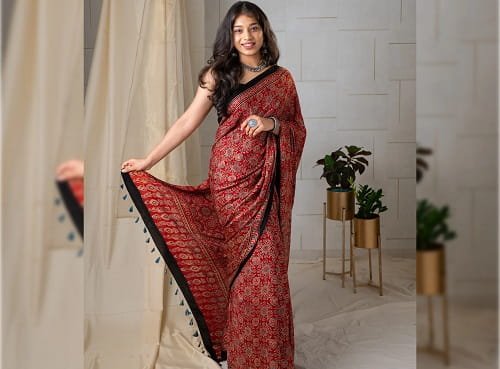
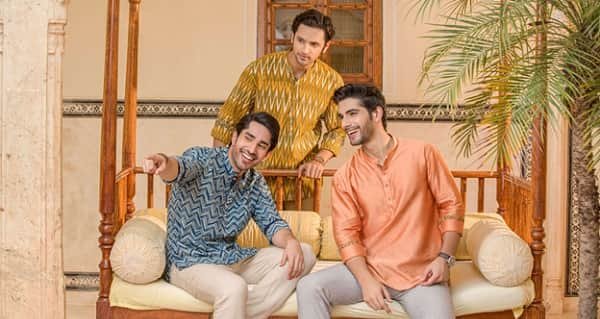
Tripura — the small, hilly, landlocked state in India’s northeast, sharing borders with Bangladesh on three sides and with Assam and Mizoram on the fourth, a land of dense bamboo forests, river valleys, historic palaces of the Manikya kings, and one of India’s most linguistically and tribally diverse populations — is a state where traditional dress is the most immediate and most legible expression of tribal identity in a region where nineteen officially recognised scheduled tribes and dozens of sub-tribal communities coexist within a territory smaller than many Indian districts.
The central fact of Tripura’s traditional dress is this: the cloth is woven by women, and the patterns encoded in the cloth carry information about the community of its weaver and wearer. Every Tripuri woman from the Tripuri (Kokborok-speaking) community — the largest tribal group in the state — traditionally knows how to weave. The Rignai she wears as her lower garment carries in its woven pattern the specific identification of her clan within the Tripuri social system. The royal tradition of King Subrai, to whom legends attribute two hundred and fifty Rignai patterns (one invented by each of his wives), reflects a historical reality: the Rignai pattern system was extensive, complex, and socially significant in a way that the casual observer wearing only the garment cannot appreciate without knowing the code.
This is dress as a visual language, worn daily, read constantly, and maintained across generations by the weaving knowledge that is simultaneously the most practical domestic skill and the most culturally significant artistic tradition in Tripura’s tribal world.
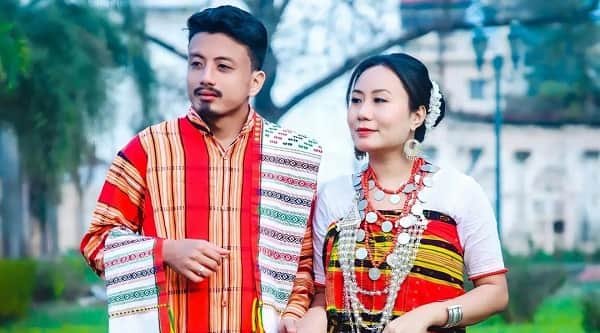
Traditional Dress of Tripura Quick Comparison
| Garment | Community | Worn By | Occasion |
| Rignai (Rinai) | Tripuri | Women | Daily, Festivals, Ceremonies |
| Risa (Risha) | Tripuri, all tribes | Women | Daily, Ceremonies, Festivals |
| Rikutu | Tripuri | Men (loin cloth) | Daily (historical), Ceremonies |
| Kamchwlwi Borok | Tripuri, all tribes | Men | Daily, Festivals |
| Dhuti Borok | Tripuri | Men | Ceremonies, Festivals |
| Kubai | Men | Men | Daily (shirt) |
| Kamchi | Men | Men | Head covering (summer) |
| Pachra | Reang (Bru) Women | Women | Festivals, Weddings |
| Rikharak | Reang (Bru) Men | Men | Ceremonial turban |
| Gamchatakbarak | Reang Men | Men | Loin cloth daily |
The Weaving Tradition of Tripura
Tripura’s textile tradition rests entirely on the backstrap loom — a simple but versatile weaving implement in which one end of the loom is attached to a fixed point (a post or tree) and the other end is attached to a belt around the weaver’s lower back, using the weaver’s body tension to maintain the warp’s tightness. This loom is found across Southeast Asia and in India’s tribal northeast, and it is the specific instrument through which Tripuri women have produced their distinctive textiles for centuries.
The thread is prepared from cotton grown locally or bought from markets, dyed using traditional natural dyes — red from the Achu tree and black from the Lela plant — and wound onto the loom in the specific pattern that will create the clan’s characteristic Rignai design. The designs are not drawn or traced; they are memorised and reproduced from the weaver’s knowledge of her clan’s pattern, passed from mother to daughter. The Bothai (design vocabulary) of each clan is its textile identity, and the most expert weavers are those who can reproduce the most complex Bothai patterns with the greatest precision.
The state government has recognised the Risa — the upper cloth — as a symbol of Tripura’s cultural identity, and has promoted its use in official contexts as a way of maintaining the tradition’s cultural visibility in a rapidly changing social landscape.
Traditional Dress of Tripura for Men
1. Rikutu (Loin Cloth / Waist Wrap)
The Rikutu is the traditional lower garment of Tripuri men — a piece of cloth worn around the lower body as a loin cloth or waist wrap, historically the primary male lower garment among the Tripuri and related communities. In its simplest form, it is a plain cloth in a single colour distinguished from the patterned Rignai that women wear, reflecting the Tripuri tradition in which the most elaborate textile artistry is concentrated in women’s dress. The Rikutu historically formed the complete male lower garment, worn without additional covering in the most traditional contexts. In contemporary practice, the Rikutu appears at ceremonies and cultural events while Western-style trousers have largely replaced it for daily use among younger men.
The Rikutu Gamcha is a specific variant — a smaller, towel-like cloth wrapped around the waist for daily practical use, functioning as both a waist covering and a multi-purpose cloth that can be used as a face cloth, head covering, or carrying cloth depending on the need.
2. Kamchwlwi Borok — The Traditional Shirt
The Kamchwlwi Borok is the traditional upper garment of Tripuri men — a short jacket or shirt in the characteristic Tripuri pattern, typically in vibrant red and black fabric with tribal geometric motifs woven or embroidered into the cloth. Without buttons in its most traditional form, the Kamchwlwi Borok is worn loosely, providing comfort in Tripura’s warm and humid climate while maintaining the visual identity of the tribal pattern. For festivals and ceremonies, more elaborately patterned versions replace the simpler daily wear versions, creating a garment whose visual complexity signals the formality of the occasion.
The Kamchwlwi Borok’s red and black colour scheme is the most consistently Tripuri visual signature in men’s dress — the same colour palette that defines the most characteristic Rignai patterns — creating a visual unity between men’s and women’s traditional dress that reflects the shared clan identity of couples and families.
3. Dhuti Borok — Ceremonial Lower Garment
The Dhuti Borok is the ceremonial version of the Tripuri male lower garment — a more formal cloth worn specifically at festivals, religious ceremonies, and important community events. It functions similarly to the Dhoti worn across mainland India but in specifically Tripuri proportions and with specifically Tripuri patterns. At the major festivals of the Tripuri community — Garia Puja (the most important Tripuri festival, celebrating the god of prosperity) and Ker Puja — men wear the Dhuti Borok with the Kamchwlwi Borok as the complete traditional ceremonial male ensemble.
4. Kubai — The Everyday Shirt
The Kubai is the everyday cotton shirt worn by Tripuri men for daily activities — a simple, loose-fitting shirt without elaborate patterning that prioritises comfort and practicality over ceremonial visual expression. Paired with the Rikutu Gamcha at the waist, the Kubai-and-Gamcha combination is the standard daily dress of rural Tripuri men, equivalent in function to the cotton Kurta-and-Dhoti combinations of other Indian states. Its simplicity contrasts with the more elaborate Kamchwlwi Borok worn for ceremonies, creating a clear distinction between daily and formal dress in Tripuri men’s clothing system.
5. Kamchi — The Head Covering
The Kamchi is a piece of cloth used by Tripuri men to cover the head during summer — a simple, functional head covering whose form is determined by the need for sun protection rather than by any elaborate ceremonial or social convention. Unlike the turbans and pagris of North Indian communities, the Kamchi is a straightforward cloth covering without the complex social signalling of elaborate turban tying traditions. For ceremonies, some men use the Rikharak — a more structured turban form — but the everyday head covering remains the simple Kamchi.
Traditional Dress of Tripuri Women
1. Rignai — The Clan-Identifying Lower Garment
The Rignai is the most culturally fundamental garment in all of Tripura’s textile tradition — the handwoven lower wrap-around skirt that forms the primary lower garment of Tripuri women and whose specific woven pattern identifies the clan of its wearer within the Tripuri social system. A standard Rignai is approximately 1.6 metres long and 1.2 metres wide — enough cloth to wrap around the lower body from waist to ankle and secure at the front. The cloth is wrapped around the hips and tucked in at the front, creating a simple, practical lower garment whose entire cultural complexity is concentrated in the pattern rather than the form.
The pattern vocabulary of Rignai is vast. Historically, different clans of the Tripuri community maintained their own specific Rignai designs — the Bothai — as the visible marker of clan membership, readable by any Tripuri woman who knew the system. The Chamathwi Rignai (white with red borders) is the most sacred and most ceremonially significant variant, worn by brides at traditional Tripuri weddings and for the most important ceremonies. The Kachak Rignai is the everyday working version in plain colours. The Lakhapati Rignai — with twenty-six pola (design steps) — was historically the most complex and most prestigious, woven only by the most skilled artisans. Other named variants include Sai Rongkho, Hengra Bar, and Thaipolog Bar, each representing a specific design tradition.
In contemporary Tripura, the strict clan specificity of Rignai patterns has relaxed considerably — inter-clan wearing of each other’s patterns is now common, and new designs are continually being created by contemporary weavers. But the tradition of identifying a woman’s clan by her Rignai pattern remains alive among those who know the older system, and the state government’s efforts to document and revive the lost patterns of legendary king Subrai’s collection reflect an awareness that this visual language is worth preserving.
2. Risa (Risha) — The Sacred Upper Cloth
The Risa is the upper cloth of the traditional Tripuri women’s ensemble — a piece of cloth approximately 1.5 metres long and between 30 and 50 centimetres wide, decorated with intricate handwoven patterns in bright colours, traditionally worn to cover the chest and upper body. The Risa’s function is practical — providing upper body covering — but its cultural significance extends far beyond its practical role. The Risa is the most frequently gifted and most symbolically loaded garment in Tripura’s tribal culture: it is presented by elders to young women at rites of passage, gifted between families at weddings, used to honour distinguished guests, and presented as a mark of respect at important community occasions.
In its traditional wearing, the Risa is draped over the chest with the two ends secured — a wearing mode that requires adjustment and skill. In contemporary practice, most Tripuri women wear a blouse beneath the Risa or have replaced the Risa entirely with a blouse for daily convenience, reserving the traditional Risa wearing for festivals and ceremonies. Young girls in contemporary Tripura often wear the Rignai with a modern top rather than the Risa.
The Risa’s design vocabulary — flowers, stars, geometric shapes — is created through the supplementary weft technique on the backstrap loom, with coloured threads inserted individually to build the pattern. The most elaborate and most finely detailed Risas take considerable time and skill to produce. The state government has promoted the Risa specifically as a symbol of Tripuri cultural identity and has encouraged its use in official and formal contexts within the state.
3. Rikutu — The Upper Shawl for Women
The Rikutu in the women’s context functions differently from the men’s waist loin cloth of the same name — for women, it is an upper body cloth worn as a shawl or additional layer, particularly during colder months and during winter ceremonies. The women’s Rikutu is plain in colour, providing warmth without the elaborate patterning of the Risa, and is draped over the shoulders and secured. During religious rituals and winter festivals, the combination of Rignai, Risa, and Rikutu creates the complete traditional Tripuri women’s ensemble.
4. Pachra — The Reang (Bru) Women’s Garment
The Pachra is the primary traditional lower garment of Reang women — the Reang (also called Bru) being one of Tripura’s major scheduled tribes, concentrated in the Jampui Hills. The Pachra is similar in structure to the Rignai but distinguished by the Reang community’s specific colour palette and pattern vocabulary: where Tripuri women typically prefer red-and-white Rignai patterns, Reang women favour black and white with additional colour accents that create a visually distinct aesthetic. The Risha worn by Reang women above the Pachra is also distinguished from the Tripuri version by specific design differences. At Reang community festivals — particularly Buisu, the harvest festival — the Pachra and Risha in their finest versions appear in the most elaborate forms that the community’s weaving tradition produces.
Tribal Diversity in Dress
Tripura’s nineteen scheduled tribes — including the Chakma, Mog, Halam, Lushai (Mizo), Kuki-Chin, Jamatia, and Noatia communities in addition to the Tripuri and Reang majorities — each maintain distinct dress traditions. The Chakma women, whose community spans Tripura, Mizoram, and the Chittagong Hill Tracts of Bangladesh, wear a distinctive two-piece dress of Pinon (lower cloth) and Khadi (upper cloth) in typically pastel colours with horizontal stripes. The Jamatia women wear the Rignai and Risha in characteristically Jamatia colour combinations — red and black are dominant — with patterns that distinguish them from the Tripuri clan patterns. Mog women wear a garment tradition related to the Burmese longyi rather than the Tripuri Rignai. Each community’s dress thus functions as a visual identifier in a social landscape of extraordinary diversity.
Festival Dress — Garia Puja
Garia Puja is the most important festival in the Tripuri religious calendar — a week-long spring festival celebrated to honour Garia, the god of prosperity, held in April. During Garia Puja, both men and women wear their finest traditional dress: women in the most elaborate Rignai and Risa their family possesses, men in Kamchwlwi Borok and Dhuti Borok. Traditional bamboo and cane headgear appears in the ceremonial performances. Musical instruments — traditional drums, flutes, and the characteristic Tripuri instruments — accompany the singing and dancing, all performed in traditional dress. Garia Puja is the primary occasion in contemporary Tripura where the full traditional dress system appears in its most complete and most culturally rich expression.
FAQs
Q: What is the Rignai and why does it carry clan identification?
A: The Rignai is the handwoven lower wrap-around skirt of Tripuri women, whose specific woven pattern (Bothai) historically identified the clan of the wearer within the Tripuri social system. Different clans maintained their own design vocabularies, making the Rignai a textile identity document readable by those who knew the pattern system. The Chamathwi Rignai in white with red borders is the most sacred variant, worn by brides.
Q: What is the Risa and why has it been adopted as a cultural symbol of Tripura?
A: The Risa is the upper body cloth of Tripuri women — a narrow, elaborately patterned cloth traditionally worn across the chest. Beyond its practical function, the Risa is the most frequently gifted garment in Tripura’s tribal culture, presented at rites of passage, weddings, and as marks of respect. The state government has promoted it as a symbol of Tripuri cultural identity and encouraged its use in formal contexts.
Q: What is the backstrap loom and why is it central to Tripura’s textile tradition?
A: The backstrap loom uses the weaver’s own body tension — one end attached to a fixed point, the other to a belt around the weaver’s waist — to maintain the warp. It is the universal weaving implement across Tripura’s tribal communities, the instrument on which all traditional Rignai, Risa, Pachra, and other handwoven textiles are produced. Weaving on the backstrap loom is traditionally every Tripuri woman’s skill.
Q: How does the Reang (Bru) community’s dress differ from the Tripuri tradition?
A: Reang women wear the Pachra (similar to the Rignai) and Risha, but in a distinctly Reang colour vocabulary — typically black and white with colour accents, rather than the Tripuri preference for red and white. Each tribe’s specific colour palette and pattern conventions create an immediately readable visual distinction between communities for those familiar with the local system.
Q: What is Garia Puja and why is it the most important traditional dress occasion in Tripura?
A: Garia Puja is the most important Tripuri festival — a week-long spring celebration in April honouring Garia, the god of prosperity. It is the primary occasion when the full traditional dress system appears in its most complete form: women in finest Rignai and Risa, men in Kamchwlwi Borok and Dhuti Borok, with traditional bamboo and cane headgear and ceremonial accessories completing the community’s collective cultural performance.