Building lean muscle is not just about lifting heavy weights. The nutritional environment you create around your training determines how efficiently your body repairs and grows muscle tissue after each session. Among all the protein sources athletes and fitness enthusiasts rely on, whey protein isolate has held its position as one of the most studied and consistently effective options for supporting muscle growth over decades of research.
Understanding what separates isolate from other protein forms and how to use it strategically can meaningfully improve training outcomes, whether you are just starting out or working at an advanced level.
What Makes Whey Isolate Different from Other Protein Types
Whey protein starts as a byproduct of cheese production. Through filtration processes, the fat, carbohydrate, and lactose content are progressively removed, leaving a higher-concentration protein product. Whey concentrate retains more of the original composition, which keeps costs lower but also keeps more fat and lactose in the product. Whey isolate takes the process further, removing the majority of non-protein components and producing a product that typically contains 90% or more protein by weight.
This matters for two practical reasons. First, the higher protein concentration means each serving delivers more of what muscles actually need, with fewer calories from sources that do not contribute to recovery. Second, the reduced lactose content makes isolate far better tolerated by people who experience digestive discomfort from standard whey products.
The Role of Absorption Speed in Muscle Synthesis
Muscle protein synthesis, the process by which muscle tissue is built and repaired, depends on having a sufficient supply of amino acids available at the right time. After training, the muscle is primed for uptake, and fast-absorbing proteins are particularly effective at capitalizing on this window.
Whey isolate is among the fastest-digesting complete proteins available. Its full essential amino acid profile, including a high leucine content, provides the signaling stimulus for muscle protein synthesis that slower proteins deliver less effectively.
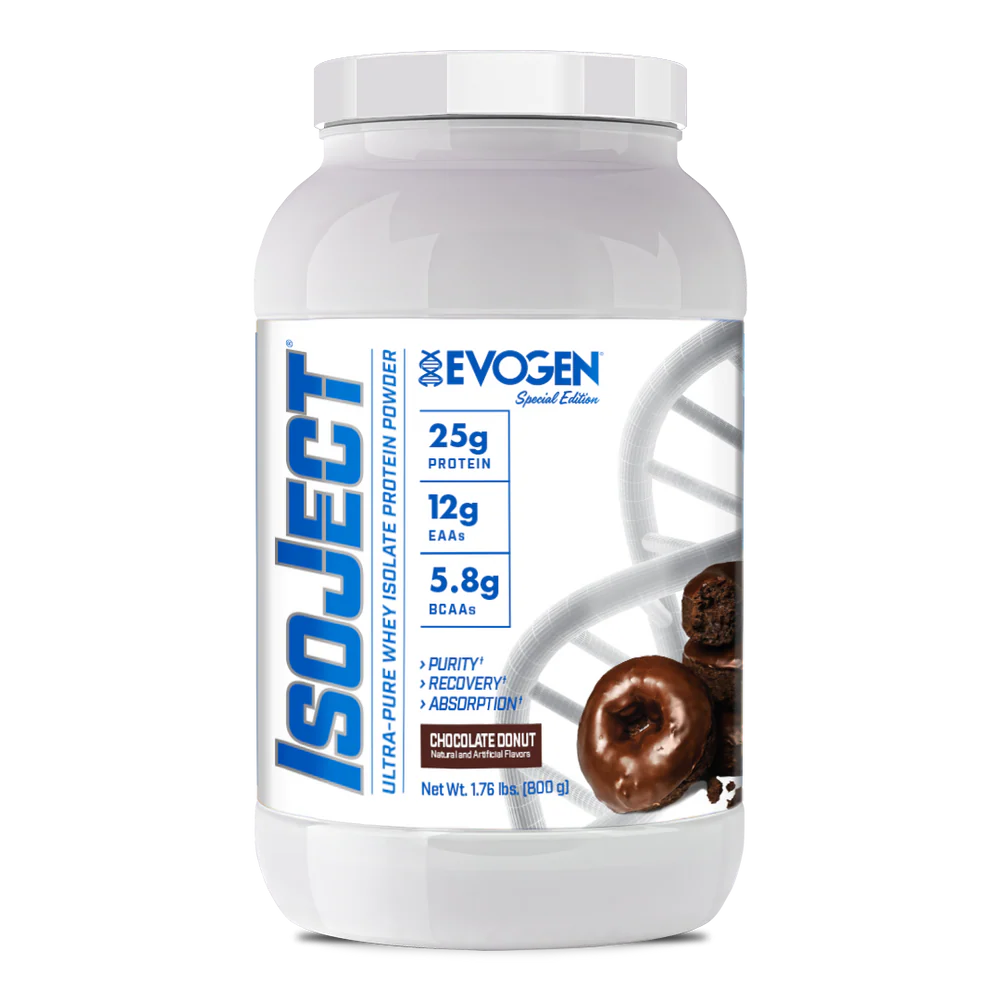
IsoJect from Evogen Nutrition is a whey isolate for muscle growth that uses a triple cold-filtration process to preserve bioactive whey fractions that contribute to recovery alongside the protein content. The IGNITOR enzyme system included in the formula is designed to improve amino acid uptake, making the delivery of protein to muscle tissue more efficient. It contains virtually no lactose or fat, is available in over 20 flavors, and is manufactured in cGMP-certified facilities.
Timing and Dosing for Maximum Results
The post-workout window is one of the most studied periods for protein consumption. Consuming 25 to 40 grams of a high-quality whey isolate within an hour of training supports the elevated muscle protein synthesis rate that occurs naturally after resistance exercise. However, total daily protein intake matters more than timing precision for most people. Hitting a daily target of 1.6 to 2.2 grams of protein per kilogram of bodyweight consistently will produce stronger results than perfectly timed but insufficient total intake.
Whey isolate can be used as part of breakfast, between meals, or post-workout depending on where the gap in daily protein intake is largest.
Frequently Asked Questions
What is the difference between whey isolate and whey concentrate?
Whey isolate is more refined, with a higher protein percentage per serving and lower fat and lactose content. Whey concentrate retains more of the non-protein components and is generally less expensive. For people with lactose sensitivity or those prioritizing protein density, isolate is usually the better choice.
Does whey isolate help with both muscle gain and fat loss?
Yes. High-quality protein supports muscle retention during a caloric deficit, which protects against fat-free mass loss during weight loss phases. During muscle-building phases, it provides the amino acids needed for tissue synthesis. The virtually zero fat and low carb content of a good isolate also fits cleanly into most diet structures.
How much whey isolate should I take per day?
Most people benefit from one to two servings of 25 to 30 grams per day, depending on how much protein they get from whole food sources. If diet provides adequate total protein, a single post-workout serving of isolate may be sufficient.
Is whey isolate suitable for people with lactose intolerance?
In most cases, yes. The filtration process that creates isolate removes the vast majority of lactose, making it well-tolerated by people who experience symptoms from concentrate or dairy products. Individual sensitivity still varies, so monitoring your response is always a reasonable approach.
What makes some whey isolates better than others?
Manufacturing quality, filtration method, and formulation matter significantly. Products made in cGMP-certified facilities with transparent ingredient labels, no proprietary blends, and additional features like enzyme systems for improved absorption represent the higher end of the category.