No — a juice shop cannot legally operate in India without FSSAI registration, and this holds true whether you’re running a tiny roadside sugarcane cart or a fully branded juice café with indoor seating. Given how much raw fruit, water, ice, and constant hand-contact goes into making a glass of juice, food safety regulators treat this category with genuine seriousness. Here’s exactly what the law requires — including a significant regulatory update that took effect in April 2026.
The Short Answer: FSSAI Registration Is Non-Negotiable
Whatever form your juice business takes, the same underlying legal requirement applies.
- Registration or licensing with the Food Safety and Standards Authority of India (FSSAI) is compulsory for all juice shops and juice businesses, without exception based on size or format
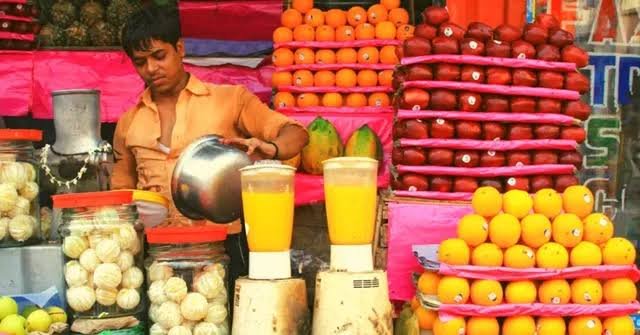
- This covers every variation you might imagine: fresh fruit juice sold from a shop or roadside stall, packaged or bottled juice, a juice café or juice lounge, a stall, cart, or kiosk, sugarcane juice, cold-pressed juice, milk-based shakes and smoothies, and sales taken through your own website, social media, or delivery apps like Swiggy or Zomato
- The reasoning is genuinely practical, not just bureaucratic — juice involves raw fruits, water, ice, and near-constant handling, all of which create real opportunities for contamination if hygiene standards aren’t consistently followed
- Operating without a valid FSSAI license carries real financial consequences: your shop can face fines of up to ₹2,00,000 or even temporary closure
What’s Changed: The April 2026 Regulatory Update
FSSAI significantly revised its licensing framework this year, and the changes genuinely matter for anyone running or planning a juice business.
- The Food Safety and Standards (Licensing and Registration of Food Businesses) Amendment Regulations, 2026, introduced key changes specifically aimed at simplifying registration for smaller operators while strengthening overall regulatory oversight
- The amendment expanded the definition of “petty food business operator” to explicitly include street vendors, hawkers, food trucks, temporary stall holders, and vendors distributing food at social or religious gatherings — closing ambiguity that previously left many small operators uncertain about their exact obligations
- Vendors already registered under the Street Vendors Act, 2014 are now deemed registered under the Food Safety and Standards Act, subject to continued compliance with hygiene standards — a genuinely useful simplification for street-level juice sellers who were already navigating one registration system
- Instant registration certificates are now available upon submission of required documents in many cases, cutting down what used to be a longer waiting period
- Importantly, licenses or registrations are now deemed suspended if annual fees or returns aren’t filed on time, and businesses cannot legally continue operating during that suspension period — a stricter enforcement mechanism than before
Updated Turnover Thresholds for 2026
Alongside the regulatory changes above, FSSAI significantly raised its turnover thresholds effective April 1, 2026, making classification considerably more generous for growing businesses.
- Basic Registration now covers annual turnover up to ₹1.5 crore — a substantial increase from the earlier ₹12 lakh threshold — and is intended for small, local operations
- State License now applies to businesses with turnover between ₹1.5 crore and ₹50 crore, again expanded considerably from the previous ₹12 lakh to ₹20 crore range
- Central License remains reserved for the largest operations, multi-state chains, and businesses involved in import or export
- This means many juice businesses that would previously have needed to upgrade to a State License at a relatively modest turnover can now remain under the simpler Basic Registration for considerably longer as they grow
Which License Actually Fits Your Juice Business
Matching your specific setup to the right license tier helps you avoid both under-compliance and unnecessary over-registration.
- Basic Registration suits roadside juice stalls, small kiosks and carts, and small independent juice shops just starting out or running at a genuinely local scale
- State License fits medium-sized, well-established juice cafés and juice bars, branded outlets, and juice shops operating within malls, markets, or commercial areas, once turnover crosses the Basic Registration threshold
- Central License becomes relevant only for large-scale operations, multi-state chains, or businesses engaged in import or export of juice products
- One practical nuance worth knowing: even for a genuinely micro-scale operation — a home delivery juice service or a seasonal stall in its very first weeks — many operators prefer applying directly for a State License from day one specifically to avoid the hassle of reapplying the moment turnover crosses the Basic threshold
How to Actually Apply
The process runs entirely through FSSAI’s official digital infrastructure.
- Applications go through the FoSCoS portal (Food Safety Compliance System), FSSAI’s designated online platform for registration and licensing
- Basic Registration typically requires only basic identity and address documentation, and in many cases, no inspection is required before issuance
- The registration or license is generally valid for 1 to 5 years, renewable directly through FoSCoS before it expires
- Processing typically takes around 3 to 7 working days, though this can vary by state and the completeness of your submitted documentation
- Fees range from as little as ₹100 per year for Basic Registration up to around ₹5,000 for higher-tier licenses, depending on the specific type and duration you select
Other Licenses You May Need Beyond FSSAI
FSSAI is the core, non-negotiable requirement, but a few additional registrations become relevant depending on your specific setup.
- Shop and Establishment License — required if you’re operating from a physical shop location, legally recognizing your business premises
- GST Registration — conditional based on your turnover crossing the applicable threshold, or if you’re selling through online platforms and need to issue proper tax invoices
- Municipal Health License — focused specifically on hygiene and sanitation standards at your local level, separate from but complementary to FSSAI requirements
- Fire Safety Certificate — becomes relevant for larger juice café setups that include indoor seating, given the additional occupancy and safety considerations
- Even a kiosk, cart, or rented small space typically requires at least the basic combination of FSSAI registration plus whatever local municipal permission applies to your specific location
Common Mistakes Juice Shop Owners Make
A few recurring errors show up consistently among new juice business owners, and avoiding them saves genuine time and money.
- Operating without any FSSAI registration at all, often based on the mistaken belief that a small roadside stall is somehow exempt from national food safety law
- Applying for a higher-tier license than necessary when Basic Registration would genuinely suffice, adding unnecessary cost and paperwork for an operation that hasn’t reached that turnover threshold yet
- Neglecting local municipal hygiene standards separately from FSSAI compliance — passing your FSSAI registration doesn’t automatically mean you’re meeting every local health department requirement
- Letting registration lapse without renewal, particularly risky now that licenses are deemed automatically suspended if annual fees or returns go unfiled, meaning you could unknowingly be operating illegally during a suspension period
FAQs
Q1. I run a small sugarcane juice cart on the street — do the new 2026 rules actually make things easier for me, or more complicated?
The 2026 amendment genuinely simplifies things for street-level vendors — if you’re already registered under the Street Vendors Act, 2014, you’re now deemed registered under the Food Safety and Standards Act as well, provided you maintain proper hygiene compliance. Combined with instant registration certificates now available for many petty food business operators, the process has become considerably more accessible for small, informal juice sellers than it was before this update.
Q2. My juice shop’s annual turnover is around ₹40 lakh — do I need a State License now, or does Basic Registration still cover me?
Under the updated 2026 thresholds, Basic Registration now covers annual turnover up to ₹1.5 crore, meaning a business turning over ₹40 lakh annually would still fall comfortably under Basic Registration rather than requiring a State License. This is a significant change from the earlier ₹12 lakh threshold, so if you registered before April 2026 based on older rules, it’s worth double-checking whether you’re now eligible to remain on the simpler Basic tier for longer.
Q3. What happens if I forget to renew my FSSAI registration or fail to file my annual returns on time?
Under the current regulations, your license or registration is deemed automatically suspended if annual fees or returns aren’t filed, and you cannot legally continue operating your juice shop during that suspension period. This makes timely renewal genuinely important, not just a minor administrative task, since continuing to sell juice while suspended would put you back in the same legal position as never having registered at all.
Q4. Do I need FSSAI registration if I only sell juice through a delivery app like Swiggy or Zomato and don’t have a physical storefront?
Yes — FSSAI registration is mandatory regardless of whether you’re selling through a physical shop, a roadside stall, your own website, social media, or a delivery app. Most delivery platforms will actually require proof of valid FSSAI registration before allowing you to list your juice business on their app in the first place.