Digital artwork refers to any visual artistic piece created, altered, or displayed via digital technology. Digital artists, instead of using traditional physical media like oil paint, acrylics, graphite, or clay, use computers, graphics tablets, smartphones, and software algorithms to render graphics, illustrations, and 3D models.
Traditional art is unique physical objects. Digital art is easily editable, infinitely reproducible, and often created with layers, brushes echoing real media, or generative AI. You can undo mistakes, experiment freely, and distribute the same high-quality file worldwide. But many artists are using both: working in traditional ways then digitizing, or beginning digitally and then printing physical editions.
What Makes a Product Walkthrough Video Dynamic and Engaging?
A dynamic walkthrough takes the viewer through a logical visual path rather than random angles of the product. Information should be conveyed gradually and without distraction in each scene. Each sequence is engaging from start to finish with balanced movement, thoughtful composition, and purposeful storytelling. Camera transitions should be used to seamlessly link each product feature and ensure consistency in visuals throughout the presentation. Focus should be given to materials, textures, and functional highlights without any distractions. A filmic presentation enhances the emotional impact and provides information. The pacing is good, ensuring that no scenes are repeated and that the viewing experience is memorable. It also enhances quality throughout all segments by having consistent lighting, framing, and product appearance.
Plan Your Product Walkthrough Before Generating the Video
Prior to production, good planning provides a clear direction. Be sure to include its primary purpose and highlight its top attributes. For flow, arrange scenes that have a beginning, middle, and end. Identify close-up, medium, and wide shots that make sense in each demonstration. Create accurate reference photos or videos to ensure the product looks in the generation. Choose settings that are appropriate for the intended use and expectations of the audience. Set up a consistent way to present before prompts for writing. The AI video generator simplifies the creation process, enabling structured and organized project development, and its versatility in customization guarantees a perfect fit for every user’s needs.
Seedance 2.5 Features That Enhance Product Walkthrough Videos
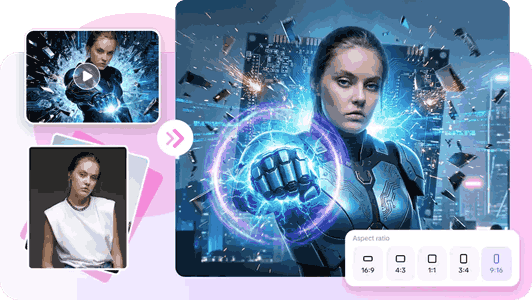
Pippit offers superior features to enhance product walkthrough quality as well as connected scene generation and realistic visual presentation. Seedance 2.5 allows for continuous videos up to thirty seconds long in one continuous video. Timestamp prompts help improve the accuracy of product moments with scenes. Using a camera in film style helps to add natural movement and transitions between demonstrations. Multi-modal references ensure that the product is kept consistent in its appearance, colors, composition, and styling in all sequences. The use of detailed textures, lighting, and material rendering significantly enhances the visual realism. Built-in green screen editing allows for background replacement post-generation in various promotional styles. Footage extension also remains demonstrations without having to repeat the entire creative process, which helps to present products for a longer time while maintaining good continuity.
Steps to Create Dynamic Product Walkthrough Videos with Seedance 2.5
Step 1: Prepare your product video idea
1. Sign up for Pippit using your Google, TikTok, or Facebook account information.
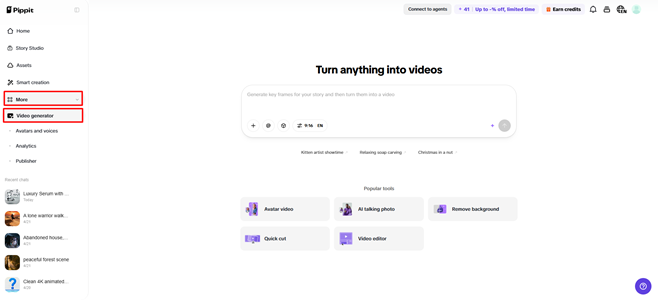
2. Go to the left vertical menu bar, open the “More” tab, and click “Video generator”.
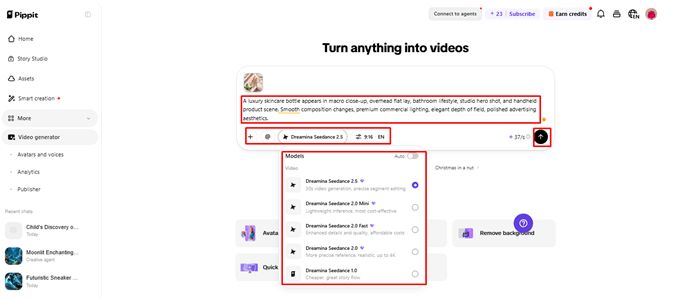
3. Select “Dreamina Seedance 2.5” to create engaging product walkthrough videos.
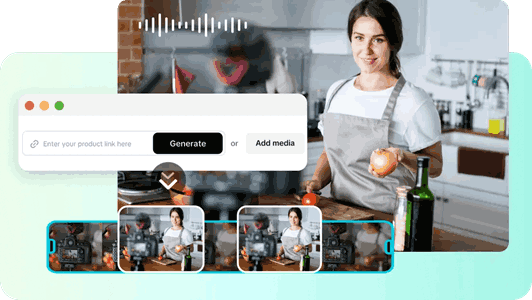
4. Enter a detailed text prompt describing your product, features, camera movements, scenes, and presentation style.
5. Choose the video length, language, subtitles, and aspect ratio according to your needs.
6. Click “+” to upload product images or videos from your device, phone, Dropbox, or a link. You can also select available assets.
7. After adding all details, click “Generate”.
Step 2: Create your product walkthrough video
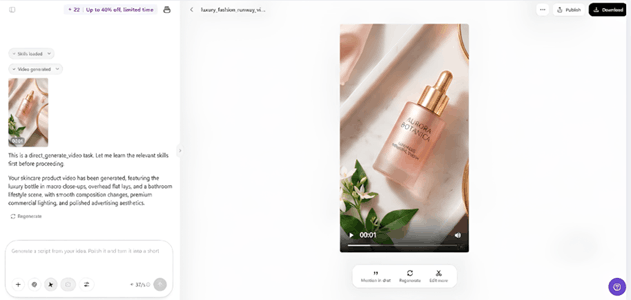
- After clicking “Generate”, Pippit’s AI video generator automatically creates a video using your product prompt and reference media.
- The AI handles transitions, pacing, captions, avatars, voice, lyrics, and visual enhancements for a smoother presentation.
- You will receive a video draft to review.
Step 3: Customize and publish your product video
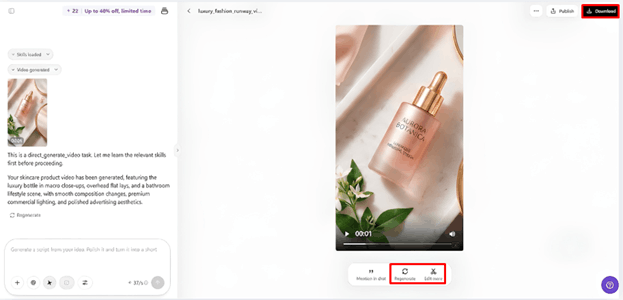
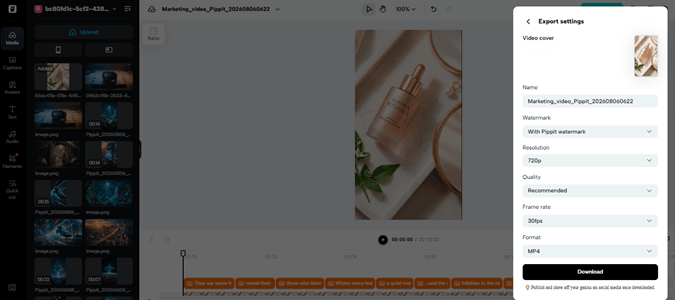
1. Click the “Download” tab at the top right corner to save your video. If required, click “Regenerate” for a new version or select the “Edit more” tab to customize it.
2. Adjust captions, add text descriptions, and modify text size, color, alignment, filters, and effects.
3. Add background music, remove backgrounds, and refine visuals to highlight product features.
4. Click “Export” when your product walkthrough is complete.
5. Select “Publish” to post on TikTok, Instagram, or Facebook, or click “Download” to save the video with your preferred format, resolution, frame rate, and quality.
Structure Every Scene for a Smooth Product Walkthrough
Each walkthrough should start with an attention grabber – a product introduction that sets the visual focus. There should be no abrupt scene changes leading viewers towards feature demonstrations. Close-ups should focus on materials, textures, craftsmanship, and/or unique design features. The scenes depict realistic interactions, showcasing the product’s use and movement with believability. Wides set up and help the overall storytelling progression. Balanced pacing avoids rushing through explanations or repeated demonstrations during the presentation. Conduct a memorable ending scene that will help to establish product identity and will make a lasting impression. Smooth sequencing is a way of reinforcing learning and providing a professional product.
Best Practices for Creating High-Quality Product Walkthrough Videos
Here are some useful tips to create consistently polished walkthrough videos:
- Use a clean hero shot to set up the shot and create visual interest right away.
- Introduce one feature at a time in a logical sequence of scenes.
- Make sure to upload accurate reference media to ensure product consistency.
- Transition between shots smoothly for cinema shots.
- Adjust the captions, colors, and effects before exporting.
- Use a uniform style for all the sequences generated.
Optimize Walkthrough Videos with Pippit’s Editing Tools
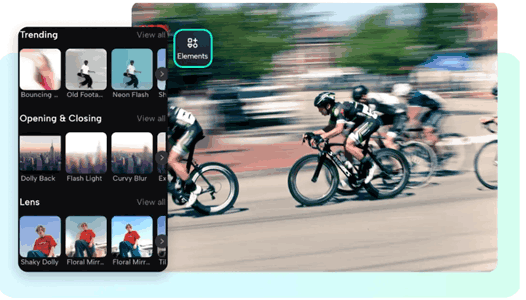
Editing turns a good draft into a good promotional tool. Enhance captioning for readability on various viewing devices and screen sizes. Select different layouts by moving text, graphics, alignment, and spacing to enhance clarity. Use filters wisely, don’t obscure critical product information, and do not alter natural product colors too much. Substitute backgrounds for different visual environments as needed for promotional campaigns. Include appropriate music that enhances the presentation, but not the narration or product demonstrations. Export at desired resolution, frame rate, and quality for publishing needs. Careful refinement enhances the presentation quality and ensures product accuracy on all platforms.
Common Mistakes to Avoid When Creating Product Walkthrough Videos
Several common pitfalls detract from otherwise good product presentations. Too much information in any given scene is distracting for the viewer and makes communication less effective. Using different reference materials causes appearance changes in sequences that are obvious. Ambiguous instructions yield erratic results and need further refinement at the end of the process. When you don’t follow the timestamp suggestions, they can throw off structured demonstrations and logical progression in storytelling. Too many visual effects divert attention from key product features rather than enhance them. Failure to go over the final editing review results in unnecessary errors in captions, color, transitions, or layouts. Before releasing any completed walkthrough, careful quality checks are carried out to enhance professionalism.
Practical Applications for Dynamic Product Walkthrough Videos
Dynamic walkthrough videos are used for various promotional activities in modern digital marketing strategies. Realistic demonstrations can boost buying confidence for e-commerce product listings. Product launch campaigns are used to promote new products by creating a compelling visual narrative. Short, connected, attention-grabbing demonstrations for vertical platforms are great for social media promotions. Informative visual presenters help to boost engagement on landing pages. Digital advertising creatives convey product value in a timely fashion and retain professional quality. Brand showcase videos reinforce the brand with visual uniformity. Marketplace demonstrations help to clarify functionality and assist with customer decision-making on competitive marketplace selling platforms.
Conclusion
Dynamic product walkthrough videos are a great way to communicate visually through a structured story and engaging presentation. Pippit makes production easier with continuous scene generation, timestamp direction, cinematic motion, consistency based on reference, and flexible editing. Polished walkthroughs are developed with well-planned and detailed prompts, accurate reference materials, and thoughtful refinements, and can be utilized for promotional campaigns, digital marketing, product showcases, and creative brand content on publishing platforms.