Energy costs represent one of the largest and most variable overhead expenses for UK businesses. Unlike fixed costs such as rent or payroll, gas and electricity bills fluctuate with market conditions, contract terms, and usage patterns, making them both difficult to predict and genuinely worth managing. For businesses that have never compared their gas tariff against the wider market, the potential savings can be substantial.
The commercial gas market in the UK is made up of more than 20 active suppliers, each offering different unit rates, standing charges, contract lengths, and service levels. Without a structured comparison, it is almost impossible for a business to know whether it is on a competitive rate or quietly overpaying. This is a gap that dedicated comparison services are designed to close.
What Business Gas Contracts Involve
Unlike domestic gas supply, commercial gas contracts are typically fixed for a set term ranging from one to five years. The pricing agreed at the start of the contract reflects wholesale market conditions at that point. This means businesses that renew at the right time, when wholesale prices are lower, can lock in competitive rates for an extended period. Conversely, businesses that miss their renewal window and roll onto out-of-contract rates face significantly higher unit costs until they switch.
Commercial contracts also come with certain conditions domestic customers do not face, including climate change levies, higher VAT rates (20% for most businesses versus 5% for domestic use), and fewer consumer protections. Understanding what is included in a quoted rate is important before committing.
The Comparison Process Is Simpler Than Many Expect
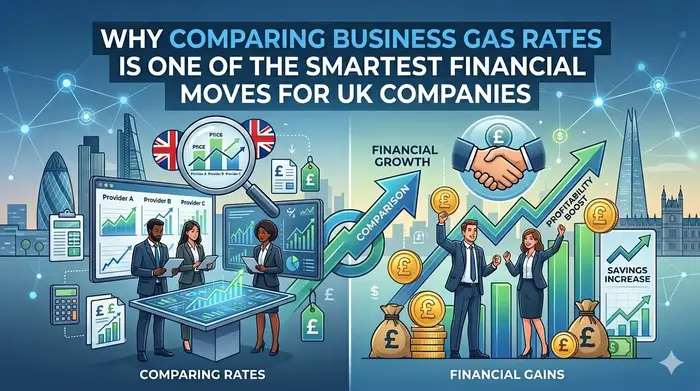
One of the main reasons businesses do not compare their gas tariff more often is the perception that switching is complicated or risky. In reality, the main risk is not switching. An established Business Energy Comparison service handles the entire process, from identifying current usage and supplier details using industry databases, to presenting live quotes from multiple suppliers, to managing the transfer on the customer’s behalf. Supply is never interrupted during a switch, and most businesses find the process straightforward.
The information typically needed to compare business gas prices includes the business postcode, current supplier, approximate annual gas consumption in kWh, and the contract end date.
When to Compare
Suppliers typically open a renewal window six to twelve months before a contract expiry. Comparing gas rates within this window, rather than waiting until the last moment or missing the renewal date entirely, gives the best chance of securing a competitive fixed rate rather than defaulting onto a higher rollover tariff.
Businesses with multiple sites can also benefit from comparison services that consolidate their energy portfolio, potentially securing volume-based pricing advantages that would not be available through a single-site contract.
Frequently Asked Questions
Q: How much can a business realistically save by switching gas suppliers?
Ans: Savings vary by usage, current tariff, and market conditions at the time of comparison. Businesses switching from default or out-of-contract rates tend to see the largest reductions.
Q: Will my gas supply be interrupted during a switch?
Ans: No. Switching gas suppliers is an administrative change. The gas itself continues to flow through the same infrastructure, supplied by the national network.
Q: How long does it take to switch business gas suppliers?
Ans: Once a new contract is agreed, the transfer typically completes within 17 to 21 business days.
Q: Can new businesses compare gas rates?
Ans: Yes, comparison services can work with new businesses that do not yet have an established usage history, providing estimated quotes based on the type of premises and expected consumption.
Q: What is an MPRN and do I need it to compare?
Ans: An MPRN (Meter Point Reference Number) is the unique identifier for your gas meter. It is helpful but not always required to start a comparison. Many comparison tools can identify it from the business address.