India is home to one of the world’s most ancient and diverse linguistic heritages. With over 19,500 languages and dialects recorded in the 2011 Census (many now endangered), the country’s linguistic history spans thousands of years across two major families: Indo-Aryan (from the Indo-European group) and Dravidian. Determining the “oldest” languages involves examining archaeological evidence, inscriptions, literary texts, grammar treatises, and linguistic reconstructions.
While spoken forms predate written records, scholars rely on earliest inscriptions, palm-leaf manuscripts, and classical literature to establish antiquity. Tamil stands out with evidence dating back over 2,000–5,000 years (depending on whether one considers literary or proto-forms), followed closely by Sanskrit. Other Dravidian languages like Kannada, Telugu, and Malayalam also boast rich early histories.
The Government of India has officially recognized 11 classical languages (as of 2025), which must demonstrate high antiquity (1,500–2,000+ years of recorded history), a valuable ancient literary heritage, and distinct evolution from modern forms. These include Tamil, Sanskrit, Kannada, Telugu, Malayalam, Odia, and five more added in 2024: Marathi, Pali, Prakrit, Assamese, and Bengali.
Here are the Top 5 Oldest Languages in India (ranked primarily by earliest attested literary or inscriptional evidence, with classical status and cultural significance in mind):
| Rank | Language | Language Family | Approx. Age (Earliest Evidence) | Classical Status | Primary Regions | Best Known For |
| 1 | Tamil | Dravidian | 2,000–5,000 years (Sangam era ~300 BCE–300 CE; earlier inscriptions) | 2004 | Tamil Nadu, Puducherry, Sri Lanka | Sangam literature, one of the oldest living classical languages |
| 2 | Sanskrit | Indo-Aryan (Indo-European) | ~3,500–4,000 years (Vedic ~1500 BCE) | 2005 | Pan-India (liturgical/academic) | Vedas, epics, grammar (Panini), influence on many languages |
| 3 | Kannada | Dravidian | ~2,000 years (inscriptions from ~450 CE; earlier roots) | 2008 | Karnataka | Halegannada literature, inscriptions |
| 4 | Telugu | Dravidian | ~1,500–2,000 years (inscriptions from 575 CE; earlier forms) | 2008 | Andhra Pradesh, Telangana | Nannaya’s Mahabharata translation, classical poetry |
| 5 | Malayalam | Dravidian | ~1,500–2,000 years (roots in early Tamil; distinct literature ~9th–13th CE) | 2013 | Kerala | Unique script, rich poetry and films |
1. Tamil – The Oldest Living Classical Language of India
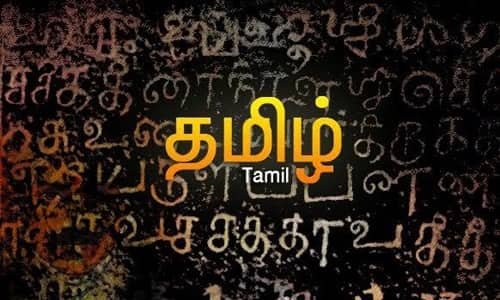
Tamil is widely regarded as the oldest among India’s living languages with a continuous literary tradition. Its antiquity is supported by Sangam literature (composed between roughly 300 BCE and 300 CE), which includes over 2,000 poems dealing with love, war, ethics, and nature. Recent archaeological findings, such as those from Keeladi excavations near Madurai, have pushed evidence of Tamil-Brahmi script and urban settlements back further, with some scholars estimating spoken Tamil roots extending 4,000–5,000 years.
Tamil belongs to the Dravidian family and has a highly sophisticated grammar treatise, Tolkappiyam, considered one of the earliest works on linguistics in the world (dated around 1st–3rd century BCE or earlier). It features a unique script and phonetic system with retroflex sounds. Tamil has maintained remarkable continuity — modern Tamil is closer to its ancient form than many other languages are to their classical versions.
As the first language to receive classical status in 2004, Tamil is spoken by around 80–85 million people today (including diaspora). It thrives in literature, cinema (Kollywood), music (Carnatic influences), and daily life in Tamil Nadu and Puducherry. Tamil’s resistance to heavy external influence and its role in cultural identity movements make it a symbol of linguistic pride. In 2026, digital content, social media, and global Tamil communities keep this ancient language vibrant.
2. Sanskrit – The Language of Ancient Wisdom and Precision
Sanskrit, often called the “mother of many Indian languages,” traces its roots to Vedic Sanskrit around 1500 BCE, with the Rigveda being one of the oldest religious texts in continuous use. Classical Sanskrit was standardized by the grammarian Panini in his Ashtadhyayi (around 500–400 BCE), a masterpiece of linguistic analysis that remains unmatched in its systematic rules.
Belonging to the Indo-Aryan branch, Sanskrit is written in Devanagari script and served as the language of Hindu, Buddhist, and Jain scriptures, philosophy, science, mathematics, and poetry. It influenced countless modern Indian languages (Hindi, Bengali, Marathi, etc.) through loanwords and structures. Though primarily a scholarly and liturgical language today (with very few native speakers), millions study it for religious, academic, or cultural reasons.
Sanskrit received classical status in 2005. Its precision — one word can convey complex ideas — made it ideal for philosophical debates and even modern computational linguistics. In 2026, renewed interest through yoga, Ayurveda, Vedic studies, and government initiatives keeps Sanskrit alive in universities, rituals, and research.
3. Kannada – Ancient Literary Tradition from Karnataka
Kannada, another major Dravidian language, has a history spanning over 2,000 years. The earliest inscriptions in Kannada date back to around 450 CE (Halmidi inscription), but linguistic evidence and references suggest even older spoken forms. Old Kannada (Halegannada) produced significant literature, including works by poets like Pampa, Ranna, and Ponna during the Rashtrakuta and Chalukya periods.
Kannada features a distinct script with many conjunct consonants and a rich grammatical tradition. It received classical status in 2008. Spoken by around 60–65 million people primarily in Karnataka, Kannada is the language of administration, education, literature, and the vibrant Sandalwood film industry.
Its literary heritage includes devotional poetry (Vachanas of Basavanna) and epic translations. In 2026, Kannada remains strong in Bengaluru’s tech ecosystem while preserving cultural roots through festivals, theatre, and digital media.
4. Telugu – The Italian of the East
Telugu, a South-Central Dravidian language, has literary roots going back about 1,500–2,000 years. The earliest known inscriptions appear around 575 CE, but Nannaya’s translation of the Mahabharata in the 11th century marks the beginning of classical Telugu literature. It is praised for its melodic quality, earning the nickname “Italian of the East.”
Telugu received classical status in 2008. With around 95–100 million speakers in Andhra Pradesh and Telangana, it is one of India’s most widely spoken languages. Telugu literature flourished under the Vijayanagara Empire and later periods, with contributions in poetry, drama, and devotional works (e.g., by Annamayya and Tyagaraja in Carnatic music).
Modern Telugu thrives in Tollywood cinema, education, and administration. Its script is elegant and distinct, and the language continues to evolve while honoring its classical foundations.
5. Malayalam – The Language of Kerala’s Unique Heritage
Malayalam evolved from early Tamil (Proto-Tamil-Malayalam) around the 9th–13th centuries CE, developing a distinct identity with its own script (derived from Grantha) and vocabulary. While its literary history is slightly later than the others, roots trace back 1,500–2,000 years within the Dravidian family. Early works include Ramacharitam (12th century) and rich poetic traditions.
Malayalam received classical status in 2013. Spoken by about 40–45 million people in Kerala, it is known for its agglutinative grammar (long compound words), unique phonemes, and contributions to literature, cinema (Mollywood), and performing arts like Kathakali.
Kerala’s high literacy and progressive society have helped Malayalam flourish in education, media, and daily life. In 2026, it remains vibrant through novels, poetry, and global Malayali diaspora connections.
Why These Languages Are Considered the Oldest
India’s oldest languages reflect the interaction between indigenous Dravidian speakers and incoming Indo-Aryan groups around 3,500–4,000 years ago. Dravidian languages like Tamil show deeper antiquity in the south, while Sanskrit represents the Vedic tradition in the north. Their survival as living or classical tongues highlights India’s cultural continuity.
Factors contributing to their status include early writing systems (Brahmi-derived scripts), royal patronage, religious texts, and grammatical sophistication. Government recognition as classical languages supports preservation through research, education, and funding.
Challenges today include the dominance of Hindi and English in higher domains, urbanization, and migration, which can dilute usage among younger generations. However, regional pride, cinema, literature, and digital platforms are helping these ancient languages adapt and thrive in the 21st century.
Final Thoughts
In 2026, Tamil, Sanskrit, Kannada, Telugu, and Malayalam continue to represent India’s profound linguistic depth. These languages are not mere tools of communication but repositories of philosophy, science, poetry, and identity that have shaped Indian civilization for millennia.
Learning or appreciating them offers a window into India’s “unity in diversity.” From Tamil’s ancient Sangam verses to Sanskrit’s timeless Vedas, each carries echoes of a glorious past while remaining relevant today.
Whether through classical texts, regional films, or everyday conversation, these languages remind us of India’s enduring cultural richness.
Which of these ancient languages fascinates you the most, or have you studied any of them? Share your thoughts and experiences in the comments.
Frequently Asked Questions (FAQs)
Q1. Which is the oldest language in India?
A: Tamil is generally considered the oldest living language with continuous literary evidence, though Sanskrit has very ancient Vedic roots.
Q2. What makes a language “classical” in India?
A: High antiquity (1,500–2,000+ years), rich ancient literature, distinct evolution, and cultural heritage — as defined by the Government of India.
Q3. Are these languages still spoken today?
A: Yes — Tamil, Kannada, Telugu, and Malayalam are vibrant living languages with millions of speakers. Sanskrit is mainly used for scholarly and religious purposes.
Q4. How do Dravidian and Indo-Aryan languages differ?
A: Dravidian languages (Tamil, Kannada, etc.) are indigenous to India with unique grammar and phonetics. Indo-Aryan (Sanskrit and descendants) belong to the larger Indo-European family and share features with languages like Greek or Latin.