An investor looking for high growth may quickly narrow the choice to two exciting areas: cryptocurrency and growth stocks. Both can rise sharply when market sentiment is strong, and both can deliver disappointing results when expectations change. But the reason behind their potential growth is very different. A growth stock represents ownership in a company expected to increase revenue or profits rapidly, while cryptocurrency is a digital asset whose value may depend on adoption, technology, scarcity and market demand.
For Indian investors, growth stocks generally offer a more established path to aggressive long-term investing, while cryptocurrency usually involves substantially higher volatility and uncertainty. Neither is automatically suitable for everyone, particularly if the money is needed for an important short-term goal.
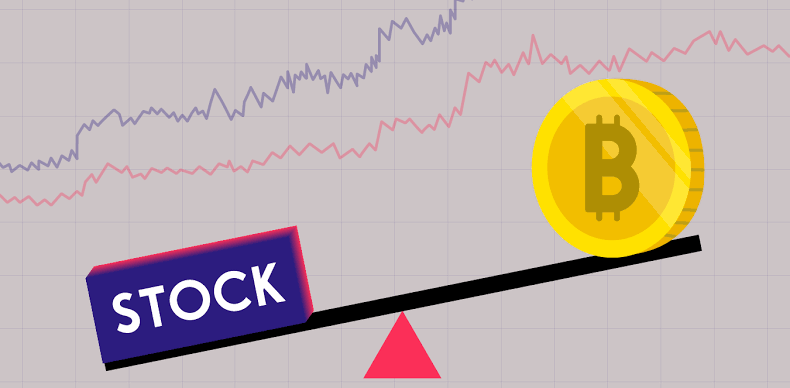
Cryptocurrency vs Growth Stocks: Quick Comparison
| Factor | Growth Stocks | Cryptocurrency |
| What you own | Ownership in a company | Digital asset |
| Main growth driver | Business revenue and earnings growth | Adoption, demand, technology and sentiment |
| Volatility | High | Usually much higher |
| Fundamental analysis | Financial statements and business metrics | Network, technology and token economics |
| Income | Dividends uncommon but possible | Usually no traditional dividend |
| Long-term history | Extensive | Relatively short |
| Diversification | Available across companies and sectors | Possible, but crypto assets may move together |
| Suitable as core investment | Can be with diversification | Generally higher-risk allocation |
What Is a Growth Stock?
A growth stock is generally a share of a company expected to expand faster than many established businesses.
Such companies may operate in areas with strong future demand or may be rapidly expanding their market share.
Instead of distributing most profits to shareholders, a growth company may reinvest money into areas such as technology, new products, marketing or expansion.
Investors purchase these stocks because they expect future earnings to become significantly larger.
However, high expectations can also create high valuations. If the company fails to deliver the expected growth, its share price can decline sharply.
Cryptocurrency Has a Different Growth Story
Cryptocurrency does not normally represent ownership in a company.
A digital asset’s long-term value can depend on factors such as how widely its network is used, its supply mechanism, technological usefulness, security and investor demand.
This makes crypto analysis quite different from stock analysis.
With a growth company, investors can examine sales, profits, margins and cash flows.
With cryptocurrency, traditional company metrics may not exist.
The investor therefore has to understand why people should continue using or valuing that digital asset many years into the future.
Growth Stocks Have Businesses Behind Them
The biggest advantage growth stocks have over crypto is the underlying business.
Suppose a company increases revenue from ₹1,000 crore to ₹2,000 crore and continues expanding profits.
Investors can connect the company’s growth with its financial performance.
This does not guarantee that the stock price will rise because valuation also matters, but there is a measurable business behind the investment.
Cryptocurrency valuation can be more difficult.
Its price may move strongly because of changes in demand and market sentiment without anything comparable to quarterly corporate earnings.
For investors who prefer analysing measurable financial information, growth stocks may be easier to evaluate.
Cryptocurrency Can Be Much More Volatile
Growth stocks can experience large corrections.
Companies trading at expensive valuations can fall significantly when interest rates rise, earnings disappoint or investors become less willing to pay high prices for future growth.
Cryptocurrency can be even more volatile.
A digital asset may rise dramatically during a strong market cycle and then lose a large percentage of its value.
This creates a major behavioural challenge.
An investor may buy after seeing rapid gains, increase the investment because of excitement and then sell during a severe decline.
High volatility requires both financial capacity and emotional discipline.
Growth Stocks Can Become Overvalued
Buying a great company does not automatically mean making a great investment.
Price matters.
Suppose investors expect a company to grow extremely quickly and push its stock valuation to a very high level.
Even if the company continues growing, its share price may disappoint if actual performance falls slightly below market expectations.
Beginners should therefore avoid assuming that the fastest-growing business is automatically the best stock to buy.
Growth rate, business quality and valuation should be considered together.
Cryptocurrency has a similar problem in a different form: rapid price appreciation can attract buyers after much of the increase has already occurred.
Diversification Is Easier With Growth Stocks
Growth-oriented companies exist across several industries.
An investor can spread money across technology, consumer businesses, financial services, healthcare and other areas rather than depending on one company.
Diversified equity funds can make this even easier.
Crypto investors can also hold several digital assets, but that does not guarantee meaningful diversification.
During broad crypto-market declines, many tokens may fall at the same time.
Owning multiple cryptocurrencies can therefore still leave the portfolio heavily exposed to one overall market theme.
Growth Stocks May Eventually Generate Cash for Shareholders
Young growth companies often reinvest profits instead of paying dividends.
However, a successful company may eventually mature and begin returning more cash to shareholders.
The investor continues to own a stake in the underlying business.
Cryptocurrency usually does not offer traditional corporate dividends.
Certain crypto systems may offer rewards, but these mechanisms involve different risks and should not automatically be treated as equivalent to profits distributed by a company.
For long-term investors, the ability of a business to generate real cash flow remains important.
Which Has Higher Return Potential?
Both can potentially deliver substantial returns.
An early investment in a successful growth company can multiply considerably if the business expands for many years.
Cryptocurrency can sometimes increase even faster during strong market periods.
But the possibility of a spectacular return does not tell you the probability of achieving it.
Many growth companies fail to meet expectations.
Similarly, many digital assets may lose relevance, adoption or most of their market value.
Investors should therefore avoid building decisions around examples of only the biggest winners.
Long-Term Risk Is Easier to Evaluate With Stocks
A growth-stock investor can monitor whether the original investment thesis remains valid.
You can review revenue growth, profitability, debt, competition and management execution.
If the company changes fundamentally, you have new information for reassessing the investment.
Crypto can be harder to evaluate because technological relevance and market adoption can change quickly.
A digital asset that appears important today may face newer competitors several years later.
This technology and survival risk becomes particularly important when the intended investment horizon is 10 or 20 years.
Which Is Better for Beginners?
Growth stocks can still be risky for beginners because selecting individual companies requires research.
A diversified equity fund may provide a simpler starting point for someone who wants equity exposure without analysing individual businesses.
Cryptocurrency requires an even greater understanding of volatility, digital security and project-specific risks.
Beginners should not select either investment simply because they want to earn money quickly.
High-growth investing works better when the investor has a long time horizon and can tolerate periods of significant losses without needing the invested money.
Can Both Be Part of a Portfolio?
An investor can hold different types of assets, but their roles should be clearly defined.
Growth-oriented equities might form part of a diversified long-term portfolio.
Cryptocurrency, if considered, can be treated as a much higher-risk allocation whose potential loss would not damage essential financial goals.
Money required for emergency expenses, education or other near-term commitments should not depend on either highly volatile growth stocks or cryptocurrency.
For most investors comparing the two, growth stocks provide a stronger connection between investment returns and the growth of actual businesses, while cryptocurrency offers greater speculative upside with much greater uncertainty. The better choice depends not on which one can rise fastest, but on which risk you genuinely understand and can afford to take.
FAQs
Q1. Are growth stocks safer than cryptocurrency?
A: Growth stocks can still be highly volatile, especially when valuations are expensive. However, they represent ownership in businesses with measurable financial performance, while cryptocurrency generally carries additional market and technology-related uncertainty.
Q2. Can cryptocurrency outperform growth stocks?
A: Yes, cryptocurrency can potentially deliver much larger gains during strong periods, but it can also experience much larger losses. Higher potential returns come with greater risk.
Q3. Are growth stocks good for beginners?
A: Individual growth stocks require research into business quality, financial performance and valuation. Beginners who want equity exposure may find diversified investments easier than selecting individual high-growth companies.
Q4. Can I invest in both cryptocurrency and growth stocks?
A: Different assets can be combined according to financial goals and risk capacity. Highly volatile investments should represent only an amount you can afford to expose to substantial losses without affecting essential financial needs.