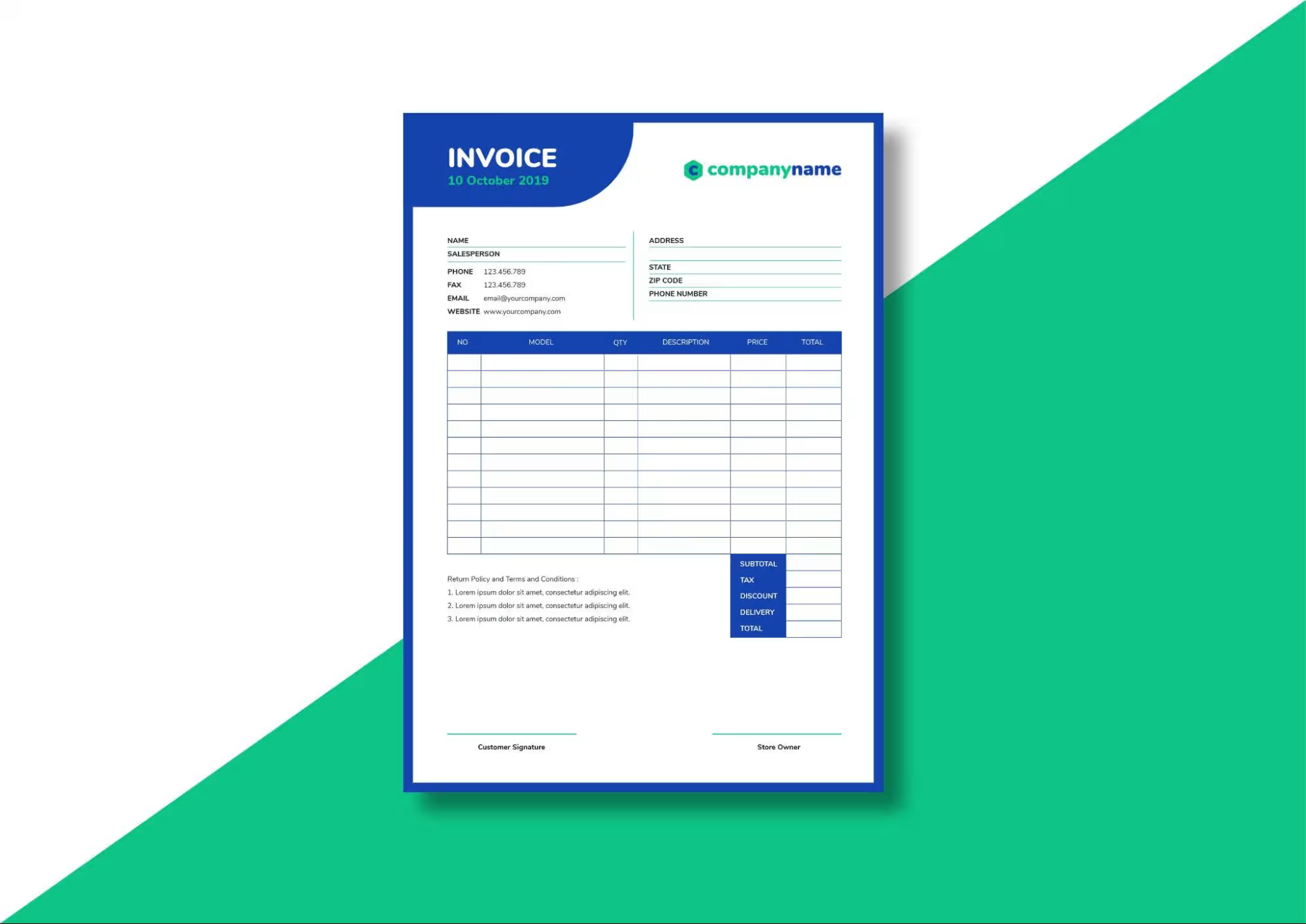
A professional invoice does more than record a sale. It tells your client exactly what was supplied, how much is payable, when payment is due and where the money should be sent. A well-structured invoice can also reduce back-and-forth emails, prevent disputes and make it easier for your client’s accounts team to process the payment.
In India, however, a professional invoice must also meet applicable GST requirements. Under Rule 46 of the CGST Rules, a tax invoice includes details such as the supplier’s GSTIN, a unique invoice number, date, recipient details, HSN or Accounting Code, description, taxable value, tax rate, tax amount and place of supply, among other particulars.
What Makes an Invoice Professional?
A professional invoice should combine legal compliance with payment-focused design. Your client should not have to search through the document to understand the amount payable.
A practical invoice format is:
| Invoice section | What to include |
| Business details | Business name, address, contact details and GSTIN, where applicable |
| Invoice identification | Invoice number and invoice date |
| Client details | Customer name, billing address, GSTIN, where applicable |
| Supply details | Description of goods or services, quantity and applicable HSN/SAC |
| Pricing | Unit price, taxable value, discount and total |
| GST | Applicable CGST, SGST/UTGST or IGST rate and amount |
| Payment terms | Due date, accepted payment methods and late-payment terms |
| Bank details | Account name, bank, account number and IFSC |
| Supporting information | Purchase order number, project reference or delivery details |
| Final amount | Total amount payable, preferably highlighted clearly |
Tips to Make a Professional Invoice
Here are some tips following which you can make your invoice look professional and compliance-ready:
Use a Unique Invoice Number
Invoice numbering is one of the simplest areas where businesses can avoid confusion. Under GST rules, an invoice number must be a consecutive serial number, unique for the financial year, and can contain alphabets, numerals and certain special characters such as a hyphen and a slash.
For example:
INV/26-27/0045
is easier to track than an invoice simply named April Invoice.
Do not reuse invoice numbers for different customers. Maintain a sequential numbering system across your invoicing records and ensure that credit notes, debit notes and revised documents can be traced back to the relevant transaction.
Put the Due Date in a Prominent Position
One of the most common bill book format problems is making the payment deadline difficult to identify.
Instead of writing only:
Payment Terms: 30 days
Write:
- Invoice Date: 25 September 2026
- Payment Due Date: 25 October 2026
- Payment Terms: Net 30 days
This removes ambiguity, particularly when the invoice passes through procurement, accounts payable and finance teams. For recurring clients, use the same payment terms consistently unless the commercial agreement specifies otherwise.
Add the Purchase Order Number
If your client has issued a purchase order, work order or contract reference, put that number on the invoice. For example:
PO No.: ABC/PO/2026/184
Many large companies verify invoices against their purchase orders before processing them. If the PO number is missing, the accounts team may need to seek additional information. All this can delay payment even when other invoice details are correct.
You can also include:
- Project name
- Contract number
- Work order number
- Client contact
- Service period
- Delivery reference
Describe the Service Clearly
Avoid vague descriptions when creating your invoice using billing software, such as:
Content services – ₹50,000
A better description would be:
SEO content writing services for September 2026 – 10 articles
For goods, mention the product name, quantity, unit price and applicable HSN. For services, mention the work clearly so the buyer can easily understand what the invoice covers. This is especially important for professional services, where a vague description can lead to questions about the work delivered or the amount charged.
Show the Tax Calculation Separately
For GST-registered businesses, do not simply show a single figure labelled “GST”. A tax invoice should provide the applicable tax details prescribed under the GST rules, including the tax rate and amount. For inter-State supplies, the invoice should also show the place of supply.
| Particulars | Amount |
| Professional services | ₹50,000 |
| CGST @ 9% | ₹4,500 |
| SGST @ 9% | ₹4,500 |
| Total payable | ₹59,000 |
For an eligible inter-State transaction, the applicable IGST would be shown instead.
Mention the Correct HSN or SAC
The applicable HSN code for goods or Accounting Code/SAC for services is part of the prescribed tax invoice information. The code should correspond to the actual goods or services being supplied. Avoid selecting a code simply because it appears similar.
Businesses should also pay attention to the applicable HSN reporting requirements. GST portal guidance currently distinguishes the HSN requirements based on turnover, including six-digit HSN reporting for taxpayers above the relevant threshold in GSTR-1.
Make Payment Instructions Obvious
A client should not have to email you asking where to make the payment. Include a clearly labelled payment section:
Payment Details:
- Account Name: XYZ Enterprises
- Bank: ABC Bank
- Account Number: XXXXXXXX1234
- IFSC: ABCD0001234
- UPI ID: xyz@upi
If you accept multiple payment methods, mention them clearly. For digital invoices, you can also include a payment link or QR code where appropriate. However, verify the payment details before sending the invoice because an incorrect account number or UPI ID can cause payment failure or, in some cases, create a fraud risk.
Avoid Common Payment Delays
Check a professional invoice before it reaches the client. Look specifically for:
- Incorrect invoice number
- Wrong invoice date
- Incorrect GSTIN
- Mismatch between customer name and GSTIN
- Incorrect HSN/SAC
- Wrong tax rate
- Incorrect place of supply
- Missing PO number
- Incorrect bank details
- Missing due date
- Mathematical errors
- Duplicate invoice
- Missing supporting documents
- Incorrect service period
Include Clear Payment Terms
Your invoice should reflect the commercial agreement you have with the customer.
For example:
Payment due within 30 days from the invoice date.
If the agreement provides for milestone-based payments, state the relevant milestone. If an advance has already been received, show it separately rather than simply reducing the invoice total without explanation.
For late-payment charges, use wording consistent with the underlying contract and applicable law. Do not add a penalty on an invoice merely because it appears on another company’s invoice template.
Conclusion
Before sending any invoice, take a final review step. Cross-check the document against your contract, GST records and supporting paperwork. Use a consistent file-naming system so invoices can be retrieved quickly when clients raise queries. Save the final version in a secure location and keep a record of when it was sent. Finally, follow up professionally after the due date, using your agreed payment terms as the reference point for communication.