Telangana — the youngest state in India, carved from Andhra Pradesh in 2014, the land of the Kakatiya dynasty’s magnificent Warangal fort, the Nizam of Hyderabad’s extraordinary cultural legacy, the sacred Thousand Pillar Temple, and the Bathukamma festival of flowers — is a state whose textile traditions sit at one of the most fascinating intersections in all of Indian handloom history. On one side, the refined courtly aesthetics of the Nizam’s Hyderabad — the most cultured and most wealthy princely state of British India — produced the Hyderabadi Sherwani, the ceremonial dress whose opulent craftsmanship set the standard for formal Indo-Islamic menswear across the subcontinent. On the other, the village looms of Pochampally, Gadwal, Narayanpet, and Mangalgiri — weaving cotton and silk by hand on pit looms for generations — produced the handloom sarees that now hold GI tags, win national textile awards, and are worn by prime ministers, film stars, and brides across India.
The tension and the synthesis between these two poles — the courtly opulence of Hyderabad and the austere handloom village traditions of the Telangana plateau — gives the state’s dress culture its specific character. Telangana is simultaneously the state where the world’s most mathematically precise double Ikat weaving is produced in Pochampally, and the state where the groom’s Sherwani is the most formally celebrated wedding garment in a specific tradition going back to the court of Asaf Jahi Nizams.
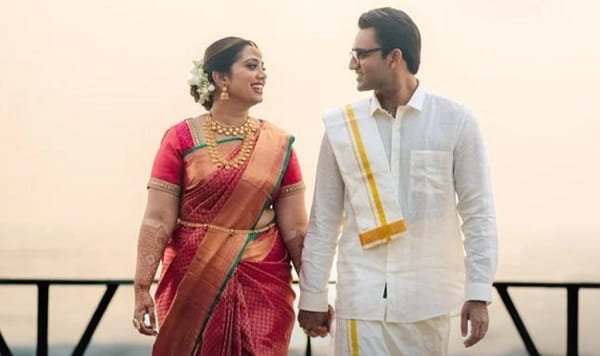
Traditional Dress of Telangana Quick Comparison
| Garment | Worn By | Fabric / Tradition | Occasion |
| Pancha (Dhoti) | Men | Cotton, Silk | Daily, Temple, Religious |
| Kurta | Men | Cotton | Daily, Festivals |
| Lungi | Men | Cotton | Daily casual |
| Hyderabadi Sherwani | Men (grooms, formal) | Silk, Brocade | Weddings, Formal ceremonies |
| Pochampally Ikat Saree | Women | Cotton / Silk (double Ikat) | Daily, Festivals, Weddings |
| Gadwal Saree | Women | Cotton body + Silk border | Weddings, Festivals |
| Narayanpet Saree | Women | Silk-Cotton | Festivals, Ceremonies |
| Mangalgiri Saree | Women | Pure Cotton | Daily, Casual festivals |
| Uppada Saree | Women | Soft Silk | Weddings, Formal events |
| Langa Voni | Young Women | Cotton, Silk | Festivals (Bathukamma), Weddings |
| Salwar Kameez | Women | Cotton, Silk | Daily wear |
Telangana’s Textile Excellence
Telangana’s handloom traditions are among the most technically distinguished in India, and understanding them is essential to understanding the state’s dress culture. Two traditions in particular have achieved national and international recognition.
Pochampally Ikat (Chitki): Pochampally village in Bhoodan Pochampally Mandal of Yadadri Bhuvanagiri district is the world’s most celebrated double Ikat weaving centre outside Gujarat’s Patan. Known locally as Chitki (meaning “tie”), the Pochampally Ikat involves tie-dyeing both the warp (vertical) and weft (horizontal) threads independently before weaving begins, then aligning them precisely on the loom so that the dyed sections of both thread systems coincide perfectly during weaving, creating the characteristic “stepped” geometric patterns with their distinctive hazy, feathered edges. The mathematical precision required to align thousands of individually tied warp and weft threads into a coherent geometric pattern is extraordinary — and it is this precision, achieved by human calculation alone without any mechanical assistance, that makes double Ikat weaving one of the most intellectually demanding of all textile crafts. Pochampally Ikat received its GI tag in 2005.
Gadwal Saree: The Gadwal saree from Gadwal town in Jogulamba Gadwal district is almost two hundred years old as a continuous tradition, and its distinctive construction makes it unique among Indian sarees. The body is woven from unbleached cotton yarn — light, breathable, perfectly suited to Telangana’s hot climate — while the border and pallu are woven separately in mulberry silk and pure zari (gold thread). The weaver must skillfully interlock these different yarns during weaving using the interlocked weft technique, creating a garment that is simultaneously the practical lightness of cotton and the ceremonial opulence of silk and gold — a specifically Telangana solution to the challenge of formal dress in a hot, humid climate.
Traditional Dress of Telangana for Men
1. Pancha (Dhoti)
The Pancha — the Telugu term for the Dhoti — is the oldest and most sacred traditional lower garment of Telangana men. A single piece of white or cream cotton cloth with a golden border, wrapped around the waist and tucked at the tailbone, the Pancha is the everyday traditional dress of Brahmin priests who conduct puja at Telangana’s countless ancient temples. Its white ground and gold border mirror the temple aesthetic itself — pure white walls with gold lamp-light — connecting the garment to the sacred context in which it is most formally worn. In many of Telangana’s most significant temples, male worshippers are still required to wear a Pancha to enter the inner sanctum, making it the only garment in which the relationship between dress and spiritual access is still legally enforced.
For daily life outside specifically religious contexts, the Pancha appears most consistently among older men in villages and small towns, among temple priests and purohits in both rural and urban settings, and at formal family occasions. Silk Panchas with wider gold borders replace cotton versions for weddings and major festivals.
2. Kurta
The cotton Kurta is the standard upper garment paired with the Pancha for all men in Telangana — a loose, long-sleeved or short-sleeved shirt in plain white or light colours for daily wear, and in richer colours and fabrics for festivals and formal occasions. Telangana’s hot, semi-arid climate has always favoured cotton over heavier fabrics for daily dress, and the Kurta’s loose fit and breathable cotton construction makes it ideal for the state’s weather. For the most formal occasions — the Sherwani aside — a silk Kurta in cream or gold pairs with the silk Pancha to create the complete formal male ensemble.
3. Hyderabadi Sherwani — The Legacy of the Nizams
The Hyderabadi Sherwani is the most distinctive, most historically significant, and most formally imposing element of Telangana’s male dress tradition — a long, elegant coat-like garment worn over a Kurta and paired with a Churidar or Dhoti, whose specific Hyderabadi form was developed and refined under the patronage of the Asaf Jah dynasty of Nizams who ruled Hyderabad from 1724 to 1948. The Nizam of Hyderabad — at various points in the early twentieth century the richest man in the world, ruling from a court of extraordinary cultural sophistication — created a specifically Hyderabadi formal male aesthetic in which the Sherwani was the definitive marker of educated, refined, Muslim-influenced Deccan aristocratic identity.
The Hyderabadi Sherwani is distinguished from the more broadly available Indian Sherwani by specific characteristics: its fabric choices historically emphasised Hyderabadi brocades and fine cotton-silk blends; its embroidery was typically more restrained than the heavily embellished versions popular elsewhere, favouring subtle zari work in geometric or floral patterns that demonstrated refinement rather than ostentation; and its colour palette leaned toward deep creams, rich greys, and muted jewel tones rather than the bright colours associated with Sherwani elsewhere.
Today, the Hyderabadi Sherwani is specifically the wedding dress of choice for Telangana grooms — both Muslim and Hindu, reflecting the complete cultural diffusion of Nizam-era aristocratic aesthetics into broader Hyderabadi and Telangana social life. A traditional Telangana wedding in which the groom wears anything other than a Sherwani is now an exception rather than the rule in urban Hyderabad.
Traditional Dress of Telangana for Women
1. Pochampally Ikat Saree
The Pochampally Ikat saree is Telangana’s most internationally celebrated textile product and the garment most immediately associated with the state’s handloom identity. Available in both cotton (for daily and working wear) and silk (for weddings and formal occasions), the Pochampally saree’s bold geometric patterns — stepped diamonds, hexagons, interlocking chevrons — in vibrant colour combinations of parrot green and deep red, bright yellow and black, or the softer pastels of the newer design vocabulary, make it instantly recognisable on a saree rack anywhere in India. Working women in Telangana — particularly government employees, teachers, and office professionals — wear cotton Pochampally sarees as their standard professional dress, combining cultural identity with practical daily wearability.
For weddings and festivals, silk Pochampally sarees in richer colour combinations with more elaborate geometric patterns represent the highest expression of the tradition. The GI tag protection ensures that sarees labelled Pochampally Ikat are produced in the designated geographical area using the authentic double Ikat technique.
2. Gadwal Saree
The Gadwal saree — with its cotton body and contrasting silk-and-zari border and pallu — is Telangana’s definitive wedding saree for many families, particularly in the state’s southern districts. Its specific combination of cool cotton body and rich silk border creates a garment that is simultaneously practical in Telangana’s heat and visually opulent at the wedding occasion. The contrast between the plain cotton body (typically in a single understated colour) and the elaborate silk border with its golden zari work creates a visual tension that is resolved in the pallu — where the full silk-and-zari elaboration of the border expands into a wide, richly decorated field of floral and geometric motifs. Gadwal sarees have been woven in Gadwal town for at least two hundred years, with the tradition maintained by communities of specialist weavers whose skill in the interlocked weft technique has passed through many generations.
3. Narayanpet Saree
The Narayanpet saree from Narayanpet district is Telangana’s most elegant checked saree tradition — a silk-cotton blend whose body features checked designs and whose border carries temple-spire motifs in contrasting thread. Narayanpet sarees are somewhat similar in construction to Gadwal sarees — combining different yarn types for body and border — but the checked body design is specific to Narayanpet, creating a more geometric, more structured visual character than the plain body of the Gadwal. They are worn for festivals, family ceremonies, and formal occasions where understated elegance is preferred over the bolder patterns of the Pochampally.
4. Mangalgiri Saree
The Mangalgiri saree — named after Mangalgiri town in what is now Andhra Pradesh but historically traded and worn across the combined Telugu-speaking region — is woven from pure cotton in a distinctive technique where the zari is woven into the border using a specific nizam border pattern, creating a saree whose visual quality is defined by the border’s metallic thread against the plain, fine-cotton body. Mangalgiri sarees are characterised by their extraordinary lightness and breathability — a purely cotton fabric with none of the weight of silk Gadwal borders — making them the preferred everyday and semi-formal saree for Telangana women who want traditional dress with maximum comfort in the state’s heat.
5. Uppada Saree
The Uppada Jamdani saree — from Uppada village in East Godavari district of Andhra Pradesh but worn and celebrated across Telangana — is the most delicate and most technically refined of all the sarees associated with the combined Telugu-speaking cultural region. Woven from the finest soft silk with a technique that creates an almost translucent fabric of extraordinary lightness, the Uppada saree’s characteristic feature is the jamdani-style weaving in which supplementary weft threads create patterns that appear to float on the gossamer silk ground. For weddings and the most formal occasions, Uppada sarees in silk with subtle motifs represent the pinnacle of Telugu textile refinement — the garment for a woman who prefers delicacy and subtlety over the bolder visual impact of the Pochampally or Gadwal.
6. Langa Voni — Young Women’s Traditional Dress
The Langa Voni — also called half-saree — is the traditional dress of young girls and unmarried women across Telangana, equivalent in function to the Tamil Nadu Pavadai-Davani and the Karnataka Langa Davani. Consisting of the Langa (a full-length skirt), a fitted blouse (Choli), and the Voni (a dupatta draped diagonally across the shoulder), the Langa Voni is the specific festival dress for young women at Telangana’s most important cultural celebration — the Bathukamma festival, in which women of all ages arrange elaborate flower towers and carry them to water bodies in a celebration of feminine divine energy. The sight of young women in silk Langa Voni at Bathukamma — colourful, festive, moving in groups toward the lake — is one of Telangana’s most photographed and most culturally distinctive images.
Lambani/Banjara Tribal Embroidery
Telangana’s Banjara community — semi-nomadic people whose needlecraft embroidery tradition is one of India’s most celebrated tribal textile arts — produce distinctive garments in which silver mirrors, dense embroidery in multiple coloured threads, silver coins, and beadwork cover every inch of the blouse and skirt surface. Banjara dress is the visual opposite of the understated elegance of Gadwal or Uppada — it is an explosion of colour, metallic reflection, and embellishment that reflects the community’s historical identity as traders who carried their wealth on their bodies and in their dress.
FAQs
Q: What is Pochampally Ikat and what makes the double Ikat technique distinctive?
A: Pochampally Ikat is a double Ikat weaving technique in which both warp and weft threads are independently tie-dyed before weaving, then aligned on the loom so their dyed sections coincide precisely to form the geometric “stepped” patterns. The mathematical precision required to achieve this alignment by hand makes double Ikat one of the world’s most technically demanding textile crafts. It received GI tag protection in 2005.
Q: What makes the Gadwal saree unique in construction?
A: The Gadwal saree combines an unbleached cotton body with a mulberry silk and pure zari border and pallu, using the interlocked weft technique to join these different yarn types during weaving. This creates a garment that is both cool and lightweight for the body — important in Telangana’s heat — and visually opulent at the border and pallu for the formal occasion. It is almost two hundred years old as a continuous tradition.
Q: What is the Hyderabadi Sherwani and why is it significant?
A: The Hyderabadi Sherwani was the formal aristocratic male dress of the Nizam of Hyderabad and his court — a long, elegant coat in silk or brocade with restrained zari embroidery. Its cultural influence spread from the Nizam’s court into broader Hyderabadi social life, and today it is the standard wedding dress for Telangana grooms across religious communities, reflecting the depth of Nizam-era cultural influence on the region.
Q: What is the Langa Voni and at which festival is it most prominently worn?
A: The Langa Voni (half-saree) is the traditional dress of young girls and unmarried women in Telangana — a skirt, blouse, and draped dupatta ensemble. It is most prominently associated with the Bathukamma festival, where young women in silk Langa Voni carry elaborate flower towers to water bodies in groups, creating one of Telangana’s most distinctive festival images.
Q: What is the Uppada saree and how does it differ from the Pochampally?
A: The Uppada saree is woven from fine soft silk using a jamdani-style supplementary weft technique, creating an almost translucent fabric of extraordinary delicacy. Unlike the Pochampally’s bold double Ikat geometric patterns, the Uppada features subtle floating motifs on a gossamer silk ground — a garment of quiet refinement rather than visual boldness. It is preferred for weddings where understated elegance is the aesthetic priority.