Women’s sports are no longer watched only for medals, trophies, or national pride. They now shape how young people think about leadership, discipline, teamwork, pressure, and career growth. In India, one of the clearest examples is Smriti Mandhana, whose calm public image and elite cricket career make her a strong reference point for young professionals.
The rise of the WPL has made this shift more visible. The league gives players a larger stage, more regular coverage, and a professional environment where performance is judged with detail. That is why WPL players 2026 are not only athletes in a tournament. They are visible examples of preparation, responsibility, and career progression.
Why Women Athletes Matter as Professional Role Models
A role model is useful when the example feels practical. Young professionals do not only need stories about talent. They need examples of how talent becomes consistent work. Women athletes offer that because their careers show preparation, feedback, failure, recovery, and public pressure in a very visible way.
In many careers, progress is not instant. A young employee may need years to build confidence, learn from mistakes, improve communication, and understand leadership. Sport shows the same process in public. A batter learns shot selection. A bowler adjusts plans. A captain handles selection pressure. These lessons travel well beyond the field.
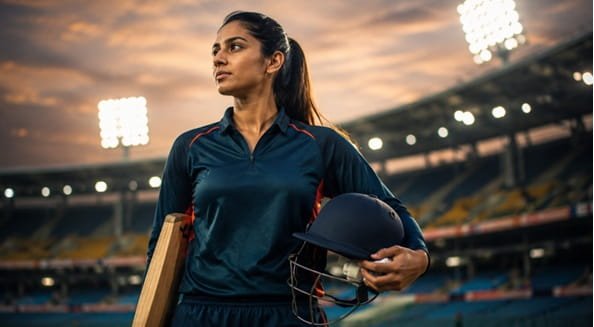
Women athletes also challenge old ideas about who gets to lead. When a young professional sees a female captain manage a team, speak after defeat, handle criticism, and return stronger, leadership becomes less abstract. It becomes something visible, human, and achievable.
The value is especially strong in India, where women’s sport has moved from limited coverage to mainstream discussion. Cricket, badminton, boxing, wrestling, weightlifting, athletics, and hockey have all created names that young people can follow. The message is simple: excellence is built, not gifted.
What Young Professionals Can Learn from Sport
Sport gives clear lessons because the result is visible, but the process behind it is long. Young professionals can use that process as a model for their own work.
Key lessons include:
- Preparation Makes the Difference: Performance is enhanced through good daily habits.
- Feedback Counts: Coaches, mentors, and managers make us recognize our weaknesses.
- Pressure Can Be Handled: Pressure is easier to handle if you know your routines.
- Team Memberships Count: Everybody cannot be a leader, but everybody has an important part to play.
- Failure Is Not Final: Either it’s a wrong fit or an unsuitable project that can derail one’s career.
It looks easy, but it makes all the difference between a flash in the pan and a sustained success.
Smriti Mandhana and the Meaning of Modern Leadership
The question Who is Smriti Mandhana has a simple cricket answer and a broader professional answer. She is an Indian left-handed opening batter, a senior national player, and the captain of Royal Challengers Bengaluru in the Women’s Premier League. She is also one of the most recognisable faces in Indian women’s cricket.
Her cricket profile is strong because it combines style with output. She has represented India across formats, scored heavily in ODIs and T20Is, and built a reputation for timing, composure, and clean stroke play. Her value is not only in attractive batting. It is in staying relevant across years, formats, teams, and changing expectations.
For young professionals, that consistency is the useful part. Many people begin careers with energy, but fewer sustain quality over time. Mandhana’s career shows the importance of repeat performance. A strong reputation is not built from one good week. It comes from showing up again and again.
Her leadership with Royal Challengers Bengaluru also matters. RCB’s WPL titles in 2024 and 2026 gave her captaincy a stronger public frame. Winning a league once can be seen as a peak. Winning again shows that the team culture has deeper strength.
Why Her Example Goes beyond Cricket
Mandhana’s public image is calm, but calm should not be confused with softness. In professional life, calm leadership can be very powerful. It helps teams think clearly, especially when pressure rises.
Young professionals can learn from three parts of her career. First, she built technical skill before becoming a public star. Second, she handled expectation without changing her basic personality. Third, she led a team where overseas stars, Indian seniors, and younger players had to fit into one system.
That is similar to workplace leadership. A manager or project lead must understand different personalities, skill levels, and pressure points. The best leaders do not only speak loudly. They create trust, define roles, and keep standards stable.
WPL as a Platform for Talent and Career Lessons
The WPL has changed the professional meaning of women’s cricket in India. It gives players a structured stage where every performance is watched, measured, and discussed. For young athletes, that means more opportunity. For young professionals watching from outside sport, it gives a clear picture of how high-performance environments work.
The WPL 2026 released players list also showed how competitive this environment has become. High-profile names such as Alyssa Healy, Meg Lanning, Deepti Sharma, and Amelia Kerr were among major players released ahead of the 2026 auction cycle. That does not reduce their quality. It shows that professional teams must constantly review roles, budgets, balance, and future plans.
This is one of the strongest links between sport and business. A team cannot keep every strong name if the structure does not fit. A company faces the same kind of planning when it builds departments, hires specialists, promotes leaders, or changes strategy.
A good sports franchise asks practical questions: who leads, who supports, who adapts, and who fits the next cycle. A good workplace asks similar questions. The language is different, but the logic is close.
What the WPL Teaches About Team Building
The WPL shows that talent is important, but fit is just as important. A team with too many similar players can struggle. A team with clear roles can outperform a more famous group.
Strong team building depends on:
- Defined Roles: Every player should know what the team expects.
- Balanced Skills: Batting, bowling, fielding, leadership, and flexibility must work together.
- Future Planning: Teams need young players ready before senior players decline.
- Honest Review: Retentions and releases must be based on team direction, not emotion.
- Shared Standards: A professional group needs clear expectations every day.
These lessons are useful for any young professional entering a competitive field. Talent opens the door, but fit, discipline, and adaptability keep the career moving.
Recruitment, Visibility, and Professional Growth
A recruitment specialist can learn a lot from how women’s sports identify and develop talent. Selection is not only about the most famous name. It is about role fit, attitude, current form, long-term value, and how a person works inside a team.
This is true for offices, startups, agencies, and big firms alike. Not all good hires are necessarily the most vocal ones. Sometimes, the ideal hire can be someone who possesses consistent habits, quick learning skills, effective communication skills, and the potential to get better through mentoring.
Women’s sports make these qualities visible. A young player may enter a league as a squad option and become a regular because she listens, trains well, and performs in small moments. A professional may follow the same path at work: first handling small tasks, then trusted projects, then leadership.
Visibility matters too. The WPL gives players more public recognition, but recognition still depends on performance. In a workplace, visibility should also come from contribution. Speaking well is useful, but doing the work is stronger.
Why Young Professionals Connect with Women’s Sports
Young professionals connect with women’s sports because the stories feel current. These athletes are not distant legends from another era. They are building careers in real time while dealing with media attention, competition, comparison, travel, workload, and public judgement.
There is also a strong emotional reason. Many young women in professional life know what it means to be underestimated. When they see women athletes succeed in high-pressure spaces, the message feels direct. It says that confidence can be earned, and authority can be built.
Men can learn from these examples too. Women’s sports are not only for women viewers. They show leadership, discipline, resilience, and team culture in a form that any professional can understand.
The rise of players through the WPL also shows that modern success is rarely individual. Behind every athlete are coaches, physios, analysts, teammates, mentors, and support staff. That is a useful reminder for young workers. Career growth is personal, but it is not isolated.
Final Take
Role models have been established by women in sports due to their ability to succeed based on the contexts associated with the achievements. Women in sport illustrate the effort put into getting the trophy, the pressure behind the smile, and the leadership qualities involved in their performance.
The example provided by Mandhana is particularly good considering the combination of her ability to succeed, be consistent, exhibit leadership skills and earn public trust. The WPL provides an additional example of how teams are developed, analyzed, and rejuvenated.
The wider lesson is clear. Young professionals need more than motivation. They need models of discipline, patience, adaptability, and calm ambition. Women’s sports provide those models every season, every tournament, and every time a player turns preparation into performance.