India’s overall literacy rate has improved steadily, reaching approximately 80.9% for the population aged 7 and above according to the Periodic Labour Force Survey (PLFS) 2023-24, with further gains expected by 2026 through schemes like the National Education Policy (NEP) 2020, Samagra Shiksha, and ULLAS (Understanding Lifelong Learning for All in Society). However, significant regional disparities persist. While northeastern and southern states lead with near-universal literacy, several large states in the northern, central, and eastern regions continue to lag due to factors such as high population density, rural-urban divides, poverty, gender gaps, child labour, migration, and challenges in infrastructure and teacher availability.
“Least educated” here is measured primarily by literacy rates (age 7+), supplemented by indicators like female literacy, mean years of schooling, school dropout rates, higher education enrolment, and learning outcomes. These states account for a disproportionately high share of India’s illiterate population, despite ongoing government efforts.
Here are the Top 5 Least Educated States in India in 2026 (based on PLFS 2023-24 data trends and 2025-26 projections for major states):
| Rank | State | Literacy Rate (approx. 2025-26) | Female Literacy (approx.) | Key Challenges | Notable Features |
| 1 | Andhra Pradesh | 72.6–74% | ~66–68% | High rural dropout, migration for labour, uneven development | Lowest in recent PLFS data |
| 2 | Bihar | 74.3–76% | ~68–70% | High population density, poverty, gender gap, teacher shortages | Historically lowest, gradual improvement |
| 3 | Madhya Pradesh | 75.2–77% | ~70–72% | Tribal areas, remote villages, infrastructure gaps | Large tribal population |
| 4 | Rajasthan | 75.8–78% | ~68–71% | Desert terrain, child marriage, seasonal migration | Strong gender disparity in rural areas |
| 5 | Jharkhand | 76.7–78.5% | ~71–73% | Tribal and forested regions, Naxal-affected areas, mining economy impact | Rich in minerals but low human development |
1. Andhra Pradesh – Currently the State with the Lowest Literacy Rate
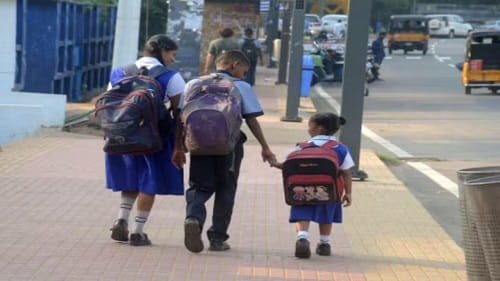
Andhra Pradesh has the lowest literacy rate among major states as per the latest PLFS data at around 72.6%, with projections for 2026 showing modest improvement to 73–74%. The state faces unique challenges after its bifurcation, with significant rural populations dependent on agriculture and seasonal migration to other states for labour.
Key issues include high school dropout rates after elementary level, especially among girls and children from backward classes, limited access to quality higher secondary and vocational education in remote areas, and the impact of parental migration leaving children with grandparents or in poor learning environments. Female literacy lags notably behind male literacy.
Despite these hurdles, the state has made efforts through schemes like Amma Vodi (for girls’ education), Nadu-Nedu (school infrastructure), and digital learning initiatives. In 2026, Andhra Pradesh is focusing on improving learning outcomes, teacher training, and English-medium education to prepare students for jobs in the growing IT and services sectors. However, bridging the rural-urban divide remains a major task. The state’s large population means even small percentage gains translate into millions of newly literate individuals.
2. Bihar – Historically the Most Challenged but Showing Progress
Bihar, long considered the state with the lowest literacy, now stands at approximately 74.3% as per PLFS 2023-24, with estimates for 2026 around 75–76%. The state has the highest population density in India, which puts immense pressure on educational infrastructure.
Challenges include acute poverty in many districts, high child labour in agriculture and informal sectors, widespread gender disparity (especially in rural areas), and issues like teacher absenteeism and inadequate school buildings. Early marriage and social norms further affect girls’ education.
On the positive side, Bihar has witnessed significant improvements through focused campaigns like the Mukhyamantri Balika Cycle Yojana (bicycle for girls), mid-day meals, and increased budgetary allocation for education. The state has also expanded higher education institutions. In 2026, Bihar continues to implement NEP reforms, emphasizing foundational literacy and numeracy, multilingual education, and skill development. While still at the bottom, the pace of improvement in recent years has been notable, giving hope for faster gains in the coming decade.
3. Madhya Pradesh – Struggling with Tribal and Rural Education
Madhya Pradesh records a literacy rate of around 75.2% in recent data, projected to reach 76–77% by 2026. The state has a large tribal population (over 20%) and vast forested and remote areas, making universal access to schools difficult.
Major issues include poor connectivity in tribal belts, high dropout rates after Class 5 or 8, language barriers (many children speak tribal dialects at home), malnutrition affecting cognitive development, and limited higher education opportunities in rural districts. Female literacy and education among Scheduled Tribes and Castes remain areas of concern.
The government has launched initiatives like the Ladli Laxmi Yojana for girls, school adoption programs, and infrastructure development under Samagra Shiksha. In 2026, Madhya Pradesh is strengthening digital education, residential schools for tribal children, and vocational training aligned with local industries like mining and agriculture. Addressing quality of education and learning outcomes beyond enrolment is a key priority.
4. Rajasthan – Gender Gaps and Geographical Challenges
Rajasthan’s literacy rate stands at approximately 75.8%, with projections for 2026 around 77–78%. The state’s vast desert terrain (Thar Desert), scattered villages, and extreme climate make school access and retention challenging, particularly in western districts.
Deep-rooted social issues such as child marriage, preference for sons, and conservative attitudes towards girls’ education contribute to one of the widest gender gaps in literacy among larger states. Seasonal migration for work and inadequate water and sanitation facilities in schools also affect attendance.
Positive developments include schemes like the Rajshri scheme for girls, transport facilities, and campaigns against child marriage. The state has improved school infrastructure and introduced technology in classrooms. In 2026, Rajasthan continues to focus on girls’ education, teacher recruitment, and skill-based learning to support its growing tourism, agriculture, and industry sectors. Closing the gender gap remains critical for overall progress.
5. Jharkhand – Education in Resource-Rich but Challenging Terrain
Jharkhand has a literacy rate of around 76.7%, expected to improve modestly to 77.5–78.5% by 2026. Carved out of Bihar in 2000, the state is rich in minerals but faces complex socio-economic issues, including large tribal populations, forested and hilly areas, and pockets affected by left-wing extremism.
Challenges encompass poor infrastructure in remote villages, teacher shortages, high dropout rates linked to child labour in mining areas or households, and cultural factors affecting girls’ education. Many children from tribal communities face language barriers in mainstream schooling.
The state government has prioritized education through residential schools, scholarships, and mid-day meal enhancements. In 2026, Jharkhand is leveraging its resources to fund better schools while implementing NEP’s focus on vocational education and local languages. Improving security in affected areas and enhancing learning quality are essential for sustained progress.
Why These States Lag in Education
These five states share common underlying issues: high rural and tribal populations, poverty, social customs affecting girls’ education, inadequate infrastructure in remote areas, and sometimes governance or implementation challenges. They also have large absolute numbers of illiterate people due to their population size, contributing heavily to India’s total illiterate population.
Broader systemic problems include teacher vacancies, poor learning outcomes (as shown in NAS surveys), and the impact of economic factors like migration and informal employment. While central schemes provide funding and frameworks, effective on-ground execution varies.
Encouraging trends include rising enrolments, narrowing gender gaps in some districts, and increasing use of technology. States like Bihar and Rajasthan have shown faster recent improvements compared to earlier decades, indicating that targeted interventions can yield results.
Final Thoughts
In 2026, Andhra Pradesh, Bihar, Madhya Pradesh, Rajasthan, and Jharkhand remain the bottom five in literacy and overall educational attainment among major Indian states. These states bear a significant share of the country’s education challenges, yet they are also witnessing gradual progress through sustained government and community efforts.
India’s path to becoming a developed nation by 2047 depends heavily on improving education in these lagging regions. Enhanced focus on foundational learning, girls’ education, vocational skills, and quality infrastructure is crucial. While absolute numbers of illiterates are declining, closing inter-state gaps will require innovative approaches, stronger local governance, and public-private partnerships.
If you live in or are associated with any of these states, understanding the ground realities can help contribute to local education initiatives.
Which of these states do you think is making the fastest progress, or what solutions would you suggest for improving education there? Share your views and experiences in the comments.
Frequently Asked Questions (FAQs)
Q1. Which is the least educated state in India in 2026?
A: Andhra Pradesh currently has the lowest literacy rate at around 72.6–74%, followed closely by Bihar.
Q2. Why do these states have lower literacy rates?
A: Common reasons include poverty, rural and tribal populations, gender disparities, migration, infrastructure gaps, and social customs. Large populations also mean higher absolute numbers of illiterates.
Q3. Is there improvement in these states?
A: Yes — all five states have shown gains over the past decade through government schemes, though the pace varies and challenges remain significant.
Q4. How does “least educated” go beyond literacy rate?
A: It also considers female literacy, dropout rates, mean years of schooling, higher education access, and learning outcomes (what students actually know).