Here’s something that surprises many first-time buyers of under-construction flats: getting the keys to your new home and formally taking possession doesn’t actually mean you legally own the property yet. That gap between physically holding your flat and legally owning it is exactly what a possession letter documents — and misunderstanding this distinction is a genuinely common source of confusion, delayed loans, and even legal disputes. Here’s what this document actually is and why it matters.
What Is a Possession Letter?
A possession letter is fundamentally a builder’s formal confirmation that your unit is ready and being physically handed over to you.
- It’s a document issued by a builder or developer to a buyer, formally stating that the property is ready for handover and that possession is being transferred on a specified date
- This is a developer-to-buyer communication — genuinely important for practical purposes, but it is not a title document and does not by itself transfer legal ownership of the property
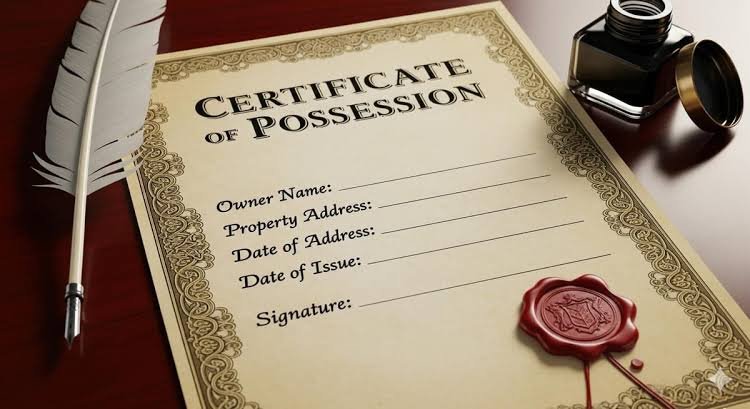
- It’s sometimes also referred to as a Possession Certificate or Handover Letter, though it’s worth noting these terms can carry slightly different meanings depending on context — a builder-issued possession certificate is typically issued only once, to the property’s first owner
- The letter typically includes the owner’s name, a detailed description of the property, and the exact date on which possession was taken
Why Possession and Ownership Are Legally Different Things
This is genuinely the most important concept to grasp about property law in India, and it surprises many buyers who assume the two are the same.
- In Indian property law, you can legally own a property — meaning your name appears on the registered sale deed and in official revenue records — while not actually possessing it, and the reverse is equally true: you can physically hold and live in a property while not yet being its legal owner
- A possession letter confirms only the physical handover side of this equation — it tells you the property is ready and in your hands, but says nothing about whether legal title has transferred
- Only a registered sale deed actually transfers legal ownership under Indian property law — the possession letter is a separate, earlier step in the overall transaction, particularly relevant for under-construction properties bought directly from a builder
- Understanding this distinction protects you from assuming that receiving your keys and possession letter means the transaction is legally “done” — it typically isn’t, until the sale deed is registered separately
How a Possession Letter Differs From Other Property Documents
Several documents circulate during a typical builder purchase, and confusing them with each other is a genuinely common mistake.
- Allotment Letter — issued much earlier in the process, this confirms that a specific unit has been allotted to you, along with details like area, floor plan, price, and expected possession date; it establishes a contractual relationship but doesn’t transfer ownership either
- Possession Letter — issued once construction is complete and the specific unit is ready, confirming the actual physical handover on a stated date
- Sale Deed — the final, registered legal document that actually transfers ownership title from the builder or seller to you; this is the only document that makes you the legal owner under Indian law
- These three documents typically arrive in sequence during a builder purchase: allotment first, possession once the unit is ready, and finally the registered sale deed to complete legal ownership transfer
Why Possession Letters Matter Under RERA
The Real Estate (Regulation and Development) Act, 2016 gives this document genuine legal weight, particularly when builders miss their committed timelines.
- Under Section 19(10) of RERA, an allottee (buyer) is entitled to possession of their apartment, plot, or building as per the date specified in the registered sale agreement
- When buying from a builder, RERA mandates that the promised possession date be clearly stated in both the allotment letter and the builder-buyer agreement — this gives you a documented reference point to hold the developer accountable against
- If a builder delays possession beyond this committed date, the possession letter (or its absence, when delay has occurred) becomes key supporting evidence for claiming compensation under RERA regulations
- Delayed possession remains one of India’s most common real estate disputes, which is precisely why verifying the builder’s RERA registration and their track record before signing anything is worth the effort upfront
What to Check Before Accepting Possession
A few specific details genuinely matter before you sign off on a possession letter and take your keys.
- Confirm whether the Occupancy Certificate (OC) has been received — a possession letter that doesn’t clearly state OC status is a signal to ask directly before signing, since accepting possession without OC clarity can create genuine complications later, including potential issues with utility connections and legal occupancy status
- Verify all stated details match your original agreement — the property description, unit specifications, and possession date should align with what was promised in your allotment letter and builder-buyer agreement
- Check for the developer’s proper signature and seal — the possession letter should be signed by an authorized representative of the promoter, clearly identifying the legal entity registered as the promoter under RERA
- Keep a complete record of all related communications — correspondence around possession delays, promised dates, and any compensation discussions becomes essential documentation if you ever need to escalate a dispute to RERA or a consumer forum
Why This Document Matters in Practice
Beyond the legal technicalities, a possession letter has genuine, immediate practical consequences.
- Banks typically disburse home loans only after verifying possession status — your lender will often want to see this document as confirmation that the property is genuinely ready before releasing remaining loan funds
- Sub-registrar offices check for possession disputes during registration — unclear or contested possession status can stall both your loan disbursement and your eventual property registration
- It supports your claim for compensation in case of builder delays — if your builder missed the promised possession date under RERA, this document and its accompanying correspondence become central evidence in seeking a remedy
- It’s often required for subsequent transactions — even though it doesn’t transfer ownership itself, having a clean possession record matters when you eventually move to register the sale deed or handle any future resale
FAQs
Q1. If I have a possession letter and I’ve moved into my flat, does that mean I legally own the property?
No — a possession letter only confirms the physical handover of the property from the builder to you; it is not a title document and doesn’t transfer legal ownership. You become the legal owner only once a registered sale deed has been executed and registered in your name, which is typically a separate, later step even after you’ve taken physical possession.
Q2. What’s the difference between an allotment letter and a possession letter?
An allotment letter is issued earlier in the process, confirming that a specific unit has been allotted to you along with basic details like price and expected possession date, but it doesn’t mean the unit is actually ready. A possession letter comes later, once construction is complete, and specifically confirms the physical handover of that exact unit on a stated date.
Q3. Should I accept possession of my flat if the possession letter doesn’t mention the Occupancy Certificate?
This is worth raising directly with your builder before proceeding, since accepting possession without clarity on Occupancy Certificate status can create complications later, including potential issues with legal occupancy and utility connections. A properly compliant possession letter should clearly address OC status, and its absence is a genuine signal to ask questions rather than simply sign and move in.
Q4. Can I use my possession letter to claim compensation if my builder delayed handing over my flat?
Yes — under RERA, if your builder missed the possession date specified in your registered sale agreement, your possession letter (or the documented delay in receiving one) becomes key supporting evidence when filing a compensation claim with your state’s RERA authority. Keeping thorough records of all related correspondence throughout the delay strengthens your position significantly if you need to escalate the matter.