Every car loan agreement in India contains one word that most borrowers sign past without fully understanding — hypothecation. It appears on the vehicle’s RC (Registration Certificate), on insurance documents, and in the loan agreement itself. Hypothecation is not legal jargon for decoration. It is the precise legal mechanism that determines who actually controls your vehicle during the loan tenure, what the lender can do if you default, and what administrative steps you must complete after the loan is fully repaid. Understanding hypothecation completely saves borrowers from avoidable complications — from insurance claim rejections to RC transfer problems when selling a hypothecated vehicle.
What Hypothecation Means
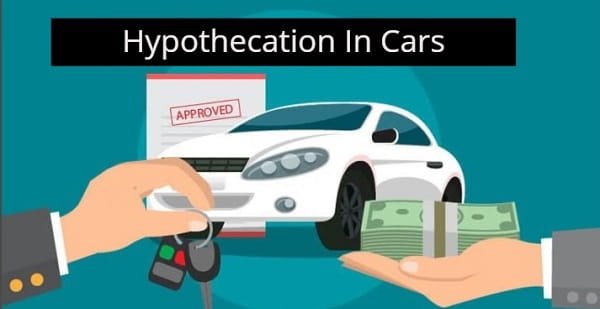
Hypothecation is a charge creation mechanism under which you — the borrower — retain physical possession of an asset (your car) while the lender — the bank or NBFC that financed the purchase — holds a legal claim (charge) over that asset as security for the loan. You drive the car. You use it daily. You are responsible for its maintenance and insurance. But the lender has a registered legal interest in it — meaning you cannot sell, transfer, or in most cases re-hypothecate it without the lender’s prior written consent.
This is distinct from mortgage (where the asset is transferred to the lender’s possession) and from pledge (where physical custody moves to the creditor). In hypothecation, physical custody stays with you; legal charge stays with the lender. For car loans, this is the standard structure — you receive the vehicle immediately at purchase, but the lender holds the security charge until full repayment.
How It Appears on Your RC and Documents
When a car is purchased with a loan, the Regional Transport Office (RTO) endorses the hypothecation directly on the Registration Certificate. The RC will show: “Hypothecated to [Lender Name]” — for example, “Hypothecated to HDFC Bank Ltd” or “Hypothecated to Kotak Mahindra Prime Ltd.” This endorsement is the official public record of the lender’s charge.
On the insurance policy, hypothecation appears in the “Financier” field — the insurance company acknowledges the lender’s interest in the vehicle. This has direct implications for insurance claims: for total loss or theft claims, the insurer will settle proportionately with both the lender (for the outstanding loan) and the borrower (for any equity above the outstanding balance). Some insurers require lender consent for partial repair claims above a specified threshold.
Your Rights and Restrictions During Hypothecation
As the hypothecator (borrower), you retain daily use rights over the vehicle. You are responsible for maintaining valid insurance at all times — the lender’s charge means any insurance lapse exposes the lender’s security, and most loan agreements make insurance maintenance a covenant breach if violated. You must not sell, transfer ownership, or create an additional charge on the vehicle without lender consent. You must not permanently relocate the vehicle to a different state without lender notification and RC transfer processing.
The lender’s right: in the event of loan default, the lender has the right under SARFAESI Act provisions (for NBFCs with prescribed asset size) to repossess the hypothecated vehicle through a defined legal process. For smaller lenders without SARFAESI powers, repossession requires court intervention. A critical point: the lender cannot repossess the vehicle without following due legal process — arbitrary seizure by recovery agents without proper notice is illegal, and borrowers have full right to report such actions to the banking ombudsman and police.
Removing Hypothecation After Loan Repayment
After the final EMI is paid and the lender confirms full loan closure, the hypothecation charge must be formally removed from the RC. This is an administrative step that borrowers frequently delay — and the delay creates complications when trying to sell the vehicle, as buyers verify the RC before purchase.
The removal process: Obtain a No Objection Certificate (NOC) from the lender — this is a formal document confirming full loan repayment and the lender’s release of charge. Most lenders issue the NOC within 7 to 30 days of final payment; digital-first lenders like HDFC Bank and ICICI Bank now provide NOC download within the mobile app shortly after final payment. Visit the RTO with the NOC, original RC, and Form 35 (Application for Termination of Hypothecation) duly signed by both borrower and a lender representative. Pay the applicable RTO fees. The RTO issues a fresh RC without the hypothecation endorsement — this is the vehicle ownership document confirming the charge has been lifted.
Common Complications and How to Avoid Them
Selling a hypothecated vehicle without NOC: buyers conducting proper due diligence will reject the purchase. Always complete hypothecation removal before listing the vehicle for sale.
Insurance complications for hypothecated vehicles: ensure the insurance policy accurately reflects the financier’s name. If the lender changes (loan transfer to another bank), update the insurance policy’s financier field. Mismatched documents can cause claim settlement delays.
Overview Table: Hypothecation in Car Loans
| Parameter | Details |
| Legal Mechanism | Charge on asset; borrower retains possession |
| RC Endorsement | “Hypothecated to [Lender Name]” |
| Borrower Rights | Daily use; maintenance responsibility |
| Borrower Restrictions | Cannot sell/transfer without lender consent |
| Lender Right on Default | Repossession via legal process |
| NOC Issuance | After final EMI; digital or physical |
| Removal Process | Form 35 + NOC at RTO; fresh RC issued |
| Typical RTO Timeline | 7–30 days after NOC application |
Frequently Asked Questions (FAQs)
Q1. Can I sell my car while it is still under hypothecation?
A: Not legally without the lender’s written consent or NOC. The buyer would be taking on a vehicle with a registered charge — any default on your loan could lead to repossession of the vehicle they purchased.
Q2. What happens if I do not remove hypothecation after loan closure?
A: The RC continues to show the lender’s name. This creates complications for resale, insurance endorsements, and any future ownership transfer. Remove it as soon as the NOC is received.
Q3. Can a lender repossess my car without notice?
A: No — legal repossession requires a formal default notice, a demand letter, and a defined process. Recovery agents cannot seize vehicles without following this process. Illegal seizure is actionable under consumer protection laws.
Q4. How long does it take to get the NOC from a bank?
A: 7 to 30 days typically. Most major banks (HDFC, ICICI, SBI) now offer NOC download within their mobile apps within 7 to 15 days of final payment.
Q5. Does hypothecation affect vehicle insurance claims?
A: For total loss or theft: yes — insurer settles with both the lender (for outstanding loan) and the borrower. Ensure the insurance policy correctly names the financier to avoid settlement complications.